Hey there! It’s Doll from Doll Can Create, and I’m sitting here in front of my really bright window—so bright, in fact, that I’m turning myself around a little so you’re not completely blinded by the light. How are you? It’s the start of a new week, maybe even the start of something new in your life.
As for me? Nothing too new happening over here. I’m still working away at the things I’ve been working on, still planning what I’ve been planning. But I do have a few new things to add to my brain dump this week.
First up, I need to rejig the budget as we’re coming up to the end of the month. And then, on the content side of things, I have three videos planned:
1️⃣ An update on my 100 Mile Life challenge. 2️⃣ A rocking chair Knit & Chat wrap-up for the end of the month. 3️⃣ A video all about knitting socks—choosing my next yarn and picking a pattern. (Maybe you can help me out with that one!) I think that might be a great way to get everything set before March 1st rolls around on Saturday.
Weather-wise, it’s looking like a warmer day here, around 4 or 5°C, but the winds are already picking up. So, batten down the hatches, hold on to your hat—do whatever you need to do!
And as you go about your day, whether you’re keeping your hands busy with a project or just taking a moment to breathe, know that I’m right there with you. Take those deep breaths we all need now and then before diving into the work ahead.
I’m rooting for you! If you have any questions or just want to chat, drop them in the comments below.
Have you ever wondered what happens to your YouTube video when it’s uploading and processing for hours, and nothing seems to happen? I sure have! This morning, I did a live rocking chair knit and chat for 20 minutes, and now—poof!—it’s in the ether. Somewhere out there. I have no idea where.
So, since I don’t know when (or if) that video will show up, I thought I’d do a quick recap of what I talked about while sitting in my rocking chair, sipping my coffee.
First, I was working on my Northeasterly Blanket, but now it’s been put away. I finished up with it and decided to tidy up my space a little. This blanket is made from tiny pieces of spindle-spun wool—some hand-dyed, some not. I keep them in jars, and I now have two full jars ready to use. I’ll try to get a picture later.
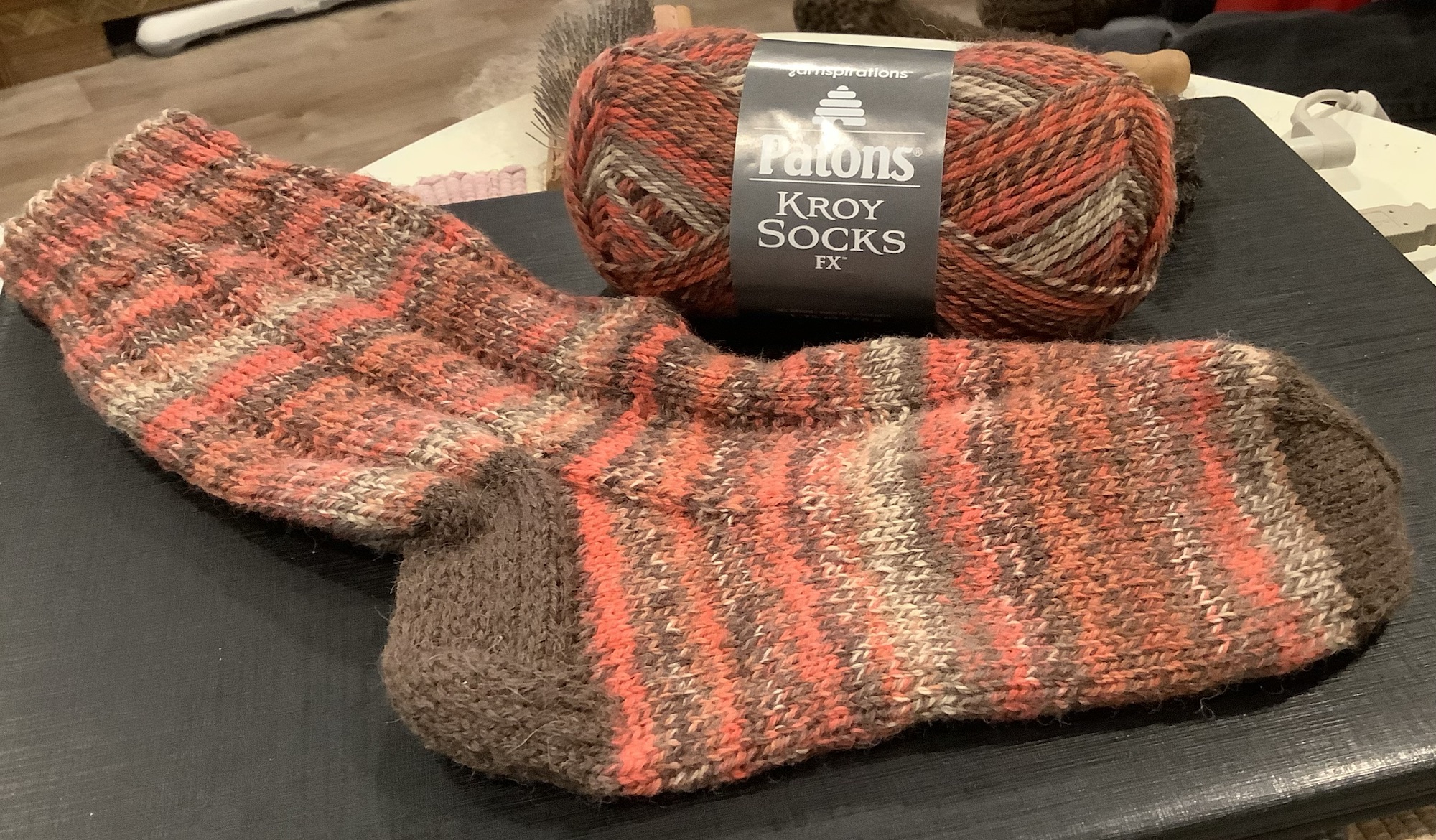
Next up, my sock. This week, I made progress—I finished the leg, the heel, and now I’m working on the gusset. Then it’ll be on to the foot. I was hoping to finish it this weekend, but that might be a bit ambitious. These socks are for me, using the Vanilla Latte pattern and Tracy’s sock pattern. I’ll link those in the comments.
I also worked a little on my hat, which is a brioche knit with a double brim. It’s incredibly soft and poofy—such a nice pattern (also one of Tracy’s). I haven’t touched my sweater this week, so nothing to show there, but I did talk about fiber! I rolled up some Bluefaced Leicester, a Merino cross that I dyed with onion skins and avocado pits and peels. I’ve got about 200 grams total between what’s on the wheel and what’s waiting beside me. Not sure what I’ll make with it yet—ideas are welcome!
Now, on to Valentine’s Day. We went out for brunch at our favorite local apple store—no, not iPads, but actual apples! They also sell other local products and baked goods. We picked up some maple syrup (from St. Clements—so definitely within the 100-mile challenge!), and they were giving away free donuts. I bought a few extra of their little apple cider donuts because they are just too good to pass up.
While we were there, I also grabbed a bag of pre-packaged stew veggies—carrots, parsnips, onions, turnips, celery, and a quarter of a cabbage—all local, mostly within 100 miles. I also stocked up on potatoes and carrots, and I think we did pretty well with keeping our groceries as local as possible. The dairy and ice cream were local too, but chocolate? That one’s tough for me. Definitely harder to source locally! But we do our best and give ourselves grace where needed.
Speaking of keeping things local, I also picked up two plants. One is a mix of African violets for Valentine’s, and the other is an Iron Cross Oxalis. It looks like a shamrock but with a burgundy cross in the middle. I had one last year and, well, I killed it. I think I overwatered it, so here’s hoping this one survives! I got them from a greenhouse about 20 minutes from here—a great local spot full of flowers for Valentine’s Day. Instead of roses, I opted for something I can “keep alive” for a little longer. Fingers crossed!
So, what are my hands going to be working on this weekend? Hopefully, I’ll get some time at the wheel and make progress on my sock. The blanket is put away until next week, but I might pick up the hat again. We had our little date outing, which was fun, and for dinner, I’ll be using some leftover 100-mile chicken.
How are you doing? Do you have any questions about my sock? I’ve shown it a lot lately, but I love this pattern—it’s simple but so satisfying. The Vanilla Latte pattern is free on Ravelry. It’s a great go-to for an easy, cozy sock knit.
Oh! My phone rang, and I had a lovely chat with a neighbor. She was just calling me back to say she’s doing well, which is always nice to hear.
Anyway, I hope you have a fantastic weekend! It’s a long weekend here in Ontario, and we’re expecting a big snowfall—possibly 15 to 25 cm—so we’ll see what happens with plans. I’ll be live on Facebook Sunday morning for worship, possibly on Zoom if the snow makes in-person services tricky. But hey, it’s winter in Ontario—that’s just how February goes!
One foot in front of the other, right? Keep creating, keep making. Whether it’s fiber arts, cooking, journaling—whatever brings you joy. Just remember: if Doll can create, so can you.
Let me know what you’re working on—I’d love to hear about your projects!
Hello, friends! Have you ever paused to consider what a typical Tuesday afternoon might look like for me? Grab your favorite drink and join the conversation as we dive into life’s simple pleasures. I’m Doll, from Doll Can Create, inviting you to explore a day in my life.
Exploring the 100 Mile Life
Today, I’m excited to share insights about my 100 Mile Life journey. This adventure began with some self-imposed guidelines intended to encourage local living. While I strive to source within 100 miles—equivalent to 160 kilometers—not everything fits this boundary. Essentials like oranges, bananas, coffee, tea, and sometimes grapes remain exceptions due to practical reasons.
My 100 Mile radius encompasses significant parts of Lake Ontario and Lake Erie, which limits fresh produce, especially during winter. However, my reasons extend beyond mere locality; they’re about minimizing environmental impact by reducing global shipping dependencies.
Some may question the avoidance of big box stores, but in Southern Ontario, larger companies like Walmart and Amazon offer employment opportunities to many. While I do make use of these resources, I’m mindful about curbing my dependency for budgetary reasons.
For instance, recent purchases included grocery staples like cake mixes, graham crackers, and grapes—but there’s a conscious effort to make some of these from scratch. The yarn, however, remains non-negotiable for the foreseeable future; my current stash is more than sufficient.
Spinning and Fiber Projects
Currently, I’m working on various fiber projects. I have a spindle with German wool—a delightful gift part of an exchange event. A different roving, is 100 grams of beautifully hand-dyed wool excites my imagination, possibly inspiring a new pair of socks!
While I ponder different creative outcomes, my spinning continues. Often, I combine fibers for projects, such as socks, ensuring strength and durability in final products. Although not all yarns are local, they represent special gifts or accumulated resources ready to transform.
Supporting Local and Final Thoughts
The 100 Mile Life isn’t just a hobby; it’s an opportunity to forge meaningful local connections—working with shepherds, farmers, and craftspeople. Through this journey, I hope to compile a booklet for those intrigued by locavorism, offering practical steps to engage with their communities.
Central to my mission is supporting Canadian wool industries. Despite seeing vast shipments of Canadian wool abroad, I remain committed to utilizing local mills wherever feasible. Crafting personal items from Canadian wool furthers this goal, reducing unnecessary transport miles.
As I scale back on external purchases, festivals and sales become opportune spaces to engage with local artisans. Moving forward involves careful consideration of wants versus needs, especially when acquiring non-local items.
Recent reflections include shifting book purchases to a local bookstore instead of Amazon. This minor adjustment embodies the ethos of my initiative—supporting local economies and reducing carbon footprints.
Today, as I conclude my yarn spinning, the journey continues. Sharing moments like this with you reinforces the transformative power of mindful living. Until next time, remember: if I can create, so can you. Have a wonderful week, and let’s continue this exciting adventure. Bye for now, and take care! Doll
Hey friends, welcome to my journey! I’m embarking on a 100-mile life adventure, and I’d love for you to come along. My mission? To live as locally as possible, sourcing everything within a 100-mile radius of my home. My first focus is on fibre, specifically wool, crafting, and all the amazing things that come with it.
Let’s dive in!
A Quick Fibre Tour
So, here’s what I’m working with. I’ve taken stock of my fibre stash, and let me tell you, it’s impressive and a little over-whelming; even embarrassing.
Bins full of fibre.
Bags that haven’t even been opened yet.
Work-in-progress projects and more fibre tucked away.
Honestly, do you think I have enough? I think so! This hidden treasure trove is a great start for my journey. Now, the plan: use what I have, source local fibres, and dive deep into the crafting process.
The Three Rules
Use What I Have: I’m committed to using my existing fibre stash. I have my spindles, my spinning wheel, and even some natural dyes I’ve been eager to experiment with.
Source Local Fibres: Supporting local shepherds and fibre farms is a top priority. I already know of a few farms within my 100-mile radius where I can visit, meet the shepherds, and select the fibres I need.
Explore Local Tools: While I don’t necessarily need new tools, I’m curious about local artisans who might create spindles or other crafting tools. It’s all part of staying true to the 100-mile life.
No More Impulse Buys
This journey isn’t just about where I source my materials; it’s also about curbing unnecessary spending. No more buying yarn just because it’s pretty. Instead, I’ll focus on:
Attending local fiber festivals (like the one coming up in March).
Visiting thrift stores for second-hand supplies when needed.
Making do with what I already own.
Wool’s Journey
Have you ever thought about from where your wool comes ? Shipping fibre across the globe is expensive and environmentally costly. For example, wool shipped from New Zealand to Vancouver and then across Canada incurs tremendous costs, both financially and environmentally. By choosing local, I can minimise this impact while supporting Canadian wool growers and fibre mills.
Beyond Fiber
This journey extends beyond fiber into other areas of my life, including food, clothing, and more. For clothing, I’ll use the fabric I already have or source it second-hand. I’ve heard that church groups often have surplus fabric they’re happy to share, which is a great way to keep things sustainable. As for undergarments… well, that might be a bridge too far for my crafting skills!
A Question for You
What steps can you take to support your local economy? Have you considered from where your crafting materials come? Living a 100-mile life is about more than just sustainability—it’s about building connections and strengthening local communities.
Stay tuned for my next post, where I’ll dive into the topic of food. For now, think about your craft supplies. Are there ways you can source more locally or reduce waste? Let’s create a more sustainable world together.
This is Doll from Doll Can Create, reminding you that you can too. Many blessings, and bye for now!
Have you ever stopped to think about how far the things you use every day have traveled? From the food on your plate to the clothes in your closet, many of these items have journeyed thousands of miles before reaching you. What if we could change that? What if we could bring it all closer to home?
That’s the inspiration behind my latest adventure: the “100 Mile Life in 100 Days” challenge. Over the next three months, I’ll be focusing on sourcing everything—from food to household goods to wool—within 100 miles of where I live. It’s a journey that’s about much more than just shopping locally. It’s about connecting with my community, reducing my environmental footprint, and uncovering the incredible resources in my own backyard.
Why 100 Miles?
This challenge takes inspiration from the “100 Mile Diet,” a movement that encourages eating locally and sustainably. But I’m expanding the concept beyond just food. By incorporating wool and other locally made goods, I’m embracing the richness of what’s nearby while supporting sustainable practices. Wool is a big focus for me—it’s a chance to connect with local producers and celebrate the artistry of textiles created right here at home.
The Rules of the Challenge
There will be a few rules I’ll set out for myself. If you follow along your rules might be different.
Stay Within the 100-Mile Radius: Everything I purchase must come from within this boundary.
Allow Necessary Exceptions: Some items, like medicine, may not be available locally, but I’ll aim to minimize these exceptions.
Focus on Learning: This isn’t about perfection. It’s about discovering new ways to live more sustainably and sharing what I learn along the way.
What to Expect
Over the next 100 days, I’ll be documenting this journey—the successes, the challenges, and everything in between. From finding local flour for baking to meeting incredible farmers, artisans, and wool producers, there will be no shortage of stories to share. Along the way, I’ll also offer tips and tricks for anyone who wants to try living more locally. Whether it’s sourcing one meal a week from local producers or supporting a nearby wool artisan, even small steps can make a big difference.
Why It Matters
Choosing to live within 100 miles is about more than convenience. It’s a way to:
Support Local Economies: Every purchase invests in the community and keeps resources circulating locally.
Reduce Environmental Impact: Local goods often require less transportation, cutting down on greenhouse gas emissions.
Rediscover Seasonal Living: Eating and living locally means aligning with the rhythm of the seasons, which can be both grounding and fulfilling.
Join Me on This Journey
I’d love for you to follow along or even join in your own way! Whether it’s by exploring local farmers’ markets, trying out regional recipes, or seeking out local wool for your next knitting project, there are countless ways to embrace the 100 Mile Life. Want local wool to spin or use in your crafting? I have a few options for you. Send me a message or check out my Patreon for more information.
Are you ready to explore the richness of what’s right around you? Let’s embark on this adventure together and see how local we can go. Here’s to discovering the beauty of living closer to home!
Join me in my cozy corner as we chat and knit or craft together in this mid-January edition of 2025!
In this relaxing session, I’ll be sharing my latest knitting projects, including a pair of cozy socks made from Patons sock yarn. As a passionate member of the knitting community, I love sharing my creations and hearing about yours.
Whether you’re a seasoned knitter or just starting out, I hope you’ll find inspiration in our chat. From spinning wool to creating unique pieces, I’m excited to share my yarn addiction with you. So grab your knitting needles, or crafting project, sit back, and let’s get cozy!
Celebrating Distaff Day: My Journey with Last Year’s Fluff
Hi friends! Welcome to my Distaff Day adventure. I wanted to bring you along for the ride as I dive into the process of carding last year’s leftover bits and pieces of fluff. So, grab your tea, get cozy, and let me share the journey with you!
A Humble Start in the Furnace Room
As unglamorous as it may sound, my journey began in the furnace room—a utility space that doubles as my fibre crafting haven. Yes, the furnace was humming away, adding a cozy soundtrack to my work. My carder is tucked away in this little corner, and I had it loaded and ready to go.
Exploring the Blends
On the carder, I had a delightful mix of fibres—each one bringing its own story and texture to the blend. There was some sari silk, bright and colourful merino, and a BFL-merino blend in classic white. Slowly, I worked through the carding process, watching the fibres come together to form a beautiful bat.
Here’s a peek at the final result: a light, fluffy creation weighing in at 23 grams. It’s a small but meaningful bounty crafted from last year’s leftover fluff.
What’s Next?
Now that I have this lovely batt, I’m pondering the possibilities. It’s vibrant and textured, but I’m not quite sure what it wants to become. If you have any ideas for how I could use this little treasure, I’d love to hear them!
Beside me, there’s still a bag of BFL waiting to be carded—another project for another day.
Reflecting on Distaff Day
Distaff Day is always a special time for me. It’s a chance to pause, reflect, and create something meaningful as we transition into the season of Epiphany. The days are growing longer, and the light is slowly returning—a perfect reminder of renewal and inspiration.
Until Next Time…
Thank you for joining me on this little adventure. If you enjoyed this post, I’d love it if you’d share it with a friend or leave a comment with your thoughts and ideas. Remember, creativity is for everyone.
This is Doll from Doll Can Create, reminding you that if I can create, so can you. Wishing you light, joy, and endless inspiration.
Today, I’m excited to share my latest YouTube video titled “Rocking Chair Knit and Chat.” In this cozy episode, I invite you to join me for a little knitting while we dive into some heartfelt conversations about life, the holiday season, and everything in between.
As I settled into my rocking chair, I found myself pondering many thoughts and feelings that come with this time of year. The Advent season can be both magical and overwhelming, and I wanted to create a space where we could chat about it all. From preparing for family gatherings to the hustle and bustle of the holidays, I shared my reflections and experiences, hoping to connect with you on a deeper level.
In the video, I also showcase a new bullet journal that I recently received. I’m thrilled with its design and features, which include an index and a future log to help keep my thoughts organized. Good customer service is something I truly value, and I shared a positive experience I had with the company that sent me a replacement journal. It’s the little things that make a difference! Bullet Journal for the win.
To add a touch of warmth to the video, I doodled a cute thumbnail of a cup of hot chocolate, which perfectly captures the cozy vibe I aimed for.
I appreciate every single one of you who takes the time to watch and engage with my content.
Thank you for being a part of my creative journey! If you haven’t already, be sure to check out “Rocking Chair Knit and Chat” on my channel, Doll Can Create. Let’s continue to share our thoughts and experiences together.
Title: 5 Essential Tips for Knitting Mittens and Socks
Welcome to the latest edition of our “Rocking Chair Knit and Chat” series! In our most recent YouTube video, published on November 30, 2024, we dove into the cozy world of knitting mittens and socks. Whether you’re a seasoned knitter or just starting out, these five tips will help you create beautiful and functional pieces. Let’s get started!
### 1. Choose the Right Yarn and needles The foundation of any great knitting project is the yarn. For mittens and socks, opt for yarns that offer warmth and durability. Wool or wool blends are excellent choices, as they provide insulation while allowing your hands and feet to breathe. Consider the weight of the yarn as well; lighter weights are perfect for socks, while heavier weights can be great for mittens.
### 2. Don’t Skip the Gauge Swatch Before you dive into your project, take the time to knit a gauge swatch. This small piece of knitting will help you determine how many stitches you knit per inch. Getting the right gauge is crucial for ensuring that your finished mittens or socks fit perfectly. If your swatch doesn’t match the recommended gauge, adjust your needle size accordingly.
Sometimes a swatch is not needed if you have been knitting mittens for a very long time.
### 3. Select the Right Needles The type of needles you use can make a significant difference in your knitting experience. For socks, many knitters prefer double-pointed needles or circular needles, which allow for a seamless finish. For mittens, you can use straight needles or circular needles, depending on your comfort level. Experiment with different types to find what works best for you!
### 4. Reinforce Stress Areas Socks, in particular, can experience a lot of wear and tear, especially in the heel and toe areas. To ensure your socks last, consider reinforcing these stress points. You can use a stronger yarn or a different stitch pattern to add durability. This small step can make a big difference in the longevity of your handmade items.
For mittens a duplicate stitch around the back of the thumb will give added strength.
### 5. Master the Kitchener Stitch The Kitchener stitch is a must-know technique for closing the toe of your socks invisibly. It may seem tricky at first, but with a little practice, you’ll be able to execute it flawlessly. Watch our video for a step-by-step demonstration, and don’t hesitate to practice a few times before you reach that point in your project.
For mittens I often will close the top with the kitchener stitch. In today’s example I passed the yarn through the final 8 stitches in a tight circle and finished it off.
Bonus tip: When you have completed the first mitten or sock, immediately cast on the second. This will give some movement towards finishing the second one.
I hope you have found these tips helpful. Please add your tips or experiences to our conversation.