Doll Can Create

100 Mile Life/Grandma Core

Project for Lent — April 4, 2025

Project for Lent

This is not a transcript but some additional thoughts:

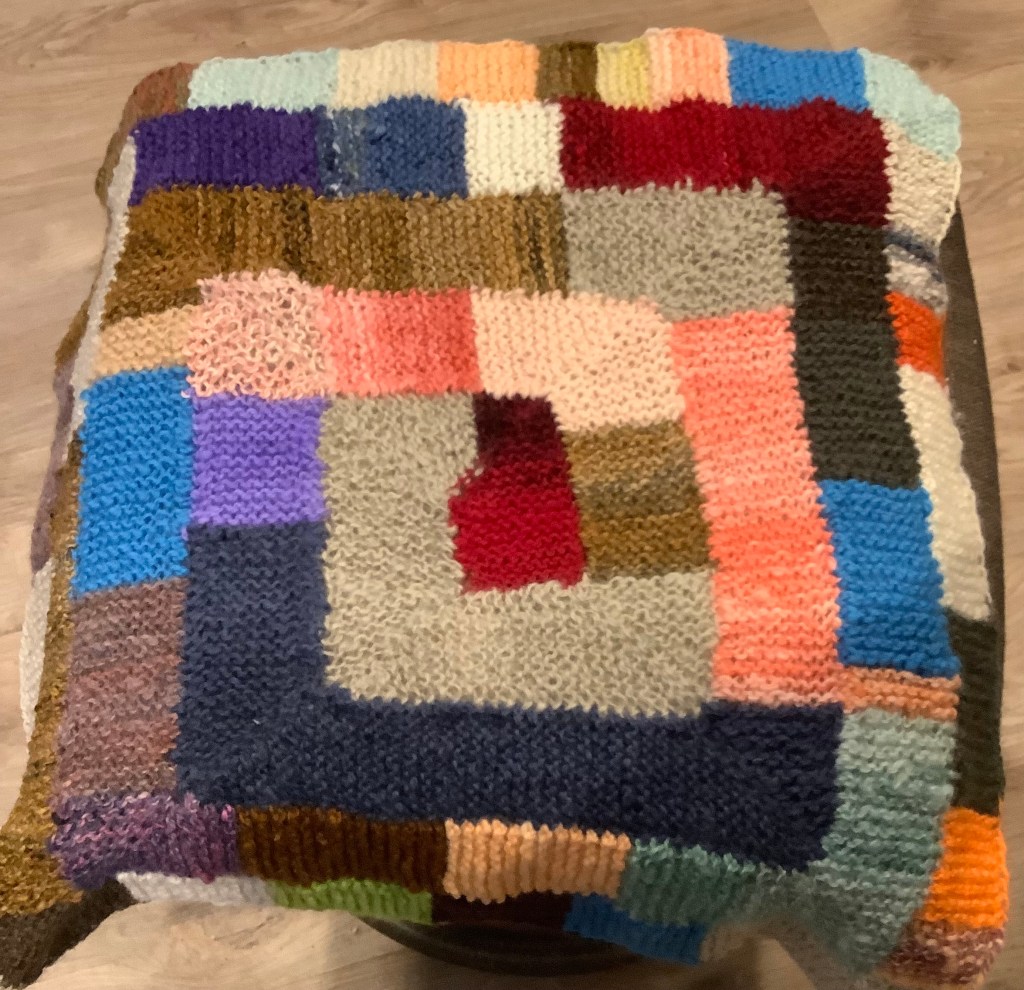
In this video I share a bit of a tutorial as I knit the 10 row blanket – adding in a new colour/section.

What does this project mean to me? While I knit, I meditate. I meditate on the day, the weekly scripture. I pray for my family, friends, and community.

With so much chaos in our world today a few moments of relaxation, stillness, and prayer is just what the Doctor would order – if I had a GP that is.

Watch the recording of Facebook live:

I think I chose a especially a modular one, because it’s only 10 stitches and it’s something I can work on every day.

https://www.ravelry.com/patterns/library/ten-stitch-blanket (free on Ravelry)

While working on this blanket, I’m not finding specific emotions connected with it, possibly joy. It’s very calming to work on it. I don’t have stress or anxiety about needing to get it done or moving forward with it. It’s just coming together.

The colors I use are coming from bits and pieces that I have had spindle spun over the last few months that are in jars. And when I choose a color, the only thing I’m looking at is that it’s not the same as what is the row before. So it needs to be contrasting or complementary, but not the same. But I’m not creating a specific color pattern as I go.

Working on a modular design means I don’t have to worry about getting through, like, 200 stitches in a day or in an hour or whatever. Ten ten stitches and then 10 stitches back, so 20 stitches. It it isn’t very much. And I try to work on whatever little ball of yarn I have. I try to finish that color when I sit. But it’s not time it doesn’t hold me up whether or not I have enough time to do it. It’s the time I have intentionally decided to pick it up.

In the last week of working on this blanket, I realized that there is a message to be found here about diversity, about differences, and how things can all mesh together, that we’re all interwoven. So I believe there’s a sermon in there.

So do my colors reflect my personal journey? I don’t believe so. I’m drawn to purple, blues, pinks, but the bulk of the blanket are more neutral earth tones. So I’m not sure color plays into the emotion for me.

So the colors I choose might reflect my day. Or if I’m tired of working on neutral tones, maybe I want a splash of color in there to brighten things up. Or maybe the day’s dark because it’s raining and cloudy and foggy. And so I need something in purples or pinks, gold or yellow to lift my spirit.

I think the modular design connects with my personal journey in that small changes are helpful, that although it’s been a long road in life to get to where I am, there have been bits and pieces of my life that have come together in beautiful ways and helped me to move forward in much the same way as this blanket does, in much the same way as my faith does.

May you continue to find blessings as you walk through Lent to the celebration of Resurrection Day!

Pastor Barb aka Doll

Spinning for 100 Days: Finding Joy, Rhythm, and Mindfulness — April 2, 2025

Spinning for 100 Days: Finding Joy, Rhythm, and Mindfulness

  • Hi friends! It’s Doll from Doll Can Create.
  • Sharing my 100-day spindle spinning challenge.
  • A fun and engaging challenge with a group of us.
  • Today, I’m spinning fiber that was a Christmas gift.

The Joy of Handspun and Modular Knitting

  • Wearing a handspun, modular knit scarf (ENTRALAC pattern).
  • Made this scarf years ago—still a favorite.
  • Modular knitting is a satisfying and creative process.

Why a 100-Day Challenge?

  • Creates space to slow down and breathe.
  • Spinning is calming and meditative.
  • Establishes a routine—spindle does the work.
  • My two goals:
    1. Spin 100+ grams of fiber on a spindle.
    2. Document the journey and share my next steps.
  • Storing singles on a jar for plying later.

The Rhythm of Spinning

  • Currently on Day 7 of 100.
  • Challenge ends as Tour de Fleece begins.
  • Tour de Fleece → switch to wheel spinning.
  • Spinning is part of my daily routine (morning or refocus time).
  • BFL blend fiber with hints of yellow—feels soft and luxurious.

Challenges and Magic in the Process

  • Breakage happens—especially while meditating.
  • Accidental reverse spinning weakens the twist.
  • Drop spindle really does drop sometimes!
  • Spinning is a sensory experience:
    • Feel the fiber.
    • Watch the spindle spin.
    • Listen to the soft whir.
  • Connects to mindfulness, prayer, and meditation.

My Favorite Spindles

  • Lightweight spindle by Nick (cherished piece).
  • Heavier spindle with a moose design (great for blending/plying).
  • Hand-painted spindle by Annie May (2004, found on eBay)
    • Heavier, good for beginners.
    • Marked an inch for wraps-per-inch checks.
    • My first spindle

The Satisfaction of Handmade Yarn

  • Spinning takes time but is deeply rewarding.
  • Even imperfect yarn (thick, thin, uneven) is beautiful.
  • Handmade yarn is art—you create something unique.

Join Me on This Journey

  • Follow along with my 100-day challenge!
  • Share your spinning progress if you’re joining.
  • More spinning conversations and tutorials coming soon.
  • Whatever you’re creating—be proud of it!
  • You are not alone—I’m cheering you on!

Be blessed.

Doll from Doll Can Create

How to Ply Yarn with a Spindle: My Simple Method — March 29, 2025

How to Ply Yarn with a Spindle: My Simple Method

Hi friends! Welcome to this tutorial where I share my personal method of plying yarn from a spindle. While there are many techniques out there, this is the one that works best for me, and I hope it helps you too. (this is not a word for word transcript)


Getting Started

Before we begin, here’s what you’ll need:

  • Your favorite spindle (or one of them, if you’re like me and have several!)
  • A small amount of spun singles
  • Your hands—no fancy tools required!

This method works best with a fiber that has some grip to it. Today, I’m using a beautiful fiber from Germany that’s naturally grabby, making for a warm and fuzzy finished yarn.


Step-by-Step Plying Process

1. Preparing the Singles

  • Remove the spun singles from your spindle.
  • Wrap the singles around your hand by first looping it around a finger and then wrapping it around your open hand.
  • Once fully wound, slide the loops down onto your wrist, creating a bracelet of yarn.

2. Setting Up for Plying

  • Find the two ends: the one from the inside of the bracelet and the outermost strand.
  • Make a slipknot with these two ends and attach them to your spindle.
  • Start spinning in the opposite direction from how you originally spun the singles.

3. Plying the Yarn

  • Hold the two strands together and let the twist distribute evenly as you spin.
  • If needed, gently guide the twist so that the yarn plies consistently.
  • Wind the newly plied yarn onto your spindle and repeat until all singles have been plied.

Finishing the Yarn

1. Making a Skein

  • Once all the yarn is plied, remove it from the spindle.
  • If you don’t have a niddy noddy, use the old-fashioned elbow method: wrap the yarn around your forearm to measure out a small skein.

2. Setting the Twist

  • If your yarn has extra twist, give it a quick flick or a gentle shake to distribute it evenly.
  • Soak the yarn in lukewarm water for about 20 minutes to set the twist.
  • Squeeze out excess water and hang it to dry.

Tips & Encouragement

  • If you’re new to spinning, don’t stress about perfection! It’s all about practice and enjoying the process.
  • Your yarn’s characteristics (twist, thickness, and texture) will determine its best use. Sometimes, the fiber itself will tell you what it wants to be.
  • Spinning can be addictive, and it’s easy to fall down the fiber arts rabbit hole! Enjoy the journey and explore different tools and techniques at your own pace.

Join the Spinning Community!

Are you taking part in a spinning challenge? I’m currently spindling for 100 days, leading up to the Tour de Fleece! Whether you’re just beginning or have been spinning for years, I’d love to hear from you.

Leave a comment below: Are you new to spindle plying? What projects are you working on? Need any extra help? Let me know!

If you found this tutorial helpful, consider subscribing to my channel or blog for more fiber arts content. Let’s grow together—my goal is to reach 200 subscribers, and I’d love for you to be part of that journey!

Happy spinning, and may your yarn bring joy to your hands and heart!

Until next time,

Doll from Doll Can Create

(Like, share, and subscribe to help support the channel and blog!)

What’s in your tool kit? — March 24, 2025

What’s in your tool kit?

Finding Calm: How Spinning & Knitting Help My Anxiety

When life feels overwhelming, I reach for my fiber. The rhythm, the movement, the texture—these are the things that bring me back to myself. Spinning and knitting have become more than just hobbies for me; they are lifelines, gentle anchors that steady me when my thoughts start to spiral.

I can always tell when my anxiety is creeping in. It starts with staying up too late, doom-scrolling through news headlines, or lying in bed as my mind races through worries—especially about my family. My heart beats faster, and suddenly, the world feels a little too big, a little too out of control. I need something steady to hold onto.

That’s when I sit down at my spinning wheel. I place my foot on the treadle, letting the motion slow my thoughts. My hands draft the fibre, watching as it twists into yarn, transforming from something loose and chaotic into something whole. Also picking up my spindle and a small amount of floof works well. It’s a small act of control in a world that often feels uncontrollable. The wheel hums, the fibre moves through my fingers, and with each turn, I feel a little more grounded.

Knitting offers me the same comfort. The repetitive motion of each stitch feels like breathing—it moves in, it moves out. I don’t have to think too hard; I just follow the rhythm, letting my hands lead the way. Each row is a prayer, each stitch a step toward calm. There’s something about soft wool, warm colors, and familiar patterns that soothes me when words fail.

Over time, I’ve learned that my anxiety doesn’t just disappear, but I can meet it with tools—tools that bring me back to the present, that remind me I’m okay. A spindle, a pair of needles, a skein of wool. Simple things, but powerful in their quiet way.

Anxiety still comes, but now I know I’m not powerless against it. I have my fiber. I have my stitches. I have my breath and I have my faith.

What helps you find calm when life feels overwhelming? Maybe it’s fibre, or maybe it’s something else. But I think we all need a thread to hold onto.

Till next time,

Doll

5 Must-Have Items to Start Spinning with a Spindle — March 17, 2025

5 Must-Have Items to Start Spinning with a Spindle

Welcome! If you’re new to spinning, this post is for you. I’ll be sharing five essential items that will help you get started. Spinning is an ancient craft, one that predates the spinning wheel itself. Before the wheel, people used a simple yet effective tool: the spindle. Let’s dive into what you need to begin your own spinning journey.

1. A Spindle

When I first started spinning, I was looking for an affordable way to make 100% wool socks. The yarn available in my area was mostly plain white or brown, so someone suggested that I try spinning my own. That’s when I discovered the drop spindle.

I bought my first spindle on eBay, and it came with some fiber to practice on. Over time, I’ve gathered several different spindles, each with unique characteristics:

  • DIY Spindles: My husband made one using a dowel, a round piece of wood, and a cup hook.
  • Plastic Spindles: I have a small 3D-printed spindle that’s lightweight and easy to use.
  • Top and Bottom Whorl Spindles: Both work well; it’s all about personal preference.
  • Turkish Spindles: These allow you to create a center-pull ball as you spin.
  • Heavier Spindles: Ideal for plying and getting a leader started.

The key is finding a spindle that spins smoothly and suits your style.

2. Fiber and Fiber Preparation Tools

Once you have a spindle, you’ll need fiber! You can buy pre-washed and prepared fiber or process raw fleece yourself. If you’re preparing fiber at home, you’ll need tools to help:

  • Dog Brushes: Before I bought hand cards, I used two dog brushes to prepare fiber.
  • Hand Cards and Drum Carders: These tools help align fibers for easier spinning.
  • Combs: Useful for finer fiber preparation.

Spinning starts with good fiber prep, so having the right tools can make a big difference.

3. A Niddy Noddy

A niddy noddy is a tool that helps measure and skein your yarn. I have a handmade wooden niddy noddy that my husband crafted in 2004. I also have a 3D-printed version that is more compact and versatile.

By wrapping yarn around the niddy noddy, I can measure my yardage and prepare the yarn for setting. Whether you choose wood or plastic, this tool is incredibly helpful for any spinner.

4. Wraps Per Inch (WPI) Tool

A WPI tool helps determine the thickness of your yarn by counting how many times it wraps around a set measurement. If you don’t have a WPI gauge, a standard ruler works just as well!

Knowing your WPI helps ensure that your handspun yarn is the right weight for your project, whether you’re making socks, shawls, or sweaters.

5. A Lazy Kate or Alternative Plying Solution

If you plan to ply your yarn, a lazy kate can be very useful. While some wheels have built-in lazy kates, I’ve also used DIY solutions:

  • Handmade Lazy Kate: My husband made one using a log and dowels.
  • Plying Bracelet: When working with a single ply, I sometimes wrap it around my wrist and ply from there.

A lazy kate or an alternative plying method helps keep tension even and makes plying much easier.

Bonus: The Joy of Slow Spinning

Spinning is more than just making yarn—it’s a meditative and mindful process. Whether I’m in my rocking chair spinning, or walking outside with a spindle in hand, I find that this craft allows me to slow down and be present. Sometimes, I even use my spinning time for prayer and reflection.

There’s something deeply satisfying about creating yarn from fiber, knowing that each step of the process is part of a long-standing tradition. So if you’re just starting out, take your time, enjoy the process, and embrace the rhythm of spinning.

If you’d like to see a spindle demonstration, let me know! And don’t forget to subscribe, comment, and share your spinning journey. May you find blessings in each day. Happy spinning!

Light Cherry Sock Yarn — March 16, 2025
Dandelion Colourway: Sock yarn for offer — March 14, 2025
Rocking Chair Knit & Chat | 100-Mile Life & Lent Knitting — March 10, 2025

Rocking Chair Knit & Chat | 100-Mile Life & Lent Knitting

Have you ever wondered what I do when I’m not sitting in the rocking chair? Stay tuned! Sometimes I’m in the furnace room, carding wool. Other times, I’m at the spinning wheel, spinning wool. I spend time at the kitchen table doing my journals, and sometimes, I just settle in with a good book.

Hi friends! This is Doll from DollCanCreate, and I’m so glad you popped in today while we have our rocking chair knit and chat. I normally do this at the end of the week, but life got busy, and I fell a couple of days behind. But I know you understand that all too well! So here I am, rocking away with my beautiful purple prayer shawl—a special gift from 2013 that still brings me comfort, especially now, during Lent.

Grab your favorite beverage! Mine is almost gone, and yes, it’s coffee—of course, of course! I’m sipping it from my beautiful cup featuring Maxine Noel’s Indigenous woman design. Let’s chat about my 100 Mile Life adventure, what’s working, what’s not, and where we’re at now. It’s so easy to forget and pick up something from the store that doesn’t quite fit the 100-mile radius goal. That’s part of what we’ll talk about, along with my works in progress, some spinning, and spindling.

Lenten Knitting and Works in Progress

We are in Lent—day five, I think! I’ve been working on my blanket, praying and meditating as I knit. It’s a simple ten-row pattern, and I placed a red heart in the middle, much like a log cabin design. I’m using bits and pieces from my jar, and as it empties, I have more yarn ready to go. There’s even a bit of gold in there waiting for its turn.

I believe I linked the pattern on my blog and in my last YouTube video. Speaking of which, I’ll try to add the last video about the blanket for reference. Many of these yarns I spun myself—some merino, some local wool. That’s where I’m focusing my efforts, sourcing local fibers.

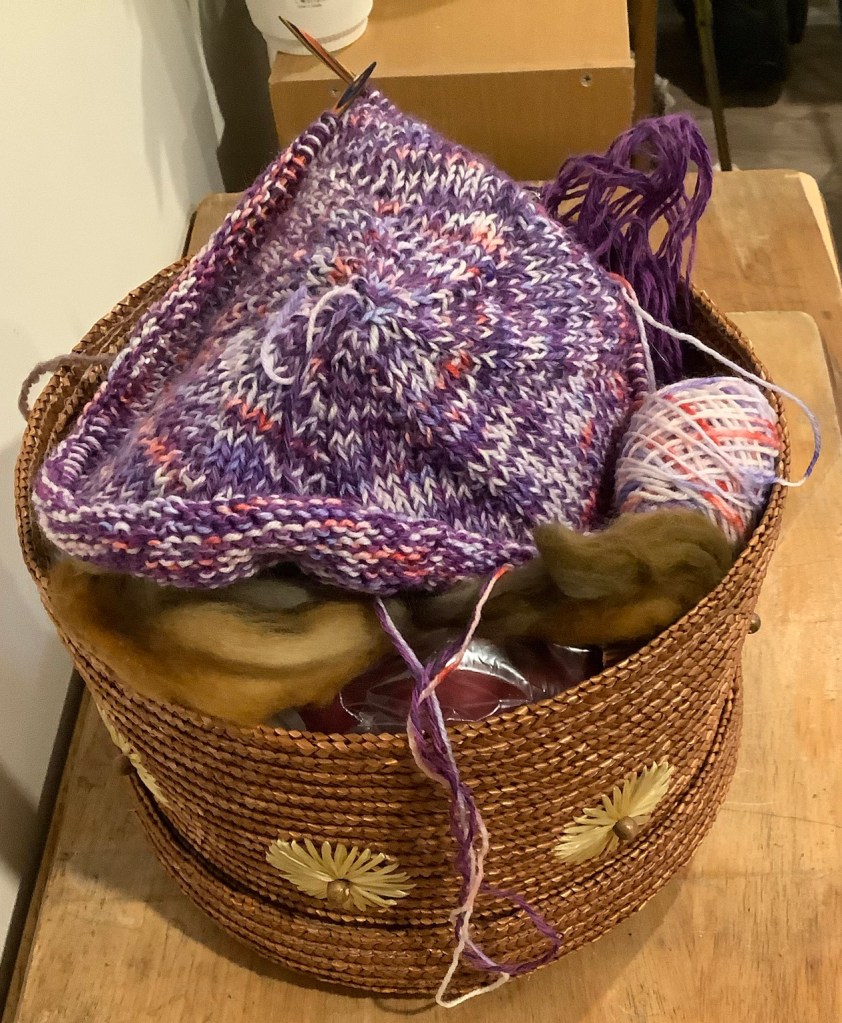
I’m also working on my first sock for March! The pattern is Heel Toe Do Si Do by the Crazy Sock Lady. It’s such an easy, enjoyable knit. I opted for a long leg with a one-by-one twisted rib. I just finished the heel and am working on the gusset now. The colorway is dyed using food coloring, giving it beautiful shading. My goal is to finish these by the end of March.

Spinning Adventures

I’m spinning a lovely brown fiber gifted to me by my Elfster partner in Germany. There’s quite a bit left to 1go, and I haven’t decided what I’ll make with it yet—maybe a hat? Maybe something else? I’d love to hear your thoughts!

I’m using a 3D-printed spindle with a Celtic design, one of my favorites. I bought it years ago from a shop in Kitchener, which has since moved. I miss that store! But I love my spindles and always seem to be on the lookout for new ones.

In the dye bath right now, I have sock yarn taking on a beautiful purple hue using Wilton’s Violet. This dye splits into shades of blue, pink, and purple—my absolute favorite! Once it’s ready, it will be available in my shop. Other colorways include Sunrise, Peacock, Copper, and Dusty Rose. No black or yellow at the moment, but that could change!

I’m also carding local wool and may naturally dye it once I have 100–200 grams ready. I have an acorn dye bath left, or I might try pine needles or even the lone walnut the squirrel abandoned in my driveway. Who knows what I’ll come up with?

The 100 Mile Life Update

So, what’s working? I found a produce delivery company sourcing Canadian-grown vegetables, likely from the New Market area. The box was good, though I’d love to know exactly where each item comes from. I did sneak in four bananas from Costa Rica—I still want bananas in my life!

The big news? We joined Summit Dairy! It’s out past Dundas, and as of Thursday, we’ll get milk and cream delivered weekly. Their dairy is high quality, coming directly from their herd, and delivered in glass bottles with a deposit system. I’ll set the cooler out Wednesday night for the early morning delivery. I go through about a liter of cream a week, plus milk and their delicious chocolate milk as a treat.

Meat sourcing is a work in progress. I bought Canadian meat from Walmart but need to find out where exactly it’s sourced. I plan to visit Denninger’s for local meat and their incredible liverwurst. Other options include meat processors within the 100-mile radius.

Flour was another challenge. I bought no-name flour but couldn’t confirm the exact source. Moving forward, I’ll return to Arva Flour Mills. Their flour is fantastic, and I may order in bulk to make delivery worthwhile.

Garden Dreams and Final Thoughts

As I plan my tiny garden, I’m considering shade-friendly plants. Last year’s cucumbers did well, and I might try potatoes again with better trimming. Tomatoes are unlikely due to lack of sun, but radishes and peas can go in early, which is exciting! Friends have a garden and grew zucchini and beets for me last year—maybe I can work with them again this season.

So, that’s my check-in! The 100 Mile Life is on track, more or less. The key is remembering that I don’t need to order flour and coffee from big-box stores when I have local options. Every small choice makes a difference.

If you have any questions about the 100 Mile Life, knitting, spinning, or my dyed yarns, let me know! I’d love to hear from you. Whatever you do, I hope it brings you joy and allows you to bless others.

This is Doll from DollCanCreate. You can too! Until next time, friends—bye for now!

  1. gif found on Pintrest ↩︎

Knitting a Log Cabin Blanket for Lent: A 40-Day Journey — March 4, 2025

Knitting a Log Cabin Blanket for Lent: A 40-Day Journey

The video explains all about it

Lent is a season of reflection, prayer, and preparation—a time to slow down and focus on what truly matters. This year, I’m incorporating that spirit into my knitting with a Lenten Log Cabin Blanket. Over 40 days, I’ll knit one section each day, allowing the project to grow as a visual and tangible reminder of this sacred season.

If you’re looking for a meaningful way to blend faith and fiber arts, I invite you to join me in this project!


What is a Log Cabin Blanket?

A log cabin blanket is a modular knitting technique that starts with a small center square, then builds outward by adding strips one by one. There’s no seaming—just picking up stitches and knitting in a continuous, meditative process.

It’s a perfect metaphor for Lent—layering our faith, growing in discipline, and building on a strong foundation. As each strip is added, we are reminded that faith is not built in a day but in steady, intentional steps.

The Lenten Knitting Plan: 40 Sections in 40 Days

This project is structured around daily knitting goals, making it both manageable and meaningful. Each day, I’ll add a new section to the blanket, sometimes incorporating special stitch patterns that reflect the themes of Lent.

Choosing Colors for Lent

Your color choices can add another layer of meaning:

  • Purple – The traditional color of Lent, representing repentance and reflection.
  • Earth Tones – Symbolizing simplicity and fasting.
  • A Gradient from Dark to Light – Moving from reflection to renewal as Easter approaches.

How to Get Started

Step 1: Knit the Center Square

We begin with a simple garter stitch square—the foundation of the blanket. This represents the foundation of faith and sets the stage for everything that follows.

Step 2: Adding Log Strips

Once the center square is finished, I’ll pick up stitches along one edge and knit a new strip. Each day, a new strip is added in a clockwise direction, causing the blanket to grow outward in a natural rhythm.

This daily practice of knitting a section becomes a spiritual discipline, just like prayer or fasting. It offers a chance to slow down, reflect, and be mindful.


Symbolism & Stitch Patterns for Lent

To make this project even more meaningful, I’m incorporating different stitch patterns that reflect the themes of Lent:

  • Garter stitch – Simplicity and steadfastness.
  • Moss stitch – Growth in faith.
  • Broken rib – The struggles and perseverance of the journey.
  • Cross motifs – A visible reminder of faith.
  • Lace and eyelets – Light breaking through, symbolizing renewal.

Each stitch carries significance, turning this blanket into a tapestry of devotion and reflection.


A Daily Practice for Lent

By the time Easter arrives, this blanket will be a physical representation of the season—each section carrying the prayers, thoughts, and reflections from the journey. Whether you knit in quiet prayer, meditate on scripture, or simply use this time to slow down, this project can be a deeply spiritual practice.


Join Me in This Lenten Knitting Journey!

Are you knitting a Lenten project this year? I’d love to hear about it! Let me know in the comments what colors you’re using, what reflections you’re bringing into your stitches, or if you have any special traditions that combine faith and fiber arts.

And if you want to see the progress of my Lenten Log Cabin Blanket, be sure to follow along on my [YouTube channel] (or insert social media links)!

Happy knitting, and may your Lenten journey be filled with peace and reflection.

Here’s your printable guide for the Lenten Log Cabin Blanket! (my gift to you)

Rocking chair crafting goals 2025 — March 1, 2025

Rocking chair crafting goals 2025

Hello, dear friends! It’s Doll from Doll Can Create, and I’m thrilled to have you join me today. As we usher in March, the landscape around us is in flux—snow, rain, sleet, and the promise of spring. It’s a season of renewal, and what better time to embark on a year-long journey of mindful, local crafting?

Embracing the 100-Mile Crafting Challenge

Inspired by the 100-Mile Diet, which encourages sourcing food within a 100-mile radius to promote sustainability and support local economies, I’ve decided to apply this concept to my crafting endeavors. The goal is to source fibers and materials from local farms and artisans, thereby reducing our carbon footprint and fostering a deeper connection with our community.

en.wikipedia.org

The Importance of Setting Crafting Goals

Without clear goals, it’s easy to drift from one project to another, leaving many unfinished. By setting specific objectives, we can channel our creativity more effectively and experience the satisfaction of completing meaningful projects. For instance, committing to knitting a pair of socks each month or spinning a certain amount of fiber weekly can provide structure and motivation.

zenyarngarden.com

My Current Projects and Fiber Adventures

Recently, I’ve been spinning some delightful brown fiber gifted from Germany—a blend that’s been a joy to work with. Additionally, I’ve spun yarn from local sheep, resulting in a sturdy two-ply yarn. While I haven’t decided on the final projects for these yarns, I’m contemplating various options like scarves, socks, or perhaps even a cozy sweater.

Tips for Your Crafting Journey

  1. Start Small: If you’re new to spinning or knitting, begin with manageable projects like hats or scarves. Completing these can boost your confidence and inspire you to tackle more ambitious endeavors.
  2. Keep Records: Maintaining a crafting journal can be invaluable. Documenting your projects, materials used, and techniques learned not only tracks your progress but also serves as a reference for future projects.
  3. Set Seasonal Goals: Align your projects with the seasons. Winter might be ideal for cozy accessories, while spring could inspire lightweight garments. Summer offers opportunities for natural dyeing, and fall is perfect for larger undertakings like sweaters.

Health Benefits of Knitting and Spinning

Beyond the tangible products we create, crafting offers numerous health benefits. Engaging in activities like knitting can reduce stress, enhance cognitive function, and promote relaxation. It’s a therapeutic practice that nurtures both mind and body.

Join Me on This Journey

I invite you to embark on this year of mindful local crafting. What’s the first project you’ll start this March? Where will you source your materials? Share your plans and experiences in the comments below. Together, let’s make this year one of creativity, sustainability, and community connection.

Until next time, happy crafting, and may your projects bring you joy and fulfillment.

Blessings,

Doll