Reflections on Exodus 14:10–31 and Matthew 2:13–15
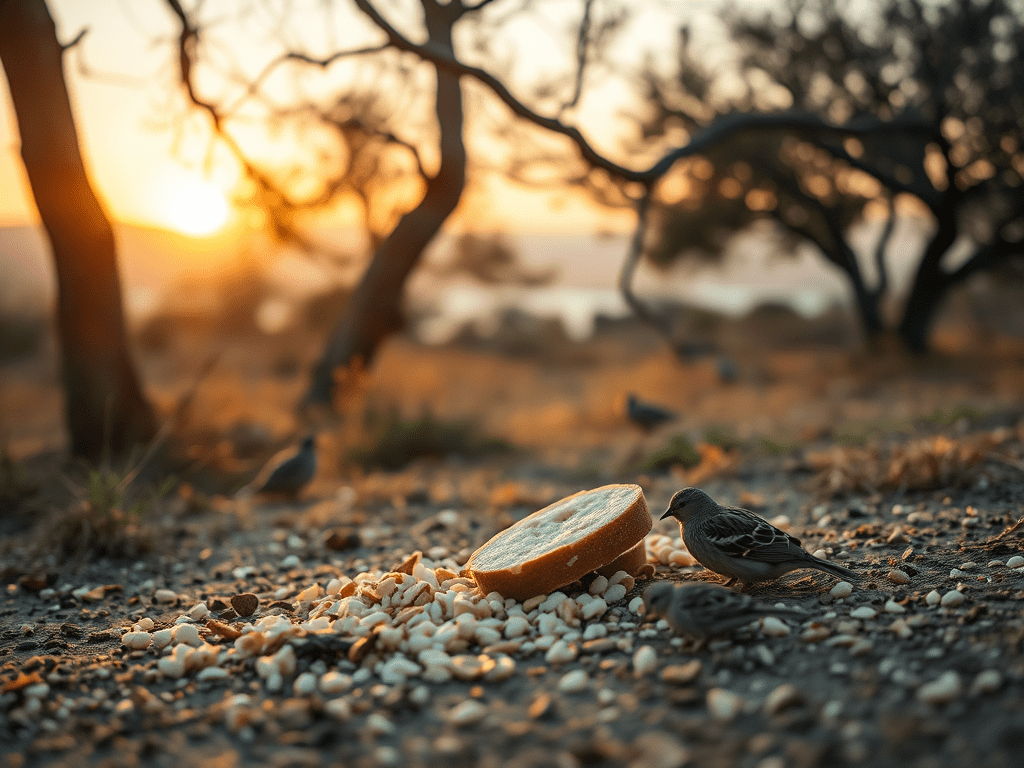
What makes you feel safe?
Perhaps it is a familiar voice, a door closing at the end of the day, or knowing that someone will answer when you call. Safety often lives in ordinary things: food in the cupboard, a welcoming place, people we can trust.
We may hardly notice these gifts until something changes.
The Israelites knew that feeling. They had left Egypt, but now Pharaoh’s army was behind them and the sea was ahead. Freedom had brought them to a place where they could see no way forward.
In Matthew’s Gospel, Joseph receives a warning that Jesus is in danger. He takes Mary and the child and leaves for Egypt. A family must leave home to find safety somewhere unfamiliar.
One journey leads out of Egypt; the other leads into it. Both begin with danger and uncertainty.
These stories remind us that our need for safety matters. Faith does not require us to ignore danger or hide our fear. Joseph responds to the warning by protecting his family. The Israelites cry out because they are frightened.
God meets them there.
At the sea, a way opens. Joseph receives direction for the next part of his family’s journey. Neither is given a complete map of everything ahead.
That is often how hope comes to us, too.
We would like to know how every problem will be resolved. We want assurance that a loved one will recover, a relationship will heal, or tomorrow will be easier. Sometimes all we can see is one small step.
A phone call. An honest conversation. An offer of help. Enough rest to begin again.
Hope can give us courage to take that step while questions remain.
The Israelites still had a wilderness journey ahead. Mary, Joseph, and Jesus still had to live far from home. Yet God’s presence accompanied them beyond the moment of escape.
And their stories ask something of us.
If we know what helps us feel safe, how might we offer some of that care to another person?
Someone may need a meal, a ride, or a patient listener. Someone new to our neighbourhood may need a welcome. Someone sitting beside us in church may be carrying a fear we cannot see.
We cannot solve every difficulty, but we can listen and ask, “What would help?”
A congregation can become a place where people find companionship and practical care. Our homes, tables, and conversations can offer that welcome as well.
This week, give thanks for someone who helps you feel safe. Then offer one act of care to someone else.
May we trust God with the next faithful step—and help our neighbours know they do not have to travel alone.
God created the heavens and the earth. God filled the world with life and entrusted humanity with the responsibility of caring for creation. Yet, as the generations passed, people moved farther and farther away from God. Violence spread. Relationships were broken. The goodness of creation became difficult to see beneath the damage humanity had caused.
Genesis tells us that God was grieved.
Then came the flood. Noah, his household and representatives of every living creature entered the ark. The rains fell, the waters rose and the world as they knew it disappeared.
It is often presented as a colourful children’s story filled with animals marching two by two. Yet this is not an easy or cheerful story. It is a story of violence, destruction and deep sorrow. Even God regrets what has happened.
But destruction is not the final word.
When the waters recede and Noah steps onto dry ground, God makes a covenant—not only with Noah, but with Noah’s descendants and every living creature upon the earth.
God places a rainbow in the sky as the sign of that promise.
More Than a Contract
We sometimes use the words contract and covenant as though they mean the same thing. But a covenant goes deeper.
A contract says, “I will do this if you do that.”
A covenant says, “I am binding myself to you. I will remain faithful.”
God’s covenant with Noah does not depend upon humanity suddenly becoming perfect. In fact, God already knows the human heart. Nevertheless, God chooses relationship. God promises to remain connected to humanity and to the whole created world.
The rainbow declares that God has not given up on creation.
What Do We See in a Rainbow?
When we see a rainbow, what comes to mind?
Perhaps we think first about the science—the way sunlight meets drops of water and separates into colour.
Perhaps we simply stop to admire its beauty.
Or perhaps we remember God’s promise.
We do not have to choose between these responses. Science can help us understand how a rainbow appears, while faith helps us receive what it signifies. Its colours stretch across the sky as a reminder that judgment is not God’s final word.
Mercy is still possible.
Relationship can be restored.
Life can begin again.
Signs That Help Us Remember
The rainbow is not the only sign that draws us back to God’s promises.
Jesus tells us, “Where two or three are gathered in my name, I am there among them.”
Whenever we gather as a family of faith, we become another sign of God’s covenant. We do not gather because we have been perfectly faithful. We gather because God is faithful.
When we break bread together, we remember the new covenant revealed in Christ.
We remember Jesus’ life and love. We remember his suffering and imagine the scars upon his hands and feet. We remember his promise never to leave or forsake us.
The rainbow turns our eyes towards God’s promise to creation.
The bread turns our hearts towards God’s promise revealed in Christ.
Both signs tell us the same truth: God has not abandoned us.
Becoming Signs of the Covenant
God’s covenant is not merely something we admire. It shapes the way we live.
If God remains faithful, we are called to practise faithfulness.
If God chooses mercy, we are called to offer mercy.
If God’s promise includes every living creature, we are called to care for the earth and all who share it.
This week, watch for signs of God’s faithfulness—a rainbow, shared bread, a gathering of friends or an unexpected moment of grace.
Then become a sign of God’s covenant for someone else.
Keep a promise. Offer forgiveness. Care for creation. Sit with someone who feels forgotten. Remind another person that they are not alone.
There is always more to the story.
The rainbow is more than something beautiful after a storm. The bread is more than food placed upon a table. They are signs that call us back to the foundation of our faith:
God remembers. God remains. God’s promises are true.
And because God keeps covenant with us, we can become people of promise for one another.
This Week’s Invitation
Watch for signs of God’s faithfulness—a rainbow, shared bread, a gathering of friends or an unexpected moment of grace. Then become a sign of God’s covenant for someone else: keep a promise, offer mercy, care for creation or remind someone that they are not alone.
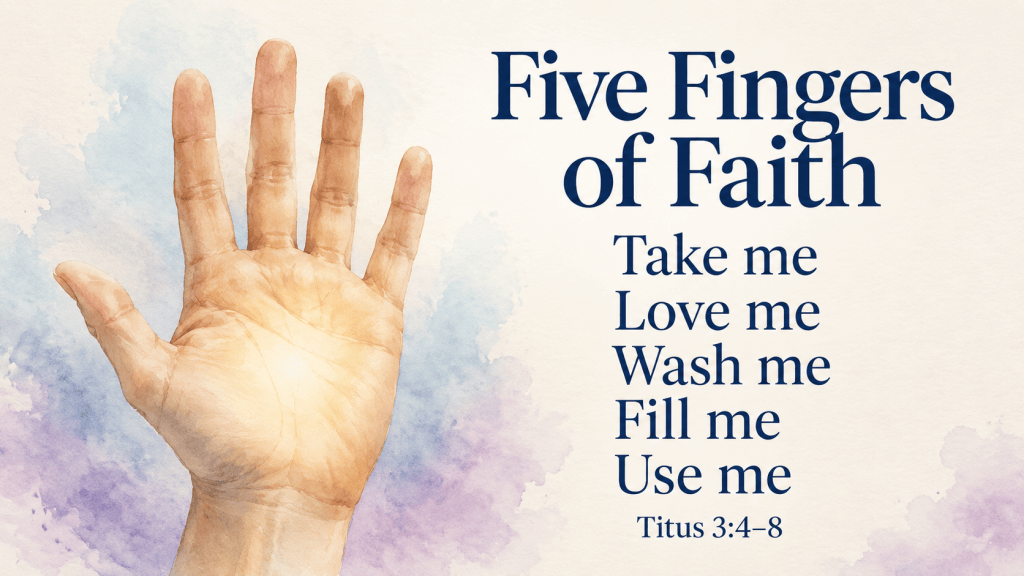
Think about everything that hand has done. It has worked, created, cooked, carried burdens and held the hands of people you love. It may have written notes, played music, tended a garden, knitted, repaired something or rested gently on someone’s shoulder when words were not enough.
Our hands carry part of our story. They can also help us remember a simple prayer:
Take me. Love me. Wash me. Fill me. Use me.
Five fingers. Five prayers. One life placed in the hands of God.
Take Me and Love Me
Titus 3:4–8 begins with the goodness and loving kindness of God. It reminds us that we are saved not because we have done everything right, but because God is merciful.
Our prayer begins with “Take me.”
Take me as I am, Lord—with my gifts and questions, my hope and weariness, my faith and uncertainty. God does not wait for a polished, finished version of us. God meets us here and begins the patient work of shaping who we are becoming.
Then we pray, “Love me.”
This is not an attempt to persuade a reluctant God to care. It is an opening of our hearts to the love God is already giving.
We can become so accustomed to working, helping and meeting expectations that we forget how to receive. Yet a faithful life cannot be lived entirely at the pace of urgency. We need moments when we stop striving and remember that we are loved before we accomplish anything.
Wash Me and Fill Me
Titus speaks of rebirth and renewal through the Holy Spirit. God receives us as we are, but grace does not leave us unchanged.
“Wash me” means bringing our failures, regrets, resentments and wounded places into God’s mercy.
Forgiveness does not mean pretending that harm never happened or allowing harmful behaviour to continue. It means refusing to let yesterday’s pain control tomorrow. God’s grace washes away what keeps us trapped and opens the possibility of a new beginning.
Then we pray, “Fill me.”
Fill me with patience when I am frustrated. Fill me with courage when I am afraid. Fill me with compassion when I am tempted to judge. Fill me with hope when the way ahead is uncertain.
The Spirit also fills the ordinary gifts already present in our lives. Baking can become hospitality. Music can become prayer. A telephone call can become pastoral care. Patient listening can become a place of healing. A handmade gift can become encouragement.
When offered in love, ordinary gifts become ministry.
Use Me
Titus encourages those who trust in God to devote themselves to good works. Notice that good works come after grace.
We do not serve so God will love us. We serve because God already loves us.
“Use me” means making ourselves available to God.
Use my voice to encourage. Use my ears to listen. Use my table to welcome. Use my gifts to strengthen the community. Use my hands to make Christ’s love visible.
Being used by God does not always require something dramatic. Sometimes it means noticing who is missing, who is sitting alone or who is carrying a burden. It may mean making a telephone call, delivering a meal, offering a ride or listening without rushing to provide an answer.
It may mean doing justice, loving kindness and walking humbly with God.
One Open Hand
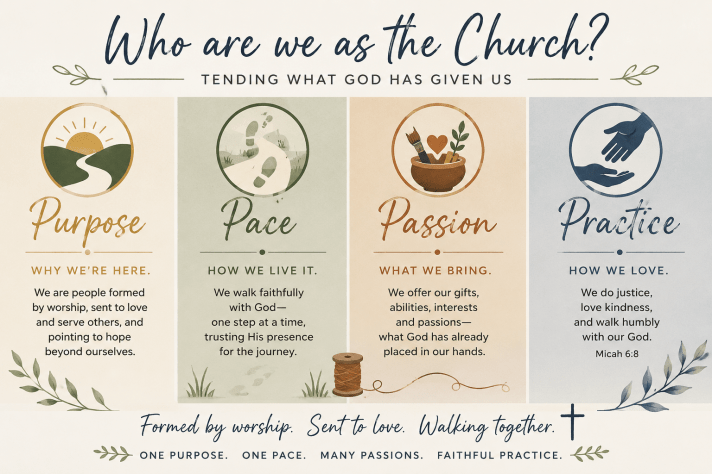
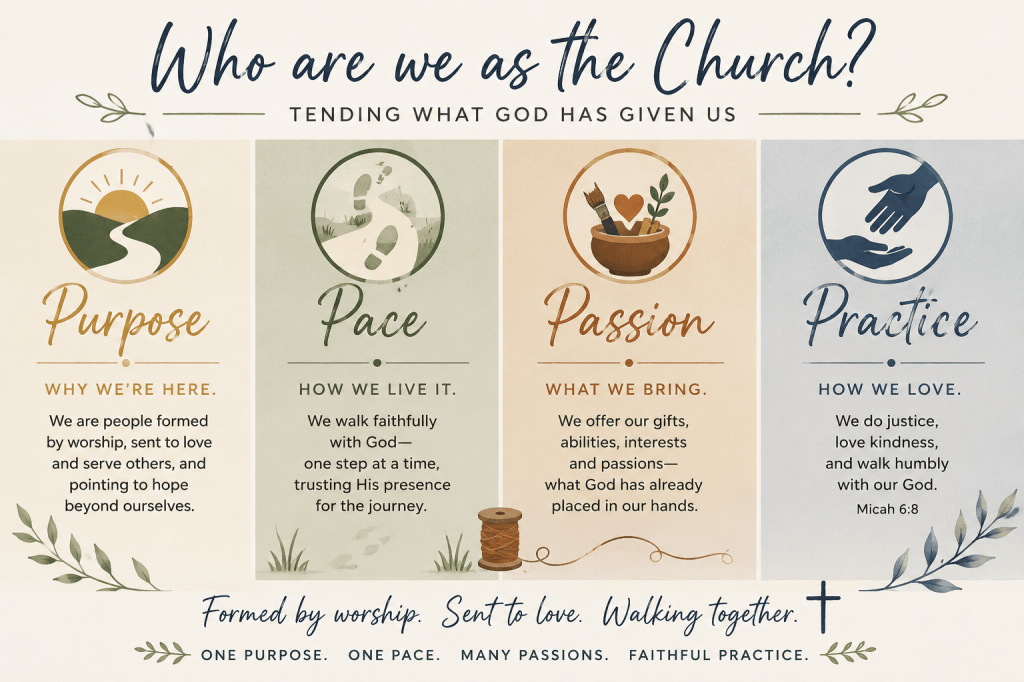
Throughout August, we explored our Purpose, Pace, Passion and Practice as people of faith.
Now those themes can be held together in one open hand:
Take me—my purpose begins in belonging to God.
Love me—I can rest and grow at a faithful pace.
Wash me—I need mercy, forgiveness and a new beginning.
Fill me—the Spirit awakens my gifts and passions.
Use me—faith becomes real when love is put into practice.
This is not only an individual prayer. It is also a prayer for the Church:
Take us, Lord. Love us. Wash us. Fill us. Use us.
Take our congregations and remind us why we are here. Love us through seasons of growth and uncertainty. Wash away old resentments and divisions. Fill us with compassion, courage and hope. Use us so our communities experience the welcome and love of Christ through us.
The Church is a people held in the hands of God, offering our hands in service to the world.
This week, begin each morning by opening your hand and praying:
Take me. Love me. Wash me. Fill me. Use me.
Then watch for the person God places in your path, the gift God invites you to offer and the opportunity to practise kindness.
Place your life in God’s hands—and allow God to place Christ’s love in yours.
Rev. Pastor Barb aka Grannie Doll
Your Invitation This Week
Begin each morning by opening your hand and praying:
Take me. Love me. Wash me. Fill me. Use me.
Then choose one simple way to put that prayer into practice. Encourage someone, listen patiently, share what you have or offer a helping hand.
At the end of the day, ask yourself:
Where did I receive God’s love today—and where did I pass it on?
Part of my drive to keep things moving forward—and to feel productive—is to find something else to do whenever I hit a roadblock.
Do you ever hit those roadblocks?
Watch to see how I managed my old ipad.
Earlier this week, I was working on my sermon and found myself completely stuck. I kept asking:
Where am I going with this? Will it connect with anyone? Where will people see themselves in this story?
Those are important questions because a sermon is more than words on a page. It needs to meet us somewhere in the middle of our real lives. It needs to help us recognize where God is already at work.
I think I finally figured it out—but you’ll have to join me on Sunday to hear where the story led!
Over the past few weeks, we’ve been exploring three important parts of our life together as the church:
Our purpose as the church
The pace at which we live and grow spiritually
The passions and gifts God has placed within us
This Sunday, we’ll focus on that third word: passion.
What moves us? What brings us joy? What abilities, interests and experiences do we have that God might use?
We’ll explore this through three simple movements.
Recognize the Gift
Sometimes we overlook our gifts because they seem too ordinary. We may not think of baking, gardening, knitting, repairing things, organizing, listening or offering hospitality as spiritual gifts.
Yet God often begins with what is already in our hands.
Recognizing our gifts means paying attention to what gives us joy, what comes naturally to us and what others have noticed within us.
Offer the Gift
A gift becomes even more meaningful when it is shared.
That may mean offering something we have made, but it can also mean giving our time, our attention or our presence. Sometimes the most important gift we offer is simply ourselves—the willingness to sit beside someone, listen to their story or help carry a burden.
Connect the Gift
Finally, we’ll consider how our individual gifts connect us with the wider life and work of the church.
We don’t all have the same abilities, interests or passions—and that is a wonderful thing. When each person brings what they have, our separate gifts become part of something larger. Together, they help the church worship, serve, care and reach beyond its walls.
If you’d like to hear how it all comes together, I invite you to join us this Sunday:
9:30 a.m. at Linden Park United Community Church on Hamilton Mountain 11:00 a.m. at Binbrook United Church
The 9:30 service will also be livestreamed on Facebook. I hope to share it on YouTube afterward as well—provided my iPad agrees to cooperate!
For now, I still have today and tomorrow to finish preparing for Sunday. And perhaps that is the lesson within the lesson: when we reach a roadblock, we don’t always need to push harder. Sometimes we need to pause, do something else and allow the next step to reveal itself.
Whatever gift or passion you have to offer the world, I hope you feel free to share it. It may seem small or ordinary to you, but in God’s hands, even the simplest gift can become part of something beautiful.
Have a wonderful day, and God bless.
From Pastor Barb to you—bye for now.
And for those who follow me on YouTube, I’m Doll from Doll Can Create.
n Paul’s letter to the Corinthians, we find a reminder that feels especially timely for us today. The people of Corinth were arguing about which leader they followed—some claimed Paul, others Apollos. Their attention was divided, and Paul gently brought them back to center:
“What, after all, is Apollos? And what is Paul? Only servants, through whom you came to believe—as the Lord has assigned to each his task. I planted the seed, Apollos watered it, but God has been making it grow.”
Paul isn’t diminishing the value of human effort. He’s showing us that every act of service is sacred when rooted in God’s purpose. We each have a role—some plant, some water—but it is God who makes things grow.
We Are Co-Workers in God’s Field
How freeing it is to remember that we don’t carry the full weight of outcomes! We are workers together with God, not competitors for His attention. We are teaching a Sunday school class, knitting for charity, or visiting a neighbour. Praying quietly at home, we are each tending a small part of God’s garden. Each action contributes to His creation.
Our job is to show up faithfully. God’s job is to bring the growth.
Christ Is the Only Foundation
Paul goes on to say:
“No one can lay any foundation other than the one already laid, which is Jesus Christ.”
It’s tempting to build our faith on people, traditions, or good works—but those things shift and crumble. Christ alone is the steady ground beneath our feet. If we build on Him, what we create will endure. Our words, our acts of love, and our ministries will stand. They will stay strong even when life’s fires test them.
What Are We Building With?
Paul writes that the quality of each person’s work will be revealed. Some build with gold and precious stones—acts of love, patience, kindness, and faithfulness. Others build with straw—pride, comparison, or self-interest.
So we ask ourselves: What materials am I using in my life of faith? Are my choices rooted in the eternal or the temporary?
Every day is another chance to build with care, to strengthen what lasts, and to remember who holds the blueprint.
A Prayer to Close
Gracious and Loving God, Thank You for reminding us that You are our foundation. Teach us to build with care, to serve with humility, and to love with steadfast hearts. May our lives reflect Your grace and our works stand firm in Christ. Amen.
Final Reflection
As you go through your week, look around your “field.” Who might need a seed of kindness? Where can you pour a little water of encouragement? Trust that God will take it from there—and make something beautiful grow. 🌿
If this reflection spoke to you, share it with a friend who needs encouragement. If you’d like printable Bible study pages for your own quiet time, you can join my Sunday Journal Circle. It’s a gentle space for faith. It’s a place for reflection and community.
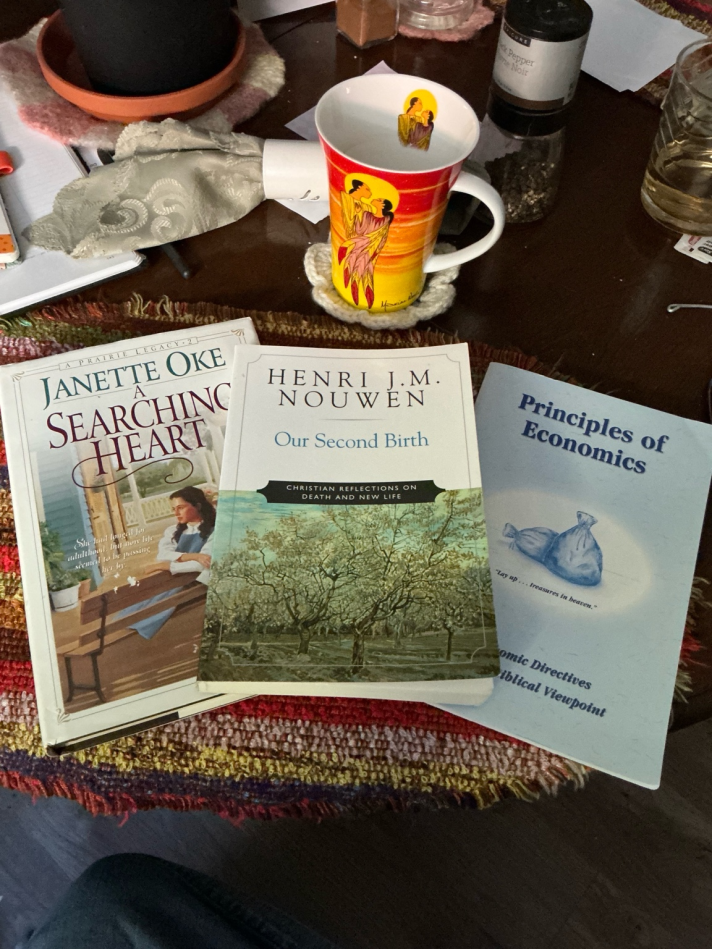
It’s reading week, and I’m beginning with three very different books — each chosen with intention and heart.
My cozy reading table this week — a balance of study, reflection, and rest.
The first is The Principles of Economics: Economic Directives from a Biblical Viewpoint. It’s helping me think through budgeting and stewardship in a faith-centered way. The second is Our Christian Reflections on Death and New Life by Henri Nouwen. This book draws me deeper into spiritual reflection. It also encourages renewal. And finally, I’ve chosen A Searching Heart by Janet Oke. This novel offers the comfort of a familiar Christian voice. It also gives the simple joy of story.
In this trio, I’ve found a balance: one for the mind, one for the soul, and one for rest. Economics, theology, and fiction — all working together to nourish different parts of my life.
Learning and Reflection
My goal this week is simple: to learn. I’ll be reading The Principles of Economics as a Bible study. Each section includes scripture, discussion questions, and reflection prompts. I’m already imagining how this can one day form the basis of a small group study or online discussion series.
The scripture on the opening page reads, “Lay up your treasures in heaven.” That alone sets the tone. Although this book was printed back in 2013 by the Eastern Mennonite Press in Pennsylvania, truth doesn’t age. The principles of faith and finance stay as relevant today as ever.
When I finish, I plan to write a short reflection. I want to capture what I’ve learned. I will also consider how it can shape my ministry.
Theological Growth and Spiritual Nourishment
Henri Nouwen’s Reflections on Death and New Life is where I’ll spend time in theological reflection. I want to see what stands out as I walk through it. I want to understand how it speaks to change, loss, and renewal in my own life. I am also curious about its impact on my ministry.
This isn’t just academic reading. It’s a conversation between faith and life — between God’s promises and my daily realities. It’s also a prompt read as we move toward Advent, a season that holds both waiting and wonder.
Rest, Relaxation, and Renewal
And then there’s A Searching Heart — my “just for me” book. I don’t always make time for fiction. Still, Janet Oke’s gentle storytelling reminds me to slow down. It encourages me to breathe and rest in the beauty of faith-filled simplicity. Sometimes, we read not to learn, but to be restored.
Why Ministers Need Reading Weeks
In ministry, we’re encouraged to take time each year for continuing education. We have three weeks set apart for growth, learning, and renewal. This reading week is part of that rhythm for me. It’s also a chance to plan ahead. It’s a time to think about Advent themes. It allows me to refill the spiritual well that ministry can so quickly drain.
Not every week of growth has to involve travel or coursework. Sometimes, it looks like a quiet corner and a warm mug. It also includes a stack of books that stretch your heart and mind.
I call that self-ministry. It is a week where you nourish your body and soul. Do this in ways that have been neglected in the busy seasons of service.
Closing Reflection
So, this week I’ll be learning, reflecting, and resting — all at once. I’ll let these books speak to different parts of my life. I trust that in their pages I’ll find wisdom. I’ll also find challenge and peace.
As you step into your own rhythm this week, it is time to pick up a book. Choose one that speaks to your soul. Whether it’s something practical, something prayerful, or simply a story that brings rest — make space for learning. Allow time for reflection and renewal.
I’d love to hear what you’re reading this season. Share your favorite faith-filled or comforting book in the comments below. Let’s inspire one another to keep growing in wisdom and grace.
“Lay up for yourselves treasures in heaven…” — Matthew 6:20
With a cozy mug in hand and gratitude in my heart, — Pastor Barb aka Grannie Doll 🤍 “Creating calm, crafting faith, and cherishing the simple life.”
Have you ever had one of those days when the worries of tomorrow press in so hard? It can be difficult to see the blessings of today. Bills stack up, cupboards look bare, and your heart begins to grumble. You’re not alone—God’s people in Exodus 16 felt the same way.
The Israelites had just experienced the miracle of crossing the Red Sea. They found themselves wandering in the wilderness with empty stomachs. Their hearts were fearful. They complained, longing for the food they remembered in Egypt. Isn’t it striking how quickly we forget God’s faithfulness when we are uncomfortable?
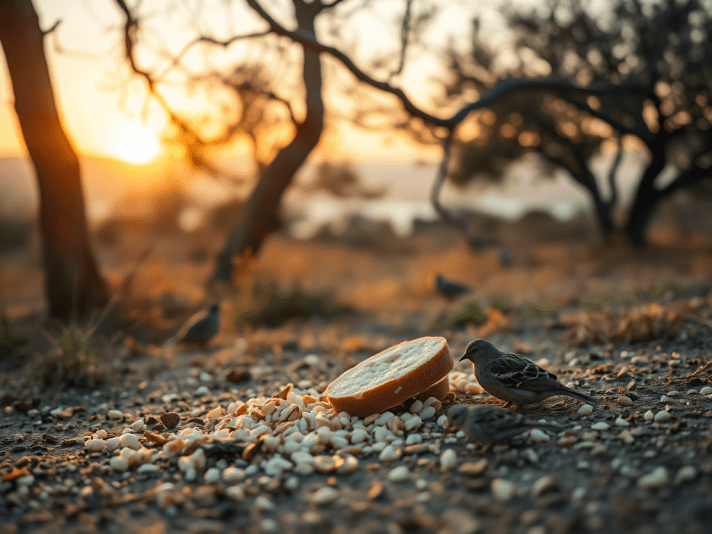
And yet, God answered not with anger, but with mercy. Each morning, bread from heaven—manna—appeared on the ground, and in the evening quail filled their camp. Enough for the day. Not enough to hoard, but enough to teach them to trust.
Lessons in God’s Daily Provision
1. Complaining clouds gratitude. Israel looked backward instead of upward. When we complain, we miss the evidence of God’s hand right in front of us.
2. God provides for today. The manna was daily bread. Just as His mercies are new every morning, His provision comes in daily trust.
3. His gifts are sufficient. No one gathered too much or too little. Each had exactly what was needed. That truth still holds: God’s grace fits your life perfectly.
From Manna to Christ
Centuries later, Jesus declared, “I am the Bread of Life” (John 6:35). The manna in the wilderness was just a glimpse of the greater gift—Christ Himself, who sustains us in every season. When we feel empty, He fills. When tomorrow looks uncertain, He reminds us He is already there.
A Thought to Carry
Today, pause and notice the manna God has placed before you—the mercies you might have overlooked. Breathe in gratitude. Trust that tomorrow’s bread will come, because the same God who fed Israel feeds your soul.
“The steadfast love of the Lord never ceases; his mercies never come to an end; they are new every morning; great is your faithfulness.” — Lamentations 3:22–23
✨ Let’s Share Together Have you noticed “manna moments” in your life lately? These are little daily provisions. They remind you that God is near. I’d love to hear from you in the comments. If this reflection spoke to your heart, please consider subscribing. This way, we can walk this journey of faith together week by week.
When we open the Bible, we encounter its very first words. They are: “In the beginning, God created the heavens and the earth.” (Genesis 1:1).
Those words are more than history. They are a reminder for our lives today. The creation story isn’t just about what happened long ago—it speaks to the rhythms of life we still experience.
God Brings Order Out of Chaos
Genesis reveals the initial state of the earth as “formless and empty.” God spoke light into the darkness. He shaped the world with care.
Sometimes our own lives feel cluttered and chaotic. Doctor visits pile up, family concerns weigh heavy, and the news feels overwhelming. Just like we tidy a messy kitchen counter to regain peace, God organizes the scattered areas of our hearts.
God Calls Creation Good
After each act of creation, God looked and said: “It is good.”
We can still see that goodness around us every day. It’s in a cup of tea on the porch at sunset. It’s the sound of birds in the morning. It’s also in the taste of fresh bread. These small gifts whisper that God’s goodness is here, now—not just in the past.
We Are Made in God’s Image
God created humanity in His own image. That means we carry His likeness, just as children carry family resemblances.
Even as years pass and our bodies change, His image in us doesn’t fade. We show God in our kindness, in the way we encourage one another, and in our capacity to love.
God Gives the Gift of Rest
After creating the world, God rested—not because He was tired, but because rest is holy.
We often forget that slowing down is part of God’s design. A nap in a favorite chair, a quiet afternoon walk, or simply sitting still with God—these moments aren’t wasted. They are Sabbath moments, sacred reminders that God holds the world even when we stop.
Living in God’s Rhythm
The first chapter of Genesis teaches us a rhythm for life:
God brings order from chaos.
God calls creation good.
God made us in His image.
God blesses us with rest.
When life feels unsettled, we can cling to the promise of those first words: “In the beginning, God.” The same God who created light and life is still at work in us today.
✨ Reflection Question: Where have you seen God’s goodness in your everyday life this week?
🙏 Prayer: Creator God, thank You for Your light, Your goodness, and Your gift of rest. Help me to see Your image in myself and others. Guide me to live each day in the rhythm of Your love. Amen.
At the end of a meal, I sometimes smile when a fortune cookie arrives at the table. It looks ordinary, a folded little cookie, but what makes it fun is the slip of paper inside. You never know quite what it will say. Sometimes it’s silly, sometimes puzzling, and sometimes it’s just the word you needed to hear.
In many ways, life is like a fortune cookie. On the outside, our days can look plain and ordinary—wake up, work, chores, meals, repeat. But tucked inside each day are hidden messages of grace, hope, and wisdom from God.
Matthew 6:25–34
1. Do Not Worry About Daily Needs
Jesus teaches that life is more than food, drink, or clothing. God provides for the birds of the air. He also provides for the flowers of the field. We can trust that He will also care for us. Worry doesn’t add to our lives; instead, it drains us.
2. Trust God’s Provision
The passage emphasizes God’s care and provision. If He clothes the grass of the field with such beauty, He will certainly deliver for His children. This calls us to release anxiety and grow in faith that God knows what we need before we even ask.
3. Seek God’s Kingdom First
The conclusion is the central teaching. It states: “Seek first the kingdom of God and His righteousness.” All these things will be given to you as well. Do not be consumed by tomorrow’s uncertainties. We are called to live faithfully in the present. Prioritize God’s will with confidence. Trust that He will supply what is truly needed.
Let’s look at the fortune cookie. When we seek God first – what fortune is there waiting for us?
1. Ordinary Outside, Extraordinary Inside
A fortune cookie by itself isn’t much. But inside, there’s a message. Life is the same. God takes the ordinary—our routines, our to-do lists, our quiet moments—and hides within them extraordinary reminders of His love. The prophet Jeremiah shares insights. He says, “For I know the plans I have for you, plans to give you a hope and a future.”
2. Unexpected Messages
Just like a fortune cookie, life’s messages often surprise us. We never know what the next day will bring—joys, struggles, opportunities, or challenges. But Jesus tells us in Matthew 6 not to worry about tomorrow, because God provides for us today. Even in the unexpected, God’s voice whispers: “Fear not, I am with you.”
3. Sweet Cookie, Honest Message
The cookie is sweet, but the message inside isn’t always easy. Some are comforting; others are challenging. The same is true of God’s Word. We love verses that remind us of God’s care. We also need the ones that challenge us: “Love your enemies. Forgive those who hurt you.” Both the comfort and the challenge are gifts.
4. We Don’t Write the Message
We don’t write our own fortunes—someone else does. And we don’t write the ultimate story of our lives—God does. That can be humbling, but it’s also freeing. Even when we don’t understand what’s unfolding, we can trust that God’s message is good. “All things work together for good for those who love God.”
5. Messages Are Meant to Be Shared
When someone opens a fortune cookie, the first thing they usually do is share it around the table. That’s our call, too. God’s message of love isn’t meant to be folded up and kept inside. It’s meant to be shared—in words, in actions, in how we live each day.
The Sweetest Message of All
So yes, life is like a fortune cookie. It’s ordinary on the outside and surprising on the inside. Sometimes it’s sweet, sometimes it’s challenging, but it is always filled with meaning. Here is the sweetest message: God loves you. God is with you. God has a plan for your life.
Crack open your day, look for the hidden message, and share it with someone else. You might just find it’s exactly what they needed, too.