
There are some meals that carry more than nourishment. For me, baked beans are one of them.
I grew up eating baked beans every Saturday night for supper. They would go into the oven earlier in the day. They cooked slow and steady. This filled the house with that deep, sweet smell. It told you all was well. There were always leftovers. They were warmed again on Sunday after church. Sometimes they were saved for Monday night when everyone was a little tired and grateful for something already made.
Even now, when a pot of beans is baking, the smell takes me right back. It smells like home.
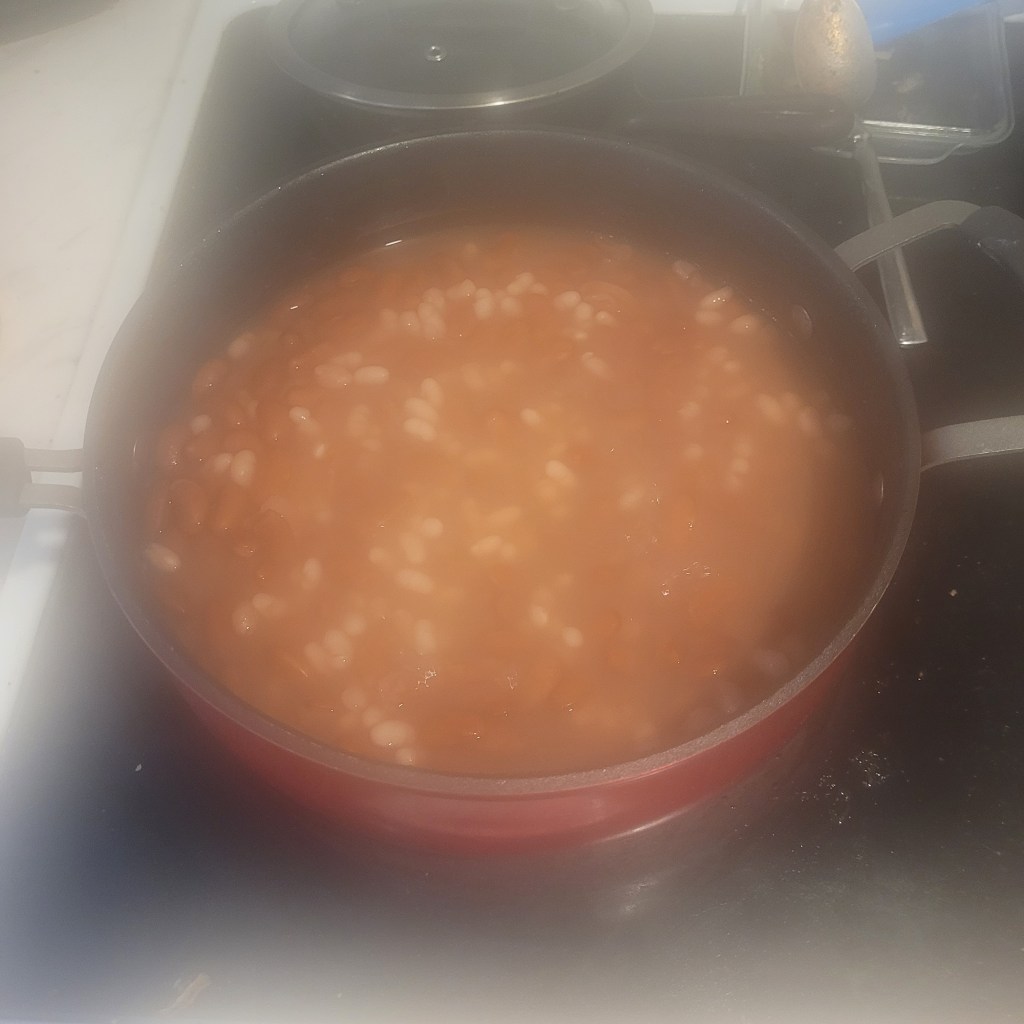
Parboiling = steam!
Ingredients
- 2 cups dry navy beans (or pea beans)
- Water (for soaking + cooking)
- 1 medium onion, diced
- ½ cup molasses
- ¼ cup brown sugar (optional, to taste)
- 1 tsp dry mustard
- ½ tsp black pepper
- 1 tsp salt (added near the end)
- 1–2 tbsp apple cider vinegar (optional, for balance)
- 1–2 tbsp ketchup or tomato paste (optional)
- Optional:
- 2–3 oz salt pork or bacon
- A splash of maple syrup in place of some sugar
Step 1: Soak the Beans (The Day Before)
Rinse the beans and remove any debris. Place them in a large bowl and cover with at least three inches of water. Let them soak overnight, 8–12 hours.
This is the first slow step — the kind of waiting that used to be part of everyday cooking.
Step 2: Parboil
Drain the soaking water. Place the beans in a pot with fresh water and bring to a gentle boil. Reduce heat and simmer for 30–40 minutes, until the beans are tender but not splitting. Drain, reserving 1–2 cups of the cooking liquid.
Step 3: Build the Beans
Preheat oven to 300°F (150°C).
In a Dutch oven or bean pot, combine the beans, onion, molasses, brown sugar, dry mustard, and pepper. Add enough reserved bean liquid to just barely cover the beans. Nestle the bacon or salt pork on top if using.
Leave the salt out for now — patience matters here.
Step 4: Slow Bake
Cover and bake for 3–4 hours, checking every hour. Add hot water if needed to keep the beans from drying out. During the last 30–45 minutes, uncover the pot so the sauce can thicken.
Stir in the salt and vinegar near the end, tasting and adjusting gently.
The beans should be soft. They must be richly coloured and thick. They should be the kind that perfume the whole house. This makes waiting worthwhile.
For the Week Ahead
These beans keep beautifully:
- 5–6 days in the fridge
- Freeze well in meal-sized portions
Serve them on toast. Pair them alongside eggs. Enjoy them with pork chops or chicken. You can also warm them again on a quiet night when cooking feels like too much.
Some foods are meant to stretch across days — and across generations.
Some recipes don’t belong to a single day.
They linger in the oven, in the fridge, and in our memories.
They provide comfort when we’re tired. They welcome us home after church. They remind us that being cared for doesn’t have to be fancy — just faithful and warm.
May this pot of beans fill your kitchen with comfort.
Let it fill your table with enough.
May it bring your week the quiet grace of food already made.
With love, from Grannie Doll’s kitchen.
If this recipe stirred a memory for you, I’d love for you to share it. Was it of Saturdays, Sundays, or suppers that smelled like home?
Leave a comment. Pass the recipe along. Better yet, put a pot in the oven and let it do its slow, steady work.
This is how we keep the old ways alive — one meal, one memory, one warm kitchen at a time.
Discover more from Doll Can Create
Subscribe to get the latest posts sent to your email.

You just made my husband’s day with this recipe. Hope you are enjoying your sabbath.LynnSent from my iPad
LikeLike
Definitely taking the Sabbath to restore. This recipe turned out well here. I made it on Saturday and enjoyed for dinner. Then last night again and finished with lunch today. Thanks for commenting.
LikeLike
0 Pingbacks