Tour de Fleece is right around the corner—and I’m getting ready for the spin of the season! Whether you’re a longtime spinner or new to the joy of the draft, I invite you to prep alongside me. Let’s talk bobbins, fiber prep, common challenges, and how we can all enjoy a slower, more intentional spin this year.
🌀 Clear the Bobbins, Clear the Mind
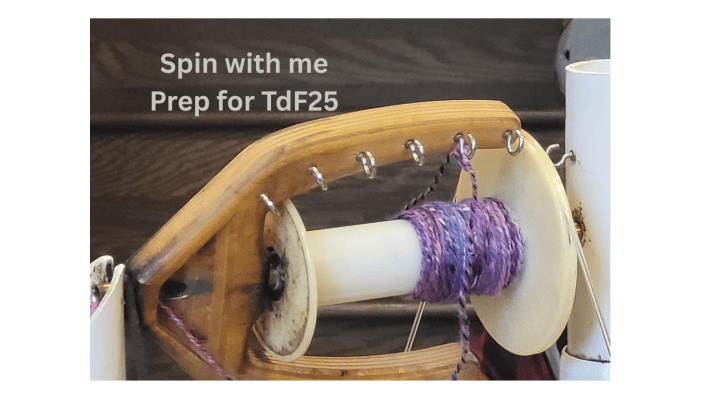
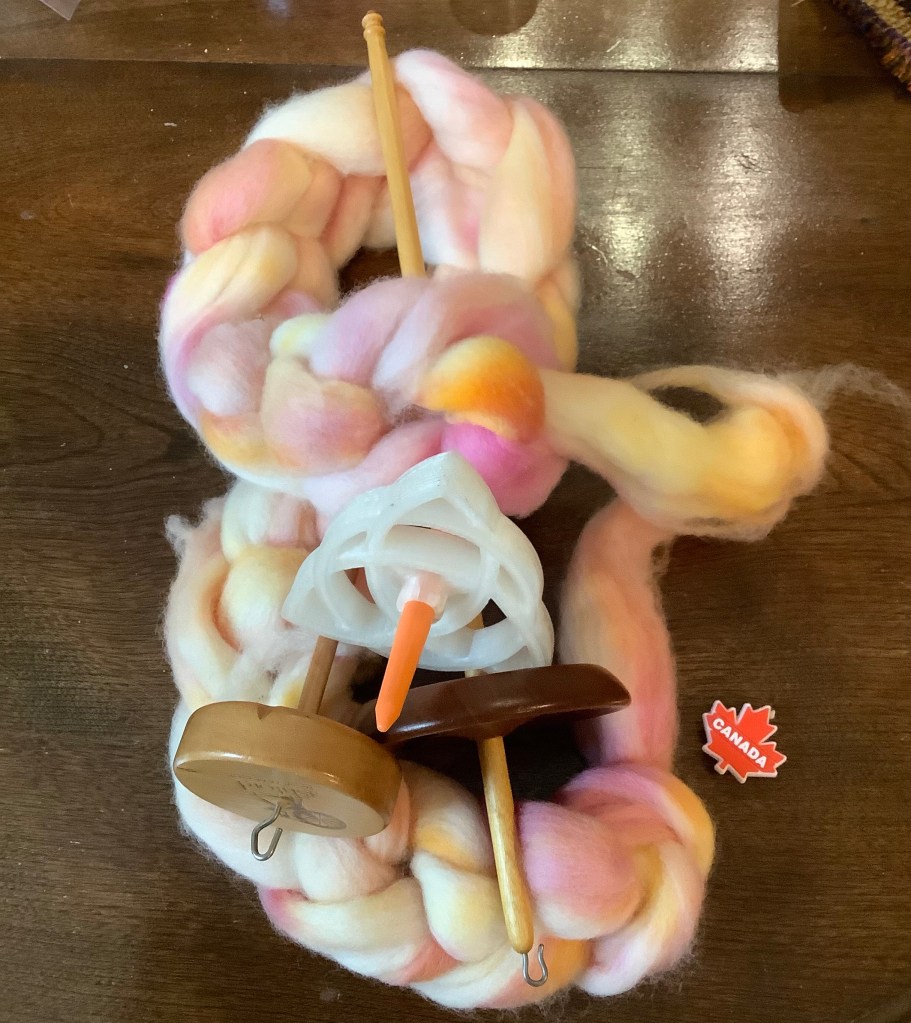
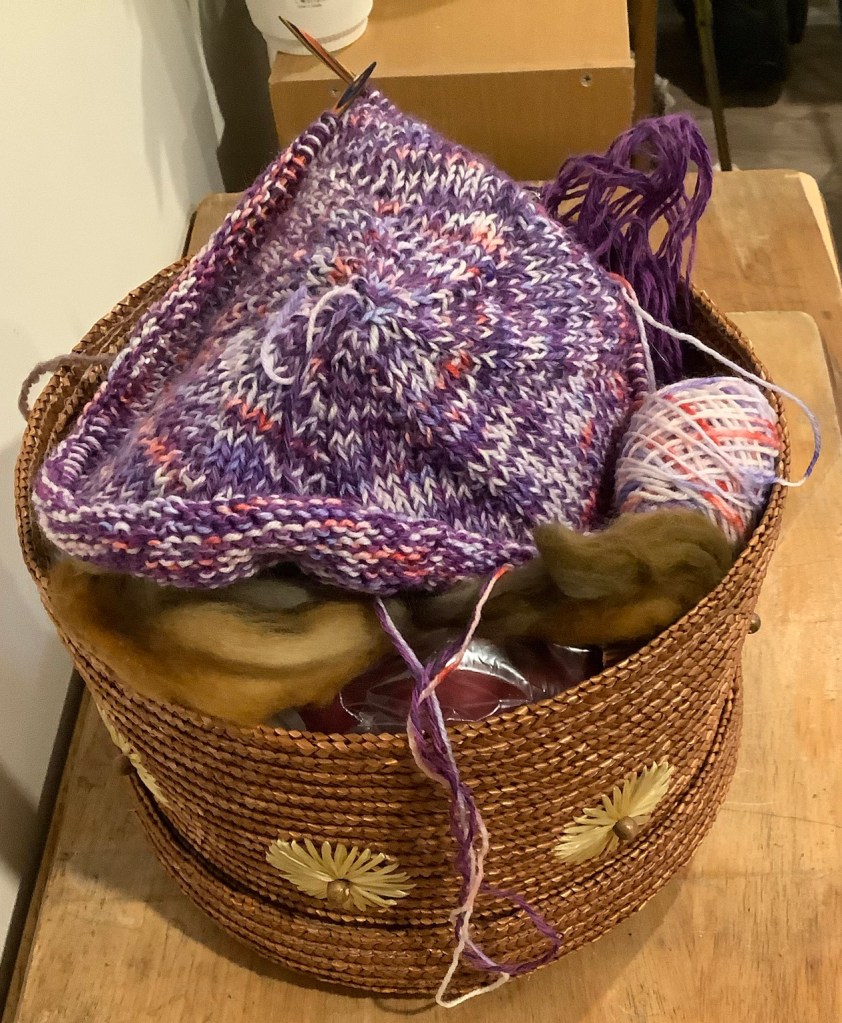
Step one: clear off those bobbins! I’m starting with a multicolored purple merino blend that’s just begging to be chain-plied into a soft three-ply yarn. It’s a simple task, but it gets the energy flowing and makes room for what’s next.
✨ Bonus: I’ll be recording the process, so follow along for inspiration!
🤯 The Too-Many-Choices Problem
Let’s be honest—fiber stashes have a way of multiplying. The biggest challenge for me is deciding what to spin. Should I:
Spin for a sweater?
Tackle a luxury fiber?
Work through stash from local sources?
This year, I’m simplifying. I’ve picked:
One main fiber for the wheel
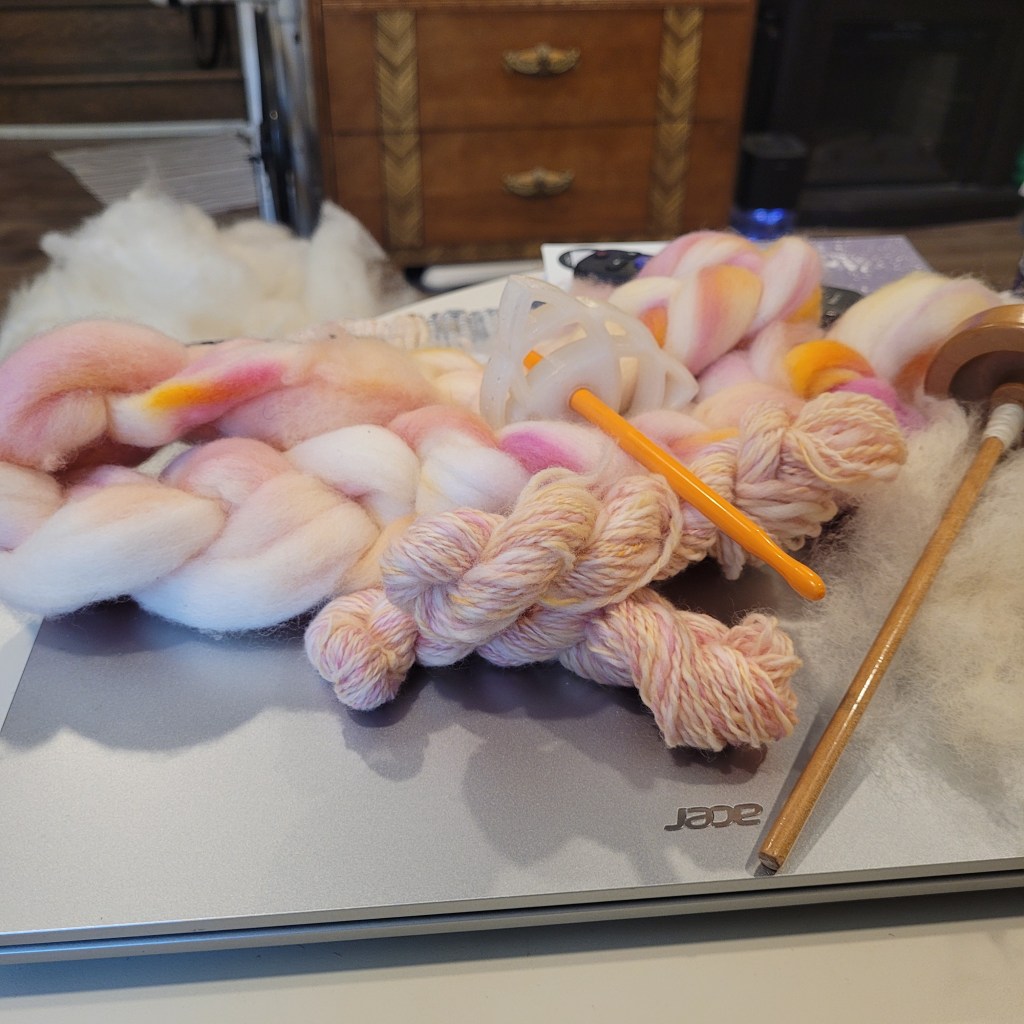
A few smaller samples for the spindle
Less decision fatigue = more time at the wheel.
💭 Over-planning Is Real
Ever plan to spin two pounds in three weeks? Me too. And when it doesn’t happen, the guilt creeps in.
So here’s my Tour mantra: 🌿 Be realistic. Be gentle. Show up with joy.
I’m setting a time-based goal instead:
15 minutes on busy days
30 minutes for flexibility
1 hour when I’m home and can relax into it
No pressure, just presence.
🧵 Tricky Fibers to Watch Out For
Every spinner has met their match. Mine?
Vacuum-sealed combed top – too compressed and slippery
Short staple fibers – easy to over-spin and hard to manage
If it frustrates me, it’s not going in the Tour basket. I’m choosing fiber that inspires, not irritates.
🎯 Making It Fun with a Tour de Fleece Bingo
Sometimes a little structure sparks creativity. I love using a Tour de Fleece Bingo card—either one of the many shared online or one I’ve made myself. It adds variety, keeps things playful, and gives me small wins to celebrate along the way. Check out Patreon for spinning folk who are on board.
✔️ Challenge met. Square marked. Spinner happy.
🌾 Local and Purposeful: My Spinning Focus
Aligned with my 100 Mile Life challenge, I’m focusing on:
Fiber from local farms and makers
No new purchases until I’ve spun what I have
Spinning with intention—thinking ahead to sweaters, vests, or cozy winter knits
This isn’t just about making yarn. It’s about making choices that align with my values.
💬 Final Thoughts
Tour de Fleece is more than a spinning challenge. It’s a celebration of creativity, community, and commitment—whether you spin for 5 minutes or 5 miles of yarn.
Let’s keep it light, joyful, and grounded. And if you need a reminder: You’re already doing great.
🧵 Tell me in the comments: What’s the one fiber you can’t wait to spin this year?
Can I Join Tour de Fleece If I’m Not a Master Spinner? Absolutely—Here’s Why You Should!
Every summer, cyclists pedal their hearts out in the Tour de France. Meanwhile, spinners around the world sit down with their wheels, spindles, and fluff. They join in a different endurance event: the Tour de Fleece. But if you’re new to spinning—or you feel like your yarn still has a few “extra design elements”—you are wondering:
Can I spin in Tour de Fleece if I’m not a master spinner?
Let me answer that loud and clear: YES. YES. A thousand times, YES!
Here’s why Tour de Fleece is especially for you:
1. It’s About Progress, Not Perfection
Tour de Fleece isn’t a competition—it’s a celebration. The goal is simply to spin a little (or a lot) every day the cyclists ride. Whether you’re spinning lumpy art yarn or super-fine lace weight, it all counts. You’re not being judged. You’re showing up, learning, and getting better with every turn of the spindle or treadle.
2. There’s a Welcoming Community for Every Skill Level
There are dozens of teams, hashtags, and social groups where beginners are not only welcome—they’re cheered on. Many experienced spinners enjoy helping newcomers. Your progress can inspire someone to pick up their spindle for the first time.
3. Your “Before and After” Will Amaze You
Tour de Fleece is usually three weeks long. That’s enough time to see a real shift in your spinning. Your hands learn. Your muscle memory builds. Your yarn changes. Even if your first skein is a little wild, your last one will show just how far you’ve come.
4. You Can Set Your Own Challenge
You don’t have to spin every day or meet a high yardage goal. Your personal challenge is:
“Spin for 10 minutes a day”
“Ply for the first time”
“Finish the fiber I started last winter”
“Try supported spindling” You make the rules. You choose your pace.
5. It’s a Great Excuse to Play with Fiber
If you needed permission to indulge in some lovely roving, here it is. Tour de Fleece is the perfect excuse to try new fibers, colors, or prep styles. You do not need a “perfect plan” for the finished yarn.
My First Tour de Fleece?
I had no idea what I was doing—but I loved every minute. I spun on a spindle in my backyard, in the car (as a passenger!), and even while watching the cyclists on TV. I learned how to draft better, how to troubleshoot twist, and how to relax and enjoy the process.
If you’re thinking, “But my yarn isn’t good enough yet,” let me share something with you. Here’s a secret: Tour de Fleece is how it gets good.
So go ahead—dust off your spindle or wheel. Join a team. Set a goal. And spin your heart out.
You’re not just allowed to join Tour de Fleece—you’re meant to. Let’s spin together and see where the fiber takes us!
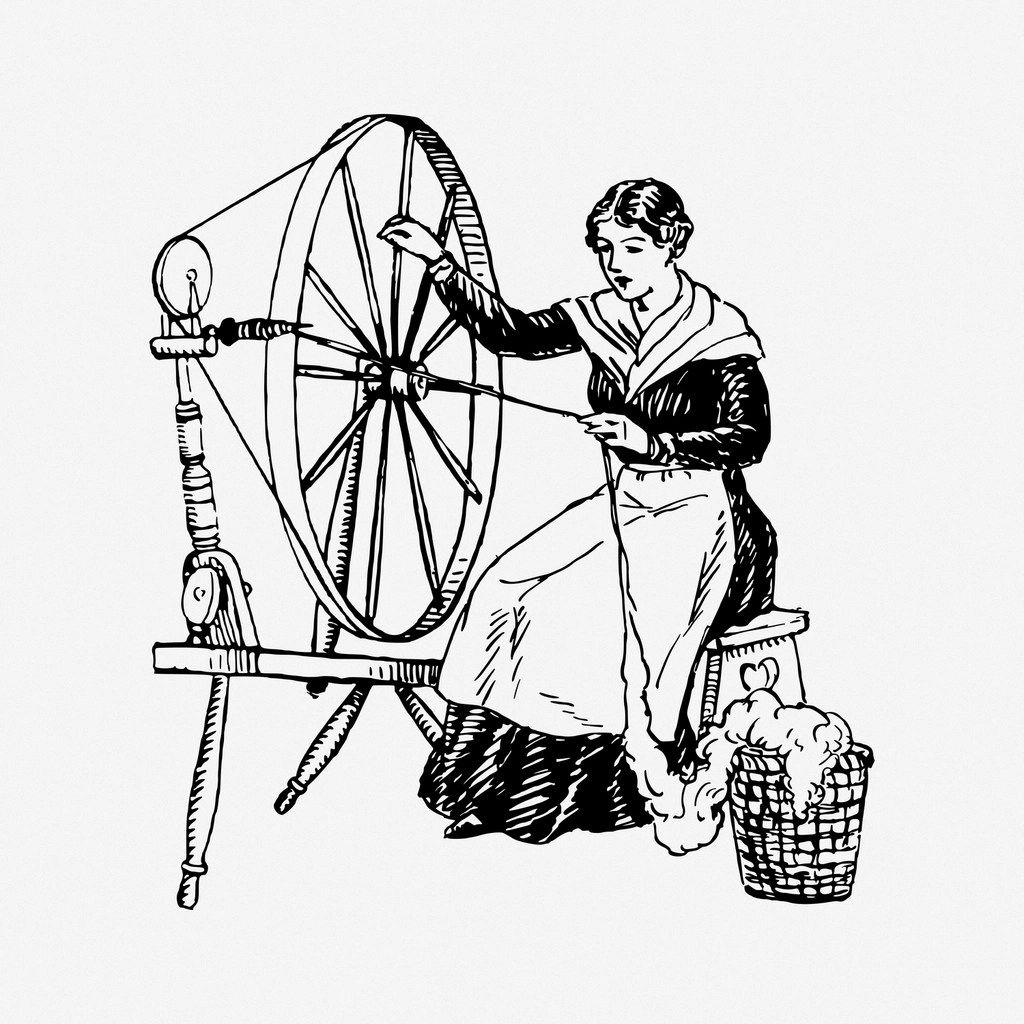
Every summer, cyclists race through the mountains and valleys of France. Meanwhile, another spinning takes place around the world. It is the joyful spin of wool turning into yarn!
This is the heart of Tour de Fleece, an international spin-along for fibre lovers. But where did it start?
Tour de Fleece was started in 2006 by spinner and blogger Katrina McHugh. She had a brilliant idea while watching the famous Tour de France cycling race. While the cyclists spin their wheels on the road, why don’t we spin our wheels at home? Or spin our spindles?
She posted her idea on her blog. She invited other spinners to join her for a three-week spinning challenge. This challenge runs alongside the Tour de France. It was an instant success.
Over the years, the event has grown into a beloved tradition among spinners worldwide. Thousands now take part each year — some through teams on Ravelry, others through Instagram and personal blogs.
The spirit of Tour de Fleece is simple: ✨ Set your own spinning goals. ✨ Challenge yourself in some way (new fibre, new technique, spin every day, finish a project). ✨ Share your progress with the community. ✨ Celebrate your love of handspun yarn!
What am I planning?
There are no hard rules — it’s about participation, learning, and joy.
Whether you spin on a wheel, drop spindle, or electric spinner, Tour de Fleece is a time to connect. It brings together spinners around the world. It allows us to cheer each other on and marvel at what we can create with simple fibre and skill.
As the cyclists conquer their miles, we spinners conquer our fibre stash — one draft at a time! 🚴♀️🧶
Are you joining Tour de Fleece this year? I’d love to spin along with you! 👉 Share your spinning plans or goals in the comments — let’s cheer each other on!
If you’d like to follow my spinning journey, be sure to do the next: ✅ Subscribe to my YouTube channel. ✅ Follow me on Instagram ✅ Sign up for my email list for extra fibre goodness!
✨ Let’s make beautiful yarn together this Tour de Fleece! 🚴♀️🧶
The month of always feels like a fresh start. Gardens are blooming and days are lighter. There is renewed energy for our fibre work. May seemed to go by very quickly; very cool, lots of rain, but it bloomed in full colour.
Here’s a little peek into what happened in my studio this past month:
🧶 Fibre on My Wheel & Spindle
May was a season of mindful spinning. I’ve been working on:
Spinning naturally fawn and brown fibres for future knitting projects
Continuing my 100 Days of Spindle Spinning challenge — it’s amazing what just 10–15 minutes a day can create!
I encourage you — even a few minutes of spinning can bring such calm and joy.
🧵 On My Needles
Knitting was my quiet companion in the month of May:
A slow fashion shawl, using my handspun yarn
A simple pair of socks for everyday wear (finished May 31st, 2025, merino/nylon blend, hand dyed.
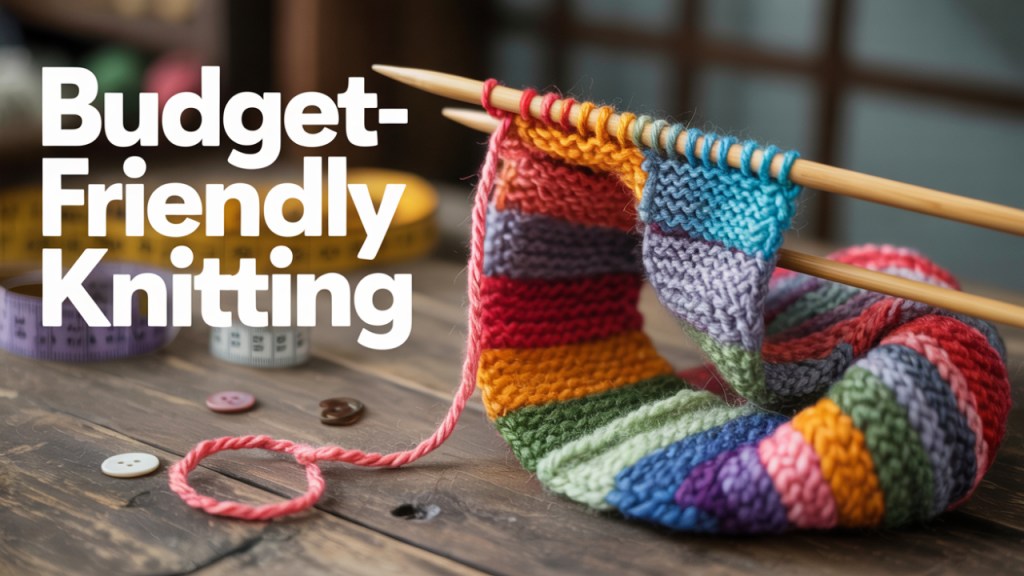
Exploring Knitting on a Budget — creative ways to knit more while spending less
I also shared a heartfelt blog post: “Crafting Calm & Grace.” It explores how fibre work can be a form of prayer and peace.
🌍 100 Mile Life: Local Fibre Focus
One of my passions in the merry month of May was deepening my 100 Mile Life journey:
Building a local fibre stash — supporting nearby farms
Cooking with local spring produce
I’ll be launching a new 100 Mile Life Tutorial Series — with a printable workbook soon in the shop!
Each step reminds me that local living and crafting can truly enrich our lives.
The rising cost of yarn and supplies can take the fun out of your favorite craft. It doesn’t matter if you’re new to knitting or a seasoned fiber artist. But don’t worry — creativity thrives under constraint. Did you know that you can knit beautiful items without breaking the bank? These Knitting on a Budget Toolkit ideas are here to help you make the most of what you have. It will stretch your dollars. You’ll still knit projects you’ll love.
🧰 1. Yarn Price Tracker
One of the best ways to stay within your fiber budget is to track yarn prices. Keep a simple log of:
Yarn brand and fiber content
Cost per skein or per 100g
Where you purchased it (or if it was a gift)
Project used for
By comparing prices over time, you’ll spot the best deals — and avoid impulse buys that aren’t a good value.
🧺 2. Stash-Busting Project Checklist
You probably have yarn in your stash you’ve forgotten about! Use it up with these go-to stash-busters:
✅ Dishcloths and scrubbies ✅ Striped scarves or hats ✅ Granny square blankets ✅ Color-block shawls ✅ Mismatched socks
Make it a challenge: Try not to buy any yarn for a month. See what you can finish with just your stash. Join me in June for a knit or crochet from our stash challenge.
🌐 3. Free & Fabulous Pattern Sources
You don’t have to pay for patterns to make stunning pieces. Here are my favorite free pattern resources:
Look at thrift stores or your own closet for 100% wool or cotton sweaters that you can unravel. Here’s how:
Choose sweaters with knit seams, not serged.
Wash gently in cold water and dry flat.
Carefully unravel, wind into skeins, and soak to relax the yarn.
This method can yield luxury yarn for pennies.
🛠️ 5. Tools That Do Double Duty
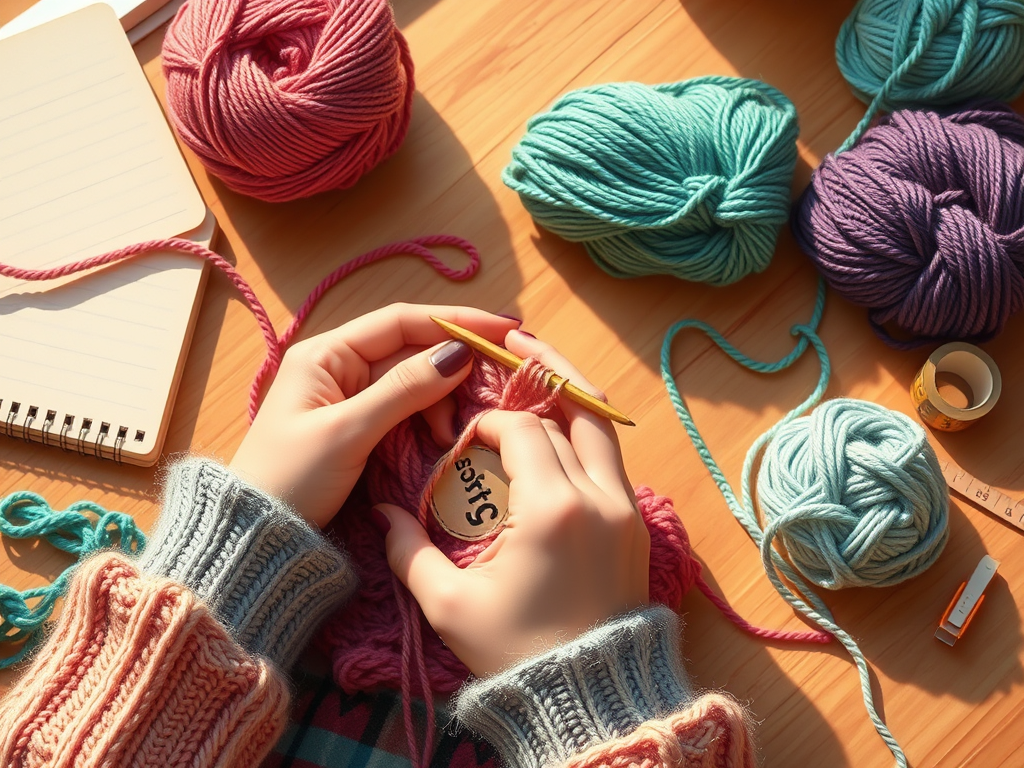
You don’t need a drawer full of gadgets to knit well. Some budget-friendly substitutions:
Use a paperclip as a stitch marker
Recycle cardboard into yarn bobbins
Use a measuring tape app if you’ve lost your real one
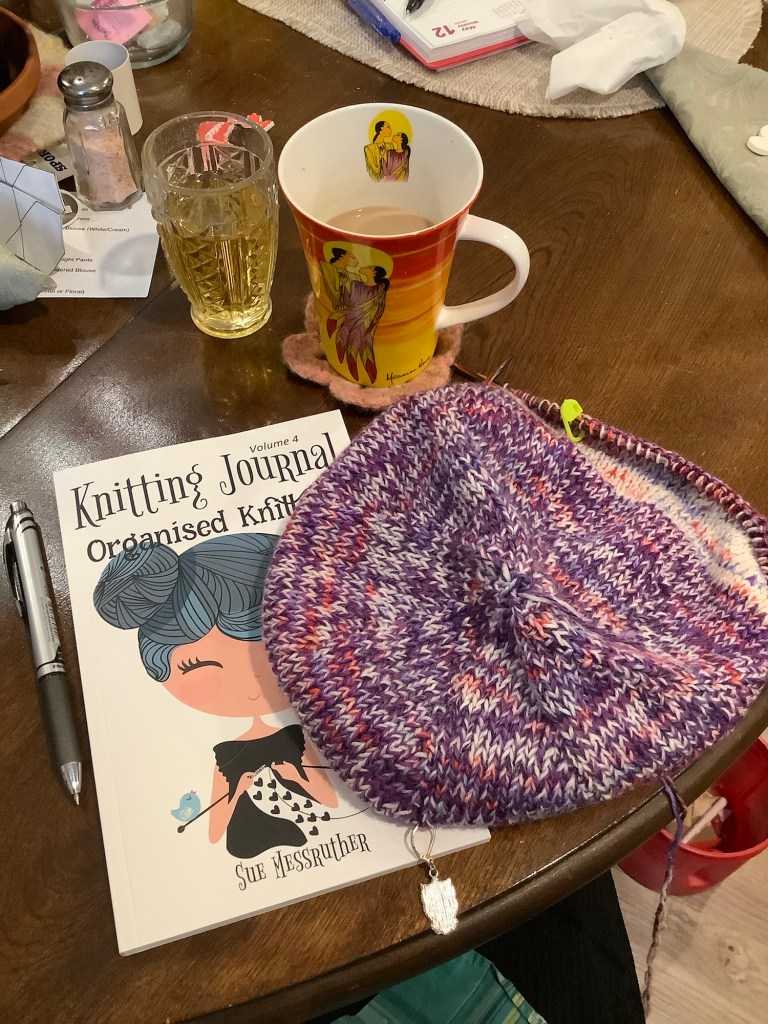
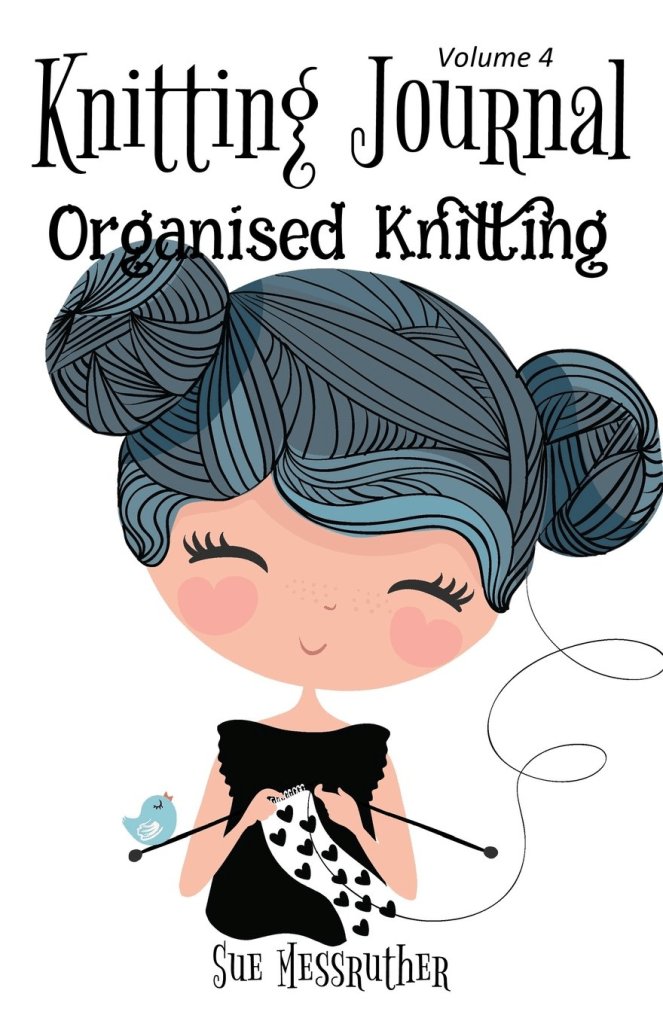
Keep a notebook for all your pattern notes — cheaper than printing pages Here’s one I’m using:
If you invest in anything, go for interchangeable needles — one set can do it all.
💬 Let’s Chat!
How do you save money on knitting? Share your favorite tip or stash-busting success story in the comments below. Don’t forget to pin this post for later!
🧶 Ready to Start Knitting Smarter?
Don’t let a tight budget hold back your creativity!
You can start easily with a travelers notebook like this one. Just set it up the way you like and go.
Introducing Myself: A Journey in Wool By [Doll Creelman]
Welcome to my corner of the internet. I wanted to introduce myself. Let me share a little bit about the passions that shape my life and work. If you’re here, you probably love fiber arts. You enjoy handmade things. Or, you’re just curious about the person behind the yarn. Either way—I’m glad you’re here.
The Roots of My Passion
My love for fiber arts didn’t start in a craft store or a YouTube tutorial—it started in a sheep pen.
As a child and even into my teenage years, I remember watching the sheep on my great-uncle Silas’s farm. There was something deeply moving about the way the sheep responded to his voice. He would call, and they would come. It was a simple yet sacred ritual that stirred something pastoral in me. That’s when I knew I wanted to dive deeper. I was intrigued not just with the sheep. I was also captivated by the wool they gave and the stories it would tell.
Back then, I knew how to knit a little and crochet some, but I longed for more. I wanted to learn to spin.
A Fiber Journey Begins
At first, wool felt out of reach. Buying 100% wool yarn was expensive, and spinning wheels were even more so. I had never heard of a drop spindle until one day I stumbled across it online. That discovery changed everything. I realized I start spinning on a budget. eBay, YouTube tutorials, and fiber forums became my teachers.
We found a local farm having a shearing day. I jumped at the chance to help. I paid for a sheep’s injections that year in exchange for the fleece. I took it home—dirty, greasy, and full of potential. Washing, drying, carding—it was all a massive learning curve, but slowly I started to understand the rhythm of the wool.
I spun enough for a pair of socks. I was so proud. Then I found a used plastic spinning wheel from Wisconsin—affordable and practical. It arrived in a box, and before long, I was spinning with both hands and heart.
From Wool to Wardrobe
The learning curve was real—drive bands breaking, fiber filled with neps, uneven bits and short pieces. But those frustrations became milestones. Each little hiccup taught me something new.
Now, I have a stash (as most crafters do). More fiber than projects. More yarn than ideas. And yet, choosing what to spin, how to dye, and what to knit still brings me joy. Some projects are for me. Some are gifts. Some are experiments in texture and color. That’s part of the magic.
The most exciting project? Probably that first pair of socks from my handspun yarn. But honestly, each finished project—whether from hand-dyed yarn or commercial wool—feels like a little victory.
Why It Matters
I’m passionate about fiber arts because I feel like I’m part of the process. From fleece to yarn to garment, I get to shape something with my hands that’s both beautiful and practical. It reminds me of ministry, too—how something raw can be transformed with care and intention.
Fiber art teaches me patience, persistence, and presence. And it connects me to something older than myself—an ancient rhythm of craft, care, and community.
Thanks for taking the time to get to know me a little better. Whether you’re here to learn or be inspired, I’m happy we met. I’m also delighted to share in the joy of handmade living with you.
Thanks for taking the time to get to know me a little better. Whether you’re here to learn or be inspired, I’m glad we’ve crossed paths. You also be here to simply share in the joy of handmade living.
I’d love to hear your story too. Do you spin, knit, crochet, or sew? Have you ever worked with raw wool or dreamed of trying? Drop a comment below or send me a message—I truly enjoy connecting with fellow makers.
If you’d like to follow along on my fiber journey, you can get tutorials and project updates. It also includes reflections on faith and creativity. Subscribe to the blog or follow me on Instagram @Dollcan.
Let’s keep creating, learning, and finding joy in the process—together.
Using crafting to slow down is a beautiful, intentional practice. It invites you to be present, mindful, and rooted in the moment. Here’s how to do it:
Let’s slow down our crafting. Which of these steps will you try?
1. Set the Intention
Before you start, take a breath and tell yourself, “This is time to slow down.”
Light a candle, say a short prayer, or play calming music—create a ritual that marks this as sacred, restful time.
2. Choose Slow Crafts
Pick crafts that can’t be rushed: hand stitching, spindle spinning, hand knitting, embroidery, or weaving.
These crafts naturally need a rhythm and patience, helping shift your body and mind to a slower pace.
3. Craft Without Pressure
Let go of productivity goals. Don’t worry about deadlines or finished objects.
Focus on the feel of the yarn, the movement of your hands, or the rhythm of the stitches.
4. Be Fully Present
Notice the textures, colours, sounds, and even the little imperfections.
If your mind wanders, gently return to your hands—what they’re touching, creating, and shaping.
5. Connect Spiritually
Use crafting as a form of prayer, meditation, or gratitude. Say a prayer with each stitch or dedicate your work to someone.
Consider on scriptures or quiet thoughts as you work.
6. Limit Distractions
Craft in a quiet space or with minimal digital interruptions.
Leave your phone out of reach, or set it to “Do Not Disturb.”
7. Craft Outdoors or Near Nature
Take your knitting to the porch, or embroider by a window. Let the natural world support your slowing down.
Journal Prompt: Slowing Down Through Crafting
Take a deep breath. Let your hands rest on your project. Consider on the next:
1. What drew me to pick up this craft today?
2. How does the rhythm of this work affect my body, mind, or spirit right now?
End with this question. What is one small way I can carry the spirit of this slow moment into the rest of my day?
There’s a sacred quiet that settles in when I sit down to spin or knit. The world slows. The chatter softens. And in that stillness, something deeper begins to stir: grace.
Grace shows up in the ordinary It’s in the way the yarn stretches just far enough to finish the row. Or when the spindle spins true, even after a long day. It’s the sigh of relief when the colors blend just right. It’s also when your hands remember a rhythm your mind had forgotten. Nothing flashy. Just the quiet kindness of things working together.
Crafting is a way of praying. You use your hands for this prayer. Colossians 3:23 (NIV): “Whatever you do, work at it with all your heart, as working for the Lord, not for human masters.”
I often say that knitting is my way of keeping a quiet conversation going with God. Each stitch holds a moment, a breath, a hope. Spinning wool feels the same. The fibers remind me that slow is good. Twists and turns are part of the story. There is calm in that letting go.
When life feels messy, crafting provides it with form and structure. There’s something healing about watching chaos turn into order. A tangled skein turns into a neat ball. Scraps become a blanket. Roving transforms into yarn. Crafting reminds me that transformation takes time and that even messiness has its purpose.
You don’t have to make something perfect. Just make Grace doesn’t demand perfection. It welcomes presence. Whether you’re pulling stitches back or trying a new pattern, grace sits beside you and says, “It’s okay. Keep going.” And calm follows when we stop measuring success by speed or flawlessness.
So light a candle. Make a cup of tea or your favourite beverage. Pick up your needles, your spindle, your cloth. Let your craft become your quiet sanctuary—a place where grace can find you.
This Lent, I didn’t give something up. I picked something up—my needles and yarn. (scroll down for video)
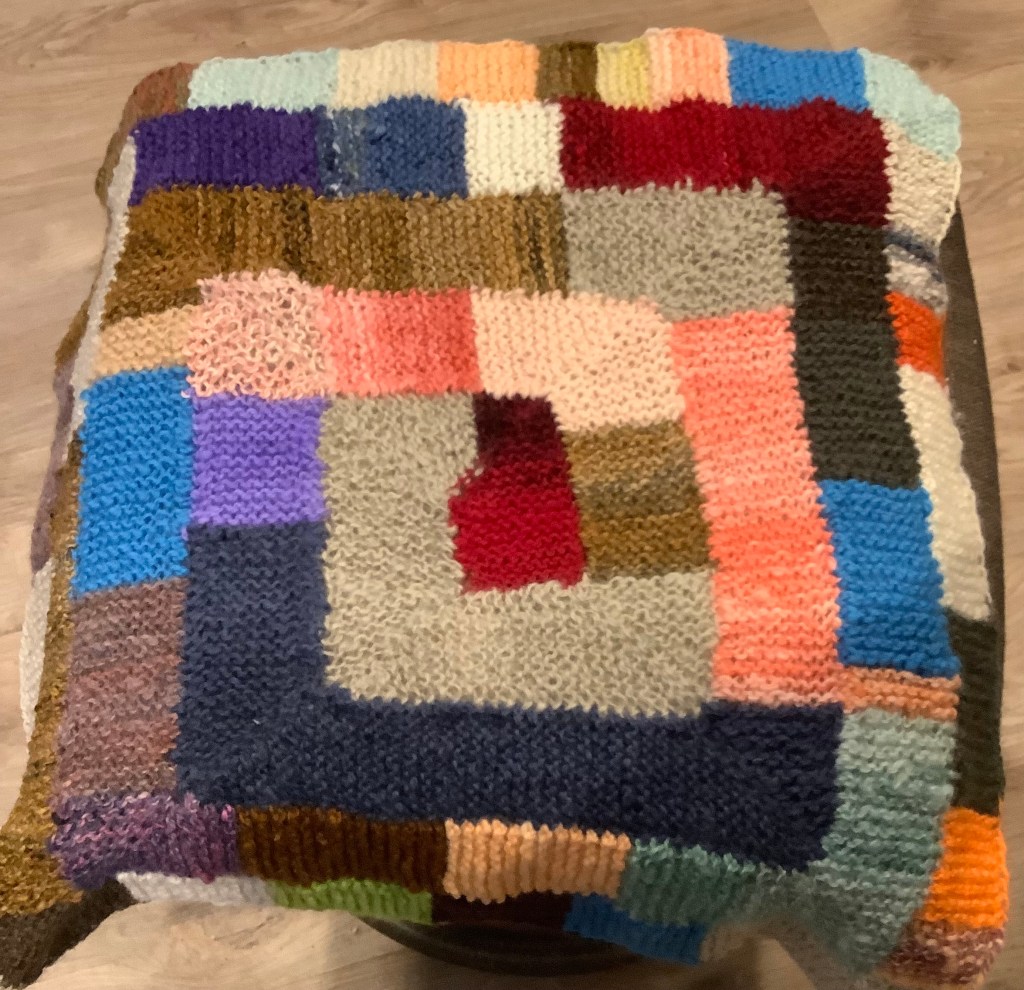
Every evening, I sat down with ten simple stitches and knit my way toward Easter. This year, I chose to create a Lenten blanket. It was a quiet project with no pressure. I worked on just small, modular squares of color and calm. What I didn’t expect was how this simple act would become my prayer.
Knitting as Devotion
The blanket wasn’t intricate. Each square was small—ten stitches across and ten back again. But that simplicity was the beauty of it. It allowed space. Space to listen, space to breathe, space to pray.
Each time I picked up my needles, it felt like I was entering into something sacred. My body slowed. My heart quieted. The rhythm of stitch after stitch became the rhythm of prayer—not always with words, but always with intention.
Prayer in Colour and Silence
Some evenings, I prayed for loved ones as I knit. Other times, I simply breathed deeply and let the yarn run through my fingers. The colours I chose came from bits of my handspun—nothing planned, only that each was different from the last. I wasn’t choosing a palette—I was choosing presence. Whatever felt right in the moment became part of the story.
There was no chart and no big goal. There was only the promise to knit one colour each day through the forty days of Lent. That small act became my grounding.
Grace in Every Stitch
It’s funny how something so ordinary can become sacred when you give it space.
There were moments of grace along the way. A square finished just before bed provided comfort. A color unexpectedly brought peace. One night, knitting was the only thing that kept the anxious thoughts at bay. I didn’t need to do anything heroic this Lent. I just needed to show up. Yarn in hand. Heart open.
From Good Friday to Resurrection Joy
As Holy Week approached, the blanket grew heavier in my lap. Each rectangle held the quiet prayers and honest questions I’d whispered throughout the season. And on Easter Sunday, when the final stitch was made, it felt like more than a finished project. It felt like resurrection.
Not because the blanket was perfect—it wasn’t. But because I was different. I had made space for stillness, for prayer, for grace.
An Invitation
If you’re longing for a gentler spiritual practice, I invite you to pick up something small and handmade. A needle, a spindle, a scrap of yarn. Let your hands lead the way. Don’t overthink it. Just start.
You find, like I did, that God meets you in the rhythm of your craft—one stitch at a time.