Doll Can Create

100 Mile Life/Grandma Core

A Week of 100 Mile Meals: What I Ate, What I Learned — April 26, 2025

A Week of 100 Mile Meals: What I Ate, What I Learned


By Doll | dollcancreate.com

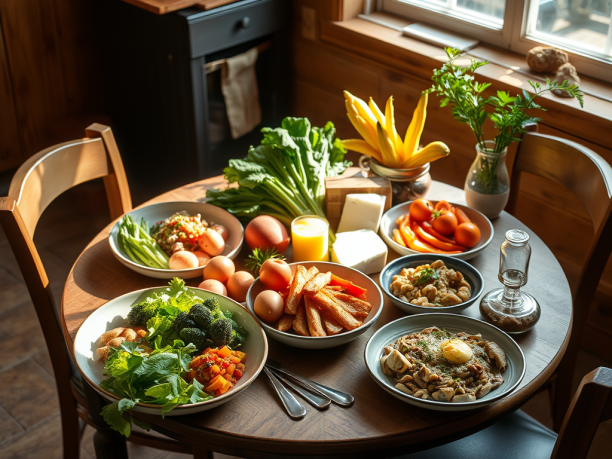
I challenged myself to spend an entire week eating meals. These meals were made from ingredients sourced within a 100-mile radius of my home. The idea was simple but profound. I wanted to deepen my connection to the land. It was also about supporting local producers and exploring what it means to truly eat “close to home.”

Here’s a glimpse into what I ate—and what I discovered along the way.


🍳 Day 1: A Breakfast Grounded in Home

  • Meal: Scrambled eggs with local cheddar, served on English muffins from Oakrun Farm Bakery (Brantford)
  • Local sources: Eggs from the farmers’ market, cheese from a regional dairy
  • Reflection: Starting the day with food grown and made nearby felt grounding. No fancy ingredients—just simple, satisfying nourishment.

🥣 Day 2: Soup for the Soul

  • Meal: Carrot, potato, and onion soup with homemade stock
  • Local sources: All vegetables from a local farm store; stock made from leftover bones from a locally raised chicken
  • Surprise: The flavour was richer than expected—fresh produce really does make a difference.
  • Reflection: I felt connected to the rhythm of seasons and soil.

🧀 Day 3: Plough-man’s Lunch

  • Meal: A rustic plate of local cheese, apples, sourdough bread, and pickled veggies
  • Local sources: Apple orchard just 15 minutes away; pickles canned last summer
  • Reflection: This felt like a picnic from another era—slow, thoughtful, rooted in tradition.

🥘 Day 4: Comfort in a Casserole

  • Meal: Ground beef and rice casserole with herbs from the garden
  • Local sources: Grass-fed beef from a farm visit last fall; rice sourced regionally
  • Reflection: Planning ahead (and freezing local meat) makes this lifestyle more doable than I thought.

🥕 Day 5: Veggie Skillet Supper

  • Meal: Cabbage, carrots, onion, and sausage all tossed together in a skillet
  • Local sources: Veg from the local stand; sausage from a family-run butcher
  • Surprise: How much I didn’t miss anything “exotic.” This was deeply satisfying.
  • Reflection: Eating locally doesn’t mean boring. It means seasonal, vibrant, and flavorful.

🥚 Day 6: Brunch for Dinner

  • Meal: Local eggs, fried potatoes, toast, and rhubarb preserves
  • Local sources: Everything within 50 miles—truly a feast from close to home
  • Reflection: There’s something joyful in keeping it simple and making it special.

🍎 Day 7: Sweet Ending

  • Meal: Baked apples with oats and a splash of cream
  • Local sources: Apples from the orchard, oats from a nearby mill, cream from a local dairy
  • Reflection: A week of eating local ended on a sweet note—and I wasn’t craving anything else.

💭 What I Learned

  • Planning is essential. Local eating takes more intention but less complication than you’d expect.
  • The taste is better. Fresher food, fewer miles, and a story behind every bite.
  • It’s about connection. To farmers, seasons, neighbours, and your own values.

This week reminded me that food isn’t just fuel—it’s a relationship. And when that relationship is rooted in care, proximity, and community, every meal becomes a moment of grace.

Catching Up on My 100 Mile Life — Check-In — April 9, 2025

Catching Up on My 100 Mile Life — Check-In

Hi friends, it’s Doll. Just popping in with a little life update — where I’m at in this 100 Mile Life journey.

  • We took a quick run to Costco after Bible study. Some hits, some misses!

The Misses (and lessons learned):

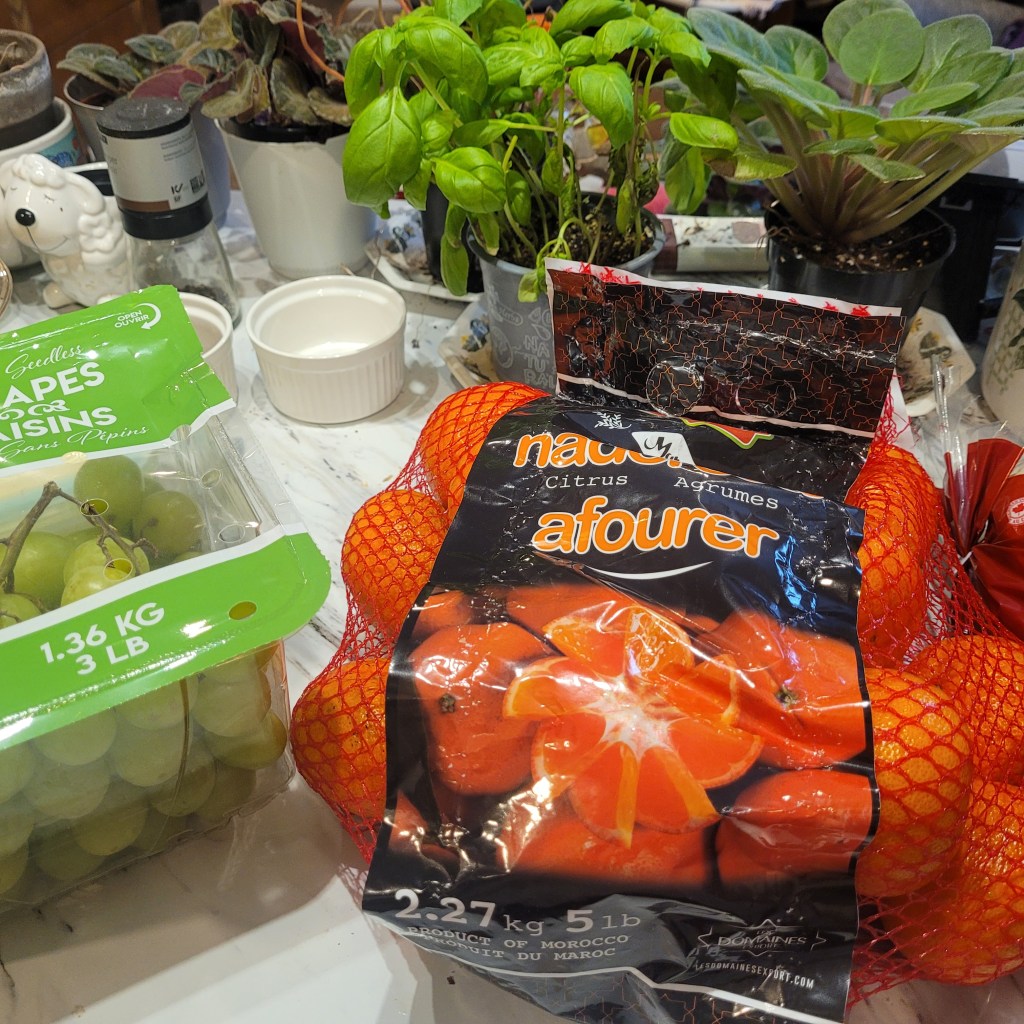
  • Grapes from South Africa — delicious, but not local.
  • Mandarins from Morocco — sweet, but definitely outside the 100-mile goal.
  • Blueberry bagels — I thought they were fresh, but it turns out the blueberries were simulated. Big disappointment! I should have read the label more closely.

The Wins:

  • Oak Run Farm Bakery English muffins — made in Brantford, which is local.
  • Plain bagels (also from Costco) — possibly made in-house, but unclear.
  • Local apples still in my fridge.
  • Summit Dairy cream and chocolate milk — both local.
  • Allen’s Apple Juice — made in Ontario.
  • Local maple syrup (label gone, but I promise it’s local!).
  • Liverwurst — also a local purchase.

Freezer Peek (yes, I showed it!):

  • Bacon — 100 Mile approved and Canadian.
  • Shaw’s, My favourite ice cream — Canadian-made
  • Pierogies from Toronto — a great local find!
  • Leftover chili and other good things waiting for me.

Other food notes:

  • All our meat is Canadian, much of it local.
  • One exception: canned ham from Denmark — and yes, I love it.
  • Coffee is tricky. I’m finishing up my stash but plan to switch to Canadian-roasted or locally roasted beans soon. The price jump is real though , my favourite coffee— $18.99 now vs. $9.99 back in the day!

Reflections:

  • The journey is real — and full of trial and error. I do my best and pray over the rest, as the saying goes.
  • I started this for 100 days, which brings me to Easter Monday. After that, I might refine it even more and lean harder into local. As we move into spring/summer and planting season I believe that the journey will be a bit easier.
  • Local fiber is especially important to me — I’m really passionate about Canadian wool.
  • I’m still spinning every day (100 Days of Spindling!), and yes, I’m still knitting too. A mitten for the fall mitten tree, and slowly working on a sock.

What’s Next:

  • A new video coming soon on my fiber declutter and de-stash project.
  • Planning for Palm Sunday and the big parade — so exciting.
  • After Easter? I’m taking a reading week — some rest, some reflection, and gentle learning. A little soul-care.

To You, My Reader:

  • If you’re trying a 100 Mile Life or a 160 km journey, I’d love to hear from you.
  • What’s worked? What’s been hard? What have you joyfully given up on?
  • We all have those “I’m still buying bananas” moments — and that’s okay.

Final Thoughts:

  • I feel so blessed. I’m doing what I love, surrounded by people who care. That’s a gift not everyone has, and I don’t take it for granted.
  • Let’s keep encouraging each other. One little thing at a time is how it starts.
  • Until next time, friends — God bless and take care.
  • And remember: you can create too.
100 Mile Journey Check-in March 28, 2025 — March 28, 2025

100 Mile Journey Check-in March 28, 2025

Embarking on a Hundred Mile Life—sourcing essentials within a 100-mile radius—has come with its share of challenges. Here’s how I’m tackling them:

Budget Challenges & Solutions

  • Local products can be more expensive, so I need to cut back elsewhere.
  • Reviewing subscriptions to streaming services:
    • Prioritizing only what we actually use.
    • Canceling unnecessary ones to free up funds for local purchases.
  • Reducing unnecessary delivery costs:
    • Checking if I’m paying for services I don’t need.
    • Finding ways to replace delivery items with local alternatives.

Finding Local Alternatives

  • Some items are harder to find, like canned goods and long-term storage items.
  • Farmers’ markets will be opening soon—good opportunities to stock up.
  • Meat sourcing has been a challenge:
    • Local meats can be pricey but not impossible to find.
    • Found a store in Hamilton with its own meat processing plant—more affordable and transparent.
    • Whole chickens are cheaper there than at big-box stores.

Tracking Local vs. Non-Local Spending

  • Need a better way to measure how much I’m truly sourcing locally.
  • Planning to use YNAB (You Need a Budget) to:
    • Separate spending into “local” and “non-local” categories.
    • Analyze where I can improve and adjust.

Minimizing Delivery Costs

  • Ensuring delivery services are within the 100-mile radius.
  • Already have local options for dairy, produce, and coffee:
    • Dairy: Prepaid for a year’s worth of delivery.
    • Produce: Can pick up for free in Ancaster (15–20 min away).
    • Coffee: Found a local roaster that delivers affordably.
  • Planning errands efficiently to reduce fuel costs when picking up local goods.

Looking Ahead

  • Expecting more challenges but staying flexible and creative.
  • The goal is sustainability—balancing cost, convenience, and commitment to local sourcing.
  • Continuing to track progress and refine strategies.

Have you tried focusing on local purchases? What obstacles have you encountered, and how did you overcome them?

Let’s start a conversation. What steps will you take this weekend?

Till again,

Doll from DollCanCreate

Practical Ways to Live a 100 Mile Life — March 20, 2025

Practical Ways to Live a 100 Mile Life

What if everything you ate, wore, and used came from within 100 miles of your home? No big-box stores, no global supply chains—just what’s near, what’s seasonal, and what’s truly local.

That’s the challenge I’ve taken on for 100 days: living as locally as possible. This isn’t just about food (though that’s a big part of it). It’s about fiber, household goods, and the relationships that sustain a truly local life.

What I’ve learned so far is that living locally isn’t about finding a perfect replacement for everything—it’s about rethinking what I actually need. It’s about discovering abundance in my own backyard.

Here are some of the ways I’m embracing this lifestyle, and practical steps you can take to live more locally, too.


Food & Cooking: Eating with the Seasons

Food is one of the biggest shifts when committing to a 100-mile life. We’re so used to having whatever we want, whenever we want it, that we forget food has a season.

  • Buy from Local Farmers – Farmers’ markets, CSAs (community-supported agriculture), and direct farm sales have become my go-to. Not only does the food taste better, but I’m also building relationships with the people who grow it.
  • Cook Seasonally – Instead of planning meals and shopping for specific ingredients, I’m flipping the approach—I buy what’s local and in season, then create meals around it.
  • Preserve the Harvest – I’m learning to can, freeze, and ferment so I can eat locally even in the off-season. (My first attempt at pickled beets was… interesting. But I’ll get better!)
  • Grow My Own – Even a small herb garden or a few raised beds can add fresh, local flavor to meals.
  • Trade & Barter – A neighbor has fresh eggs, another bakes sourdough bread. By swapping what we have, we all get a little more variety while staying local.

Clothing & Textiles: From Fleece to Fabric

Sourcing clothing locally is a challenge, but it’s one I’m excited about—especially since I love fiber arts.

  • Support Local Fiber Farms – I’ve been connecting with nearby sheep and alpaca farms to source fiber for my knitting and spinning projects. There’s something special about working with wool from animals raised close to home.
  • Make & Mend – Instead of buying new, I’m knitting my own socks and sweaters. And if something tears, I repair it instead of tossing it.
  • Experiment with Natural Dyeing – I’m trying out plant-based dyes from local sources like onion skins, acorns, and flowers. (I’ll report back on my results—expect some trial and error!)
  • Seek Out Local Makers – Weavers, seamstresses, and artisans are out there—you just have to look. Finding someone who crafts clothing locally is a rare but valuable connection.

Home & Living: Bringing It All Closer to Home

Beyond food and fiber, I’m also thinking about the everyday things I use at home.

  • Use Local Wood – Whether for furniture, crafts, or even firewood, sourcing wood locally is a more sustainable choice.
  • Find Local Artisans – Handmade pottery, candles, soap, and cleaning products can often be found close to home, supporting small businesses instead of big corporations.
  • Reduce Waste – Living locally isn’t just about buying local—it’s also about making things last. I’m focusing on repairing, repurposing, and reusing instead of replacing.

Community & Connection: The Heart of a Local Life

One of the most unexpected joys of this challenge has been the relationships I’m building. Living locally isn’t just about what I consume—it’s about the people I connect with.

  • Build Relationships with Local Producers – Knowing the farmers, spinners, and craftspeople in my area makes this journey feel richer and more meaningful.
  • Join a Local Exchange – Trading homemade or homegrown goods with others makes local living more sustainable and fun.
  • Learn Traditional Skills – Bread baking, cheese making, beekeeping—these skills are disappearing, but they make a huge difference in living a truly local life.
  • Support Local Businesses – Every dollar spent at a small, locally owned business strengthens the community.

Final Thoughts

This journey isn’t about perfection—it’s about intention. It’s about slowing down, paying attention, and living in rhythm with where I am.

I’d love to hear from you! What’s one way you could start living more locally? Let’s share ideas and encourage each other on this journey.

I’ll be sharing more updates, challenges, and lessons learned along the way—so stay tuned! 💛

Doll

The 100-Mile Life: Exploring Local Food Choices — January 27, 2025

The 100-Mile Life: Exploring Local Food Choices

Hello, my friends! Have you ever stopped to think about where your food comes from? Is it flown in from thousands of kilometers away or sourced just down the road?

Welcome! This is Doll from Doll Can Create, where I share my journey of crafting and living intentionally. Today, I’m diving into the second set of rules I’ve created for my 100-Mile Life Experiment.

Rule #1: Use What You Have

In my last post, I talked about sourcing local wool for my knitting and crafting projects. While I work towards fully local wool, I’ve also committed to using what I already have. My Sophie scarf, for example, was made from yarn already in my stash. It may not be local, but it’s a step toward sustainability.

Now, I’m turning my attention to food—where it’s grown, processed, and packaged. My goal is to source as much as possible from within a 100-mile radius of my home.

Rule #2: Local Meat

Finding locally sourced meat is tricky. Many grocery store options are imported, like New Zealand lamb. However, I know of at least one local processor, and I’m exploring food delivery services that prioritize local meat.

Prepared products require extra scrutiny—labels often reveal where meat was packaged, which may or may not meet my 100-mile rule. It’s all about reading labels and asking questions.

Rule #3: Local Cookies and Baking

When it comes to snacks, I’m rethinking my choices. For instance, Oreos are made in Montreal, which is outside my 100-mile zone. Instead, I’m revisiting local options like Dare cookies or baking my own treats.

To support this, I’ve revived my sourdough starter. The warmer temperature in my apartment has helped it thrive, and I’m excited to bake bread again. I’m also researching local grain mills for flour from nearby farms.

Rule #4: Produce and Dairy

Winter makes sourcing fresh, local produce challenging, but I’ve found creative solutions:

  • Local dairy: Summit Dairy, just outside Ancaster, produces excellent products from its own herd. While slightly more expensive, their milk, cream, and chocolate milk are worth it.
  • Produce options: I’ve started using services like Produce Express, which allows me to choose local fruits and vegetables.
  • Sprouting at home: To enjoy fresh greens year-round, I’ve begun sprouting mung beans, radishes, and pea shoots. It’s a quick and satisfying way to supplement my diet with homegrown nutrients.

A Few Exceptions

Of course, I have a few items that I’m allowing myself to buy outside the 100-mile rule, like matcha tea, green tea, and coffee. But even here, I plan to transition to local roasters once my current stash is used up.

Sharing the Journey

This journey is just beginning, and I’m excited to share more about my research and discoveries in future posts. From finding local suppliers to adapting recipes, it’s an adventure in mindful living.

What about you? Does the idea of sourcing food locally appeal to you, or does it feel daunting? Share your thoughts in the comments—I’d love to hear from you.

Until next time, this is Doll from Doll Can Create, reminding you that you can too. Let’s create a more intentional, sustainable life together.

Stay tuned, and bye for now! Blessings to you.

Fresh Sprouts and Saving Big: A Day in the Kitchen with Doll — January 21, 2025

Fresh Sprouts and Saving Big: A Day in the Kitchen with Doll

Hi friends! Doll here from Doll Can Create, and today I’m hanging out in the kitchen—one of my favorite creative spaces. 🌱✨

Let me show you what I’ve got going on! These little greens you see here? They’re pea shoots I ordered from my favorite produce supplier. I snipped a handful to make a quick salad for myself, and of course, I shared some with the bunny. (He loves them as much as I do!)

But wait—there’s more! I’m gearing up for some serious sprouting action. Let me give you a little tour of my setup.


The Big Sprouter

Over here, I’ve got my trusty big sprouter. Right now, it’s soaking green peas. These are the kind you sprout, not the dried ones for cooking. Tomorrow, I’ll rinse them and transfer them to the top layer of the sprouter. This thing has been with me forever, and it still works like a charm.


The Sprouting Towers

On the other side of the room, I have my sprouting towers. These are so fun to use!

  • Tower One: It’s a mix of sprouts—daikon radish and mung beans. I even found a couple of rogue sunflower seeds in there (a surprise gift from the sprouting mix, perhaps?).
  • How It Works: You water the top, and it flows down to the bottom, nourishing all the layers. By the weekend, I’ll have a delicious variety of sprouts ready to enjoy.

Why Sprout?

Fresh sprouts are so versatile. You can toss them in salads, soups, or stir-fries—or just snack on them straight out of the sprouter. They’re crunchy, nutritious, and incredibly satisfying. Plus, they’re a fantastic way to save on grocery bills. Doing your own sprouting means fresher, tastier greens at a fraction of the cost.


Do you sprout? If you do, let me know in the comments! I’d love to hear what you’re growing and how you enjoy them.

Until next time, friends—this is Doll from Doll Can Create. Remember, if I can do it, you can too!

Bye for now! 💚