Scripture: Luke 15:11–32 Hymn: “Softly and Tenderly Jesus Is Calling”
🕊️ Introduction
Today we hear two voices calling us. We hear the voice of Jesus in Scripture. We also hear the voice of Jesus through song.
In Luke 15, Jesus tells a story that has reached hearts for centuries. It is the story of a son who wandered, a father who waited, and a homecoming filled with grace.
And in the hymn “Softly and Tenderly,” we hear that same invitation:
“Softly and tenderly Jesus is calling, Calling for you and for me… Come home, come home, Ye who are weary, come home…”
The message is simple and profound: God is calling you home. No matter who you are. No matter where you’ve been. No matter how long it’s been.
Let’s think together on three truths this story reveals about the heart of God.
❤️ 1. Love That Waits
“While he was still far off, his father saw him…” (v.20)
Before the son ever said a word, the father saw him.
He had been watching the road. Day after day, hoping — praying — his child would come back.
That’s the first truth of God’s love: God waits for us. Not with scolding. Not with shame. But with longing.
And Jesus calls us softly and tenderly, not with thunder or guilt. He invites us: “Come home, ye who are weary…”
Maybe you’ve wandered. Maybe it’s been a hard season. Maybe you’ve stayed outwardly close but feel spiritually far.
God’s love is waiting. Watching. Hoping.
🏃♂️ 2. Grace That Runs
“He ran to him, threw his arms around him, and kissed him.” (v.20)
In that time, older men didn’t run. It wasn’t dignified. But this father ran — because love doesn’t worry about appearances.
He didn’t wait for an apology or a cleaned-up speech. He didn’t hold back until he heard the whole story. He simply ran — with arms open.
That’s grace.
It’s what Jesus offers to each of us: Not conditional love, but compassion in motion. Not “clean up your act and come,” but “come, and I will make you whole.”
That’s why the hymn says:
“See, on the portals He’s waiting and watching — Watching for you and for me.”
Grace isn’t passive. Grace runs toward us.
🏡 3. Mercy That Welcomes All
“This brother of yours was dead and has come to life…” (v.32)
We often stop the story at the welcome home — but Jesus doesn’t. He includes the older brother, standing outside, angry, hurt, self-righteous.
And what does the father do?
He goes out to him too.
Because the Father’s mercy isn’t just for the prodigal — it’s for both sons.
God’s love reaches the lost and the loyal, the rebels and the rule-keepers. And in this story, we are all invited.
The invitation from the hymn is for everyone:
“Earnestly, tenderly, Jesus is calling — Calling, O sinner, come home!”
✨ Conclusion: Come Home
Today is Trinity Sunday. We give thanks for the mystery of God — Father, Son, and Holy Spirit — united in love.
And it’s also Father’s Day. We give thanks for the love of earthly fathers and all those who have mentored us along the way. We also appreciate the greater love of God, who waits, runs, and welcomes.
Whether you are wandering, weary, or watching from a distance — Jesus is calling you home.
Softly, tenderly — and always with open arms.
So come home. Come to grace. Come to love. Come to God.
(Recorded live during worship at LInden Park United Community Church, Hamilton)
Renewal, Unity, Sending
Pentecost has always been one of my favorite days in the church year. It’s often called the birthday of the church — a day of wind, fire, voices, and bold new beginnings. But as I’ve grown older, I see Pentecost as something more profound. It feels like a personal invitation to welcome the Holy Spirit’s work in my life again. This invitation stands regardless of my age, energy level, or stage of life.
This year, as I prepared to lead our worship, three simple words guided me. Renewal. Unity. Sending.
Let me share a few reflections from my study.
1️⃣ The Spirit Renews Our Lives
Acts 2 tells us that the Holy Spirit came like a rushing wind and tongues of fire. In Ezekiel 37, we read of dry bones being brought back to life by God’s Spirit.
I don’t know about you, but there are times when my spirit feels tired or dry. Life brings seasons of grief, change, and uncertainty. But Pentecost reminds us: God is not finished with us! The Spirit still breathes new life into weary hearts. We can be renewed again — even in our later years.
2️⃣ The Spirit Brings Unity in Diversity
On that first Pentecost, people from many nations heard the Good News in their own language. The Spirit didn’t erase their differences — it brought understanding and unity.
In today’s world, we need this Pentecost Spirit more than ever. The church is called to be a place where all belong — across generations, cultures, and backgrounds. In our seniors’ group, we shared how each person’s gifts and life experience enriches the whole body of Christ.
3️⃣ The Spirit Sends Us to Witness
Pentecost was not just about gathering — it was about sending. Jesus said, “You will be my witnesses.”
Sometimes we think of witnessing as something for the young or the bold. But we realized in our group. Each of us, no matter our age, can share Christ’s love. We can do this through prayer, encouragement, kindness, and presence. The Spirit empowers us to shine His light right where we are.
A Prayer for Pentecost
Spirit of the Living God, breathe new life in us again. Unite us in your love. Send us out — with courage and joy — to be your witnesses in the world. Amen.
Final Thought
Pentecost reminds me that I am never too old to be renewed. I am never too different to belong. I am never too small to be sent.
It’s a question that lingers in many hearts—especially in quiet moments when we’re honest with ourselves:
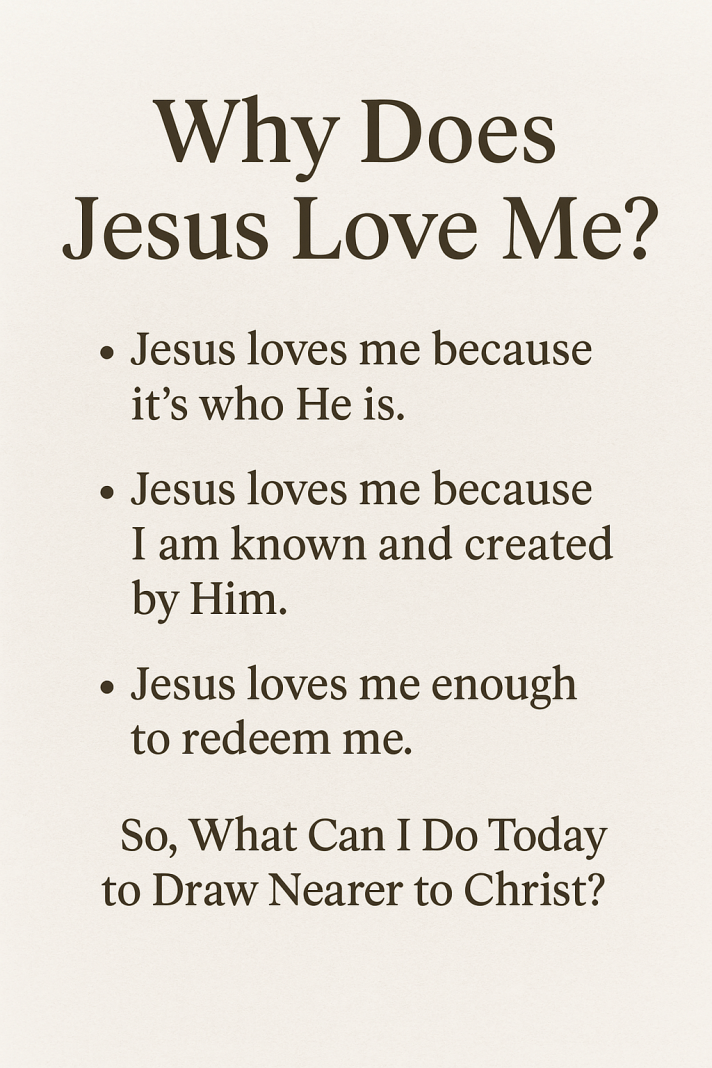
Why would Jesus love someone like me?
It’s not always easy to accept. Life has left its marks. We’ve made mistakes. We’ve doubted, fallen short, and wondered if we’re still worthy of love.
But Scripture answers this question, not with a list of qualifications, but with the cross.
“But God proves His love for us in that while we still were sinners Christ died for us.” – Romans 5:8
Let’s break that open gently and see what it tells us.
1. Jesus Loves Me Because It’s Who He Is
Love isn’t something Jesus does. Love is who He is.
“God is love.” – 1 John 4:8
Just like the sun doesn’t need a reason to shine, Jesus doesn’t need a reason to love you. He does it because it’s His very nature. It’s not about what you’ve done or failed to do. It’s about who He is—and whose you are.
2. Jesus Loves Me Because I Am Known and Created by Him
You are not an accident. You were made by the hands of the Savior who now holds them out to you in love.
“I have called you by name. You are mine.” – Isaiah 43:1
Jesus doesn’t just love the idea of you. He loves the real you—your scars, your story, your soul.
3. Jesus Loves Me Enough to Redeem Me
The cross wasn’t a symbol. It was a sacrifice. Not for a world in general—but for you in particular.
He didn’t wait for you to clean up your act.
“While we were still sinners, Christ died for us.”
He came into your mess, your grief, your shame—and He stayed.
So, What Can I Do Today to Draw Nearer to Christ?
Read a few verses. Let His Word speak to you.
Talk to Him honestly. Prayer doesn’t need polish—just presence.
Be still for a few minutes. Let your heart quiet down.
Love someone quietly. A kind word or gesture in His name is holy.
Thank Him. Gratitude draws your soul closer.
Whisper His name. Even a small, sincere “Jesus, help me,” is a sacred step.
Final Thought:
If you’re wondering why Jesus loves you, the answer is already written in nail-scarred hands.
“Make my joy whole by being like-minded. Have the same love and be one in spirit and of one mind. In your relationships with one another, have the same mindset as Christ Jesus.”
Meaning for the Church Today:
Pursue Deep Unity
Unity is more than agreement—it’s shared purpose rooted in Christ’s love.
In a divided world, the church is called to model mutual care and shared mission.
Practice Humility
We’re to “consider others better than ourselves,” which counters the culture of pride, self-promotion, and individualism.
Church members should serve each other rather than compete for position or recognition.
Imitate Christ’s Mindset
Jesus humbled Himself—so should we. His example is our pattern.
The church thrives when it reflects the servant-hearted love of Jesus.
🔹 Philippians 2:12–16 – Working Out Salvation and Shining as Lights
“Continue to work out your salvation with fear and trembling. Do everything without grumbling or arguing. Then you will shine among them like stars in the sky. You hold firmly to the word of life.”
Meaning for the Church Today:
Live Out Salvation Daily
Paul isn’t saying we earn salvation, but that we live it out with seriousness.
The church must be a community that actively reflects the grace it has received.
Cultivate Obedient Hearts
Paul reminds the Philippians to obey not just when he’s here, but always.
Faithfulness is not dependent on leadership watching—it flows from inward transformation.
Avoid Grumbling and Division
Churches today often fall into cycles of complaint or internal strife.
Paul says such behavior dims our witness. Joyful, united communities shine brightest.
Shine in a Dark World
The church is called to be a beacon of light. This is not achieved through power or control. Instead, it relies on holding fast to the Word and embodying hope.
In an anxious, fractured world, a loving, united church offers powerful testimony.
✨ Summary Takeaway for Today’s Church:
The church is at its best when it is unified in love.
It thrives when it is humble in spirit.
The church is obedient to Christ and radiant with hope.
We are not called to blend in with the world. We are called to stand out. We do this not through judgment or noise. We do this by living as a Christ-shaped community that shines like stars in the sky.
“Gracious Lord, thank You for showing us how to love and live like Jesus. Help us to be humble, united, and full of joy as we follow You. Let our lives show Your light, and others will be drawn to You through our witness. Amen.”
Have you ever been in a boat when the waters turned rough? Maybe on a lake or a river. You start off with a good weather report. The skies are clear. The breeze is calm. Then suddenly the wind picks up. The water grows choppy. Your boat rocks, and fear starts to rise in your chest.
Depending on the size of your boat—or your barge—you feel very small and very vulnerable.
But those who know the water? They don’t panic. They head for a cove, a sheltered place, and they throw out the anchor. And they wait.
Because here’s what they know: every storm runs out of energy. Every storm ends.
Same Storm, Different Boats
During the pandemic, we heard over and over: “We’re all in the same boat.” But let’s be honest—maybe we were all in the same storm, but not in the same boat.
Some had sturdy ships with full crews and plenty of support. Others were clinging to driftwood, barely staying afloat. Some had tools, resources, coping strategies. Others felt overwhelmed and unsure of the outcome.
What Scripture Reminds Us
In Hebrews 6, we’re encouraged to press on—“to move beyond just the basic teachings of the Anointed One.” In other words: don’t stay stuck in the past. We’re not meant to row backward. The captain of a ship doesn’t look behind to navigate. They look ahead—toward the open sea, toward hope, trusting that the anchor will hold.
We’re called to do the same. Yes, we learn from our past, but we live in the now—and we look ahead, with certain hope.
Has the Church Drifted?
Let’s speak truth: the Church today—especially the wider Church—feels like it’s run aground. We’re being battered by many rocks:
Fatigue – So many of us are burned out.
Bewilderment – How did we end up here?
Financial pressure – Too much going out, not enough coming in.
Indifference – “It doesn’t really matter to me.”
But Scripture speaks into this storm, too.
Paul urges us to pray without ceasing—with thanksgiving. Jesus didn’t just tell us how to pray—He showed us how to live through the storms.
He showed us how to love—not based on how others live, or worship, or even believe—but simply to love.
Four Anchors in the Storm
Let’s not over complicate this. When the storm rages and the Church feels adrift, here are four anchors to steady us:
Pray.
Turn to the Word—turn to Jesus.
Look ahead, not back.
And pray again.
When we shift our eyes from ourselves to Jesus, the next steps become clearer. When we shift from inward focus to outward mission, we become more than just a building on the corner. We transform into the hands and feet of Christ.
A Covenant to Move Ahead
So let’s make a pact with one another.
Let’s stand together in the light of the living Christ, as we pass through the storm toward calm waters.
Because here’s a truth we need to remember: No ship anchored at shore can fulfill its mission. It can’t deliver goods, it can’t ferry people, it can’t grow or explore.
Comfort is easy—but faith is not about ease. Faith is about action. Movement. Participation.
Maybe we don’t row like we used to. Maybe we can’t run marathons or even drive across town. But our smiles still matter. A kind word. A phone call. A simple “thank you.” Our hearts can still grow in Christ.
Keep Your Eyes on Jesus
Remember when Jesus called Peter out of the boat? Peter stepped out onto the water—but the moment he took his eyes off Jesus, he began to sink.
We must keep our eyes on Christ. Because we do have an anchor—an anchor that keeps the soul, steadfast and sure while the billows roll.
Let’s look to the horizon, to the One who loves us. Let’s move ahead—together. Amen.
There’s something sacred about the rhythm of spinning. The gentle pull of fiber through your fingers. The quiet whir of the spindle or wheel. The way time slows just enough for your heart to catch up with your breath.
This week, I wanted to share a simple practice that’s become part of my spiritual rhythm: spinning as prayer.
✨ Why Spin & Pray?
We often think of prayer as words. Spoken. Whispered. Written down. But there’s another kind — the quiet prayer of presence. The kind that happens when your hands are busy and your spirit is open.
Spinning wool offers that invitation. It lets us settle into stillness while our bodies stay gently in motion. It becomes a space to:
Offer our worries and hopes
Sit with grief, joy, or longing
Hold names of loved ones in our hearts
Simply rest in God’s presence
📖 A Scripture for the Spinner’s Heart
“In quietness and trust is your strength.” – Isaiah 30:15
This verse has anchored me more times than I can count. In the stillness of crafting — especially spinning — I have found a quiet. This quiet not only calms the mind but also nourishes the soul.
🙏 How to Try It
Want to spin and pray with me? Here’s how you can try it:
Set a gentle mood Light a candle. Play soft music. Sit somewhere peaceful.
Gather your fiber and spindle or wheel Nothing fancy is needed — just what feels right in your hands.
Start with a deep breath Let go of your to-do list. Let your shoulders drop. You’re here now.
Spin and listen You don’t need words. Just the rhythm. Just the wool. Just the moment.
If a prayer rises up, say it If not, let the spinning be the prayer.
🧘 A Space for Everyone
You don’t need to be “religious” to find meaning in this practice. Spin & Pray is for anyone seeking a little more peace, presence, and purpose in their craft.
You can sit with me during one of these moments. I’ve shared a new video on YouTube. In it, we spin and pray together. You’re warmly invited.
What Acts 6 Teaches Us About Leadership and Courage
In the early days of the church, something beautiful and messy happened — growth. But as more people joined, real needs began to surface. Acts 6 gives us a powerful glimpse into how the early church handled conflict, raised up leaders, and lived out their calling with Spirit-filled courage.
Here are five lessons we can draw from this chapter — and from Stephen, a servant full of grace and power.
1. Growth Brings Growing Pains
As the number of disciples increased, so did the challenges. A dispute arose over the care of widows, revealing gaps in the church’s support system. Instead of ignoring the issue, the apostles listened and acted.
Real ministry isn’t free from conflict — it faces it with wisdom. When our churches or communities grow, we must also grow in grace, structure, and communication.
2. Delegation Requires Discernment
The apostles didn’t try to do everything themselves. They said: “It would not be right for us to neglect the ministry of the word of God in order to wait on tables” (Acts 6:2). So they appointed seven Spirit-filled individuals to care for the practical needs of the community.
Healthy delegation isn’t about handing off chores — it’s about sharing purpose. Everyone has a role in building the kingdom. Word and deed go hand in hand.
3. Character is the First Qualification
When choosing leaders, the early church looked not at resumes, but at hearts. They chose men “full of the Spirit and wisdom.” Stephen stood out as “a man full of faith and of the Holy Spirit.”
The Spirit-filled life doesn’t start on a stage — it starts in quiet faithfulness. Leadership in God’s eyes begins with integrity, prayer, and a surrendered heart.
4. Spirit-Filled Witness May Bring Resistance
Stephen didn’t stay hidden in administrative duties. He preached boldly, performed signs, and shared the gospel with clarity and power. This drew opposition from those who couldn’t stand against the wisdom the Spirit gave him.
When you live boldly for Christ, resistance will come. But so will strength — not from us, but from the Spirit who speaks through us.
5. A Life Close to God Will Shine
As false witnesses rose up against Stephen, something remarkable happened. “They saw that his face was like the face of an angel.” Stephen’s countenance reflected his closeness to God — even under pressure.
We may not always perform miracles. Yet, we can show God’s glory in the way we live. We can reflect it through how we serve and stand firm.
Final Thoughts
Acts 6 reminds us that serving tables and standing before councils are both sacred when done in the Spirit. Stephen shows us that leadership is about more than skills. It’s about courage, grace, and being rooted in God’s presence.
Want to live a Spirit-filled life? Start by serving. Stand in truth. And let your life shine with grace.
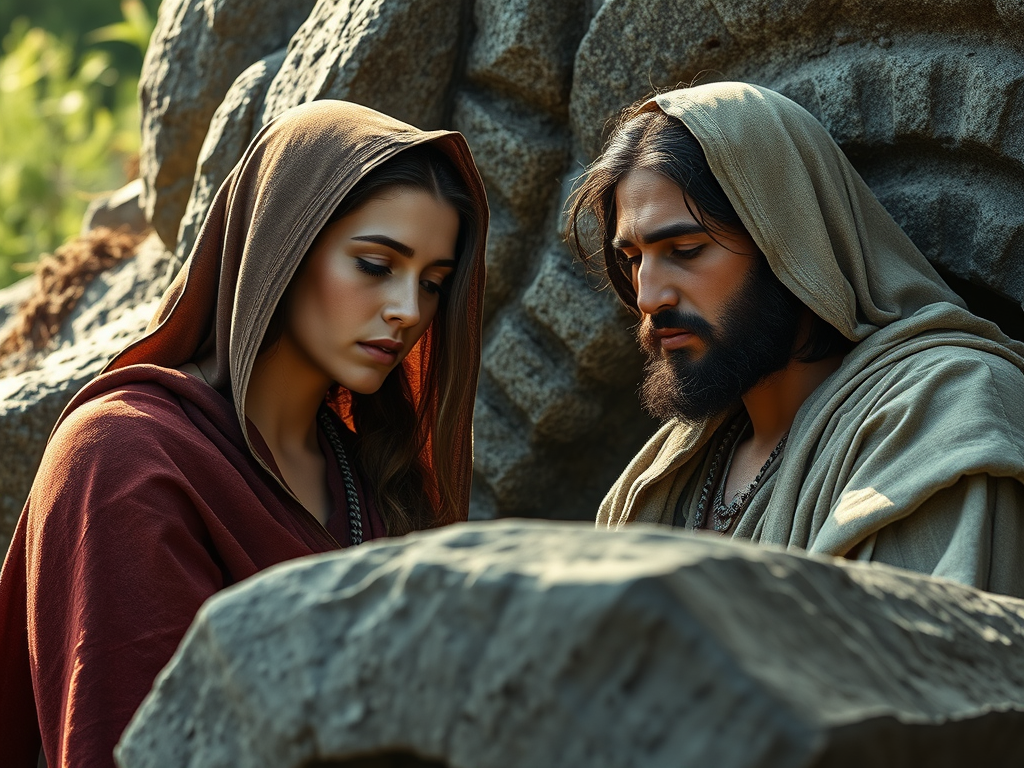
There’s a beautiful, intimate moment in the Gospel of John (20:11-18). As we celebrate the resurrection of Jesus, this moment invites us to think about the personal call of Jesus. It highlights the nourishment He offers us through His resurrection. This passage tells the story of Mary Magdalene’s meeting with the risen Christ. Through this powerful meeting, we see themes of grief, recognition, transformation, and spiritual nourishment. Let’s take a closer look at how this meeting can speak to our hearts today.
1. Grief and the Empty Tomb (John 20:11-13)
Mary Magdalene stands outside the empty tomb, weeping. She has just lost Jesus, and all she can think about is her grief. Her sorrow is so deep that she doesn’t instantly recognize that Jesus is standing right before her. She is blinded by her pain and incapable of seeing the hope that is right in front of her.
We can all relate to Mary’s sorrow. We’ve all experienced loss. It is the death of a loved one. It is the end of a season in life. Or it be the loss of hope. Grief can sometimes feel overwhelming, and it can be hard to see past our pain. Yet, the empty tomb reminds us that even in our darkest moments, God is at work. The resurrection is a powerful reminder that hope can emerge from despair.
2. Jesus Calls Mary by Name (John 20:14-16)
In the midst of her sorrow, Jesus calls Mary by name: “Mary.” The moment she hears her name spoken by Jesus, her grief turns to joy. She recognizes the risen Lord. Jesus’ call is personal. It’s not just a call to the masses; it’s a call to Mary—and it’s a call to each of us.
In our own lives, there are times when we feel lost, lonely, or distant from God. But just like Mary, Jesus calls us by name. He knows us intimately. In those moments when we’re struggling, He is right there, calling us into His presence. He invites us to leave our sorrow behind and find new life in Him.
3. The Bread of Life—Jesus Offers True Nourishment (John 20:17-18)
After Mary recognizes Jesus, her grief is transformed into joy, and she becomes the first messenger of the resurrection. Her meeting with the risen Christ completely changes her. Jesus, in this moment, offers her more than just a comforting word; He offers her the Bread of Life—Himself.
In John 6:35, Jesus says, “I am the bread of life. Whoever comes to me will never go hungry, and whoever believes in me will never be thirsty.” Jesus is the true nourishment for our souls. He doesn’t just feed us physically; He satisfies our deepest spiritual hunger. In Him, we find what our hearts have always longed for—peace, hope, love, and life eternal.
Mary’s meeting with Jesus reminds us of something important. When we come to Jesus, we are invited to feast on the Bread of Life. As we do, our grief is turned into joy, and our lives are transformed. Just as we eat to nourish our bodies, we must also come to Jesus to nourish our souls.
4. The Transformation of Mary (John 20:17-18)
Once Mary encounters the risen Christ, she is no longer the same person. Her sorrow has turned into a message of hope. Jesus tells her to go and share the good news with His disciples. She becomes the first to proclaim the resurrection.
Mary’s transformation shows us that when we meet the risen Jesus, we are not meant to keep it to ourselves. We are called to share the hope we have in Christ with others. We are invited to take the nourishment we’ve received from Him and offer it to a hungry world.
Conclusion
The resurrection of Jesus is not just a historical event—it is a living reality that continues to transform us today. Jesus calls each of us by name and invites us to feast on the Bread of Life. This meeting with Jesus brings us from sorrow to joy, from grief to hope. It transforms us, and like Mary, it sends us out to share the good news with others.
So, take a moment today to think about how Jesus is calling you by name. Are you ready to come to Him for nourishment? Are you ready to share the hope of the resurrection with those around you?
Closing Prayer:
Lord, thank You for calling us by name and offering Yourself as the Bread of Life. Help us to recognize Your presence in our lives, especially in our moments of sorrow. We feast on the nourishment You offer and be transformed by Your love. Empower us to share the good news of Your resurrection with others. In Jesus’ name, Amen.
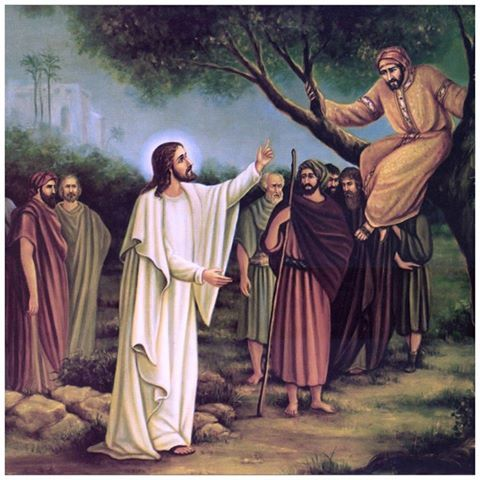
“I got a letter in the mail today—from my son, Zacchaeus. Yes, that Zacchaeus. He wrote:
“I heard Jesus was coming through Jericho. As chief tax collector, I knew people hated me—maybe for good reason. I’d built a life on their losses. But something stirred. I ran ahead and climbed a sycamore tree like a child, just to see Him.”
Then Jesus stopped. Right under that tree.
“Zacchaeus, come down. I must stay at your house today.”
He knew my name. He didn’t rebuke me. He invited Himself in.
“It changed everything, Mom. I gave half of what I owned to the poor. I paid back four times what I stole. Jesus came to find the lost—and He found me.”
And then, his letter turned tender:
“Mom, maybe He’s calling your name too.””
Let’s take a few moments to reflect on this story.
Zacchaeus reminds us what Lent is really about: repentance, change, and grace. He felt unworthy, but Jesus called him by name. The crowds grumbled, but it didn’t matter—Jesus saw him.
We’ve all been Zacchaeus at some point—feeling small, hidden, maybe ashamed. But Jesus sees. Jesus calls. Jesus loves—more than He hates sin.
So as we near the end of Lent, maybe we ask ourselves:
What trees are we willing to climb to see Jesus?
Who needs our apology, our kindness, our open heart?
What can we give—not just in money, but in prayer, time, and love?
May we be generous. May we be kind. And may we remember: we are called by name.
Because the community—the bread we offer each other—isn’t just within the church walls. It’s out there, waiting to be fed.
Who are you feeding today?
Please share your thoughts. Has this story spoken to your heart or life today?
1. Humility: Taking the Lowest Place (Luke 14:7-11)
Jesus tells a parable about a banquet where people seek the best seats.
He teaches us to take the lowest place, letting the host elevate us if needed.
Life lesson: Aging brings natural humility—our roles change, and we may feel overlooked.
Key verse:“For all those who exalt themselves will be humbled, and those who humble themselves will be exalted.” (Luke 14:11)
Reflection:
Have you experienced a time when humility brought a blessing?
How has growing older taught you humility?
2. Hospitality: Inviting Those Who Cannot Repay (Luke 14:12-14)
Jesus challenges us to welcome those who cannot repay us—true hospitality is selfless.
We often show hospitality expecting something in return, but Jesus calls us to a different way.
Life lesson: Even if we can’t do what we once did, small acts—calls, visits, kind words—reflect Christ’s love.
Key verse:“Although they cannot repay you, you will be repaid at the resurrection of the righteous.” (Luke 14:14)
Reflection:
Have you ever been blessed by someone’s kindness when you had nothing to give back?
How can we show hospitality to the lonely or those in need?
3. Living with Kingdom Values
We don’t need recognition—God honors the humble.
We don’t need repayment—God blesses generosity.
Reflection:
Where can I choose humility in my life?
Who can I bless with kindness without expecting anything in return?
Encouragement: God sees, remembers, and will reward every act of humility and love.
Closing Prayer: Ask God to help us walk in humility and extend kindness without expecting anything in return, trusting in His eternal promises.
📖 Key Takeaways: ✅ Humility brings unexpected blessings (Luke 14:11). ✅ True hospitality expects nothing in return (Luke 14:14). ✅ God sees, remembers, and will reward every act of love.
Reflection Questions: 🔹 Where can I choose humility in my life? 🔹 Who can I bless with kindness without expecting anything in return?
If this message encourages you, like, comment, and subscribe for more faith-filled content!
🙏 Let’s grow in faith together. Share your thoughts in the comments!