
Doll Can Create

100 Mile Life/Grandma Core

Baked Oatmeal Drop Cookies — December 23, 2025

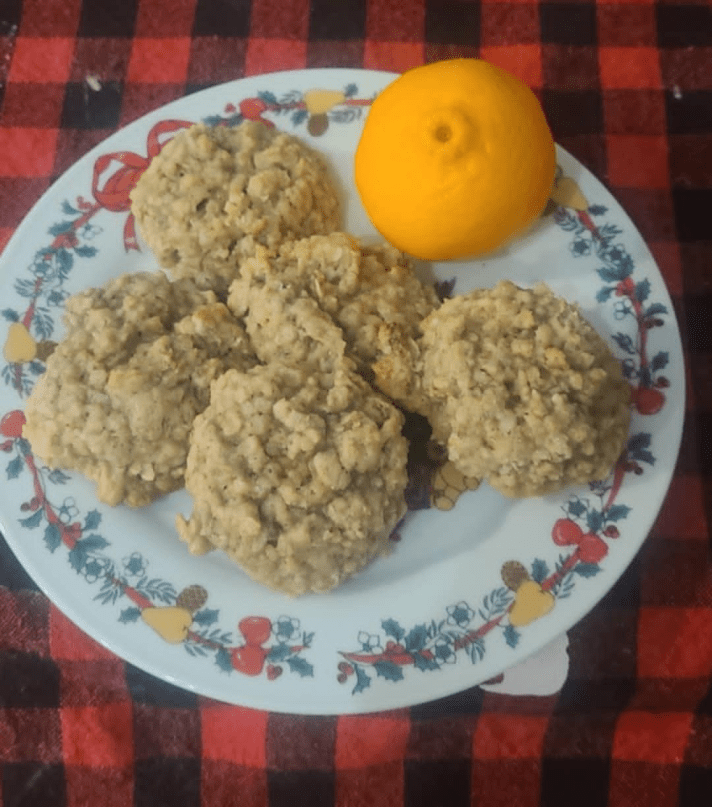
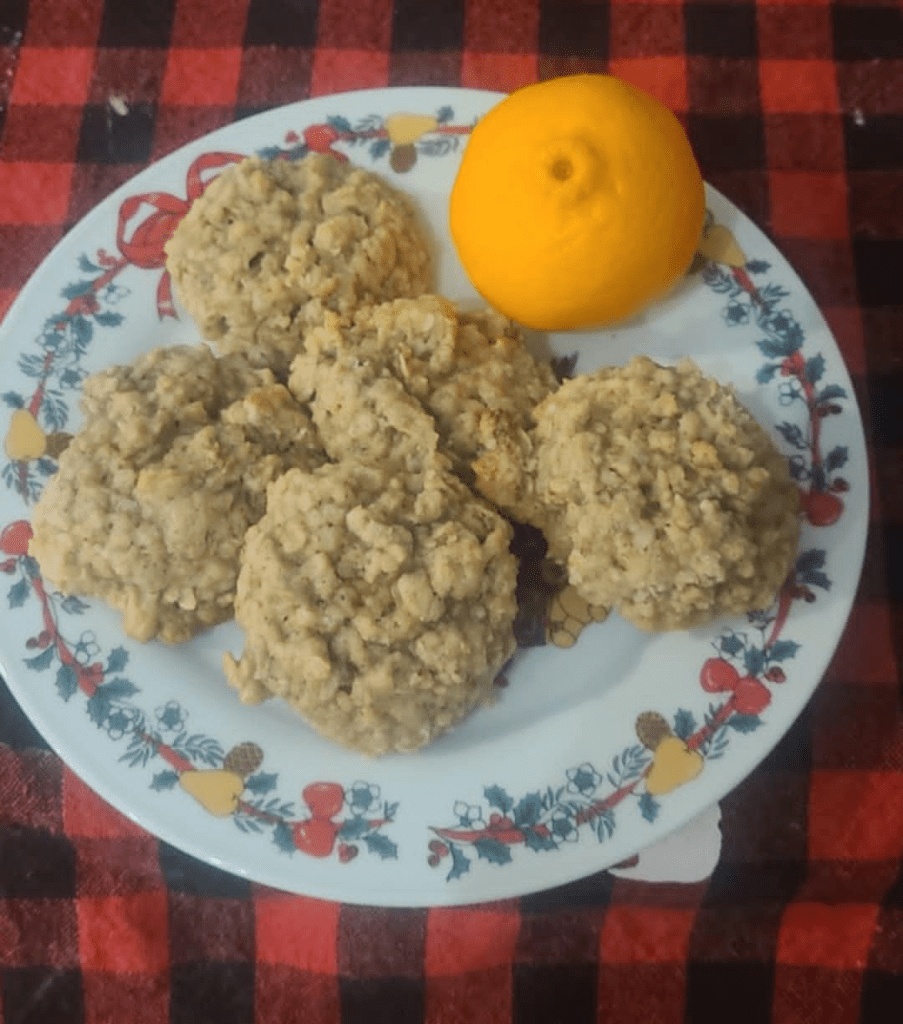
Baked Oatmeal Drop Cookies

A cozy, old-fashioned treat for slow afternoons

There’s something grounding about oatmeal cookies. Maybe it’s the way oats soften as they bake. Or it could be how the kitchen fills with that warm cinnamon-butter scent. It feels like home before the cookies even leave the oven.

These baked oatmeal drop cookies are the kind you make on an ordinary afternoon. There is no mixer drama, and no fancy steps involved. Just a bowl, a spoon, and a little pause in the day. They have a soft center. The edges are lightly crisp. They are just right with a mug of tea or coffee beside you.

This is the recipe I reach for when I want something gentle and familiar. It is the kind of baking that feels like a deep breath.


Why I Love These Cookies

  • They’re simple and forgiving
  • Made with pantry staples
  • Soft and comforting, not overly sweet
  • Easy to adapt with what you have on hand

These aren’t bakery cookies. They’re home cookies. And that’s exactly the point.


Baked Oatmeal Drop Cookies

Ingredients

  • 1 cup rolled oats (old-fashioned)
  • ¾ cup all-purpose flour (whole wheat works beautifully too)
  • ½ teaspoon baking soda
  • ½ teaspoon cinnamon
  • ¼ teaspoon salt
  • ½ cup butter, softened
  • ½ cup brown sugar, packed
  • 1 large egg
  • 1 teaspoon vanilla
  • 2–3 tablespoons milk (only if the dough feels dry)

Optional add-ins (choose what feels right):

  • ½ cup raisins
  • ½ cup chopped walnuts or pecans
  • ½ cup chocolate chips
  • ¼ cup shredded coconut

Instructions

  1. Preheat oven to 350°F (175°C) and line a baking sheet with parchment paper.
  2. In a medium bowl, whisk together oats, flour, baking soda, cinnamon, and salt.
  3. In another bowl, cream butter and brown sugar until soft and blended.
  4. Beat in the egg and vanilla.
  5. Stir the dry ingredients into the wet just until combined. Add milk if needed for a soft, scoopable dough.
  6. Drop spoonfuls (about 1½ tablespoons) onto the prepared baking sheet.
  7. Freeze for 10 minutes (optional)
  8. Bake for 10–12 minutes, until edges are lightly golden and centers are just set.
  9. Let cool on the pan for 5 minutes before moving to a wire rack.

A Few Gentle Baking Notes

  • For softer cookies: lean closer to 10 minutes. (I like them soft so yes, 10 minutes)
  • For a heartier cookie: use whole wheat flour and an extra spoonful of oats.
  • For crisp edges: lightly flatten the dough before baking.

Cozy Variations to Try

  • Maple Oatmeal Cookies: swap half the brown sugar for maple syrup.
  • Apple Cinnamon: add ½ cup finely diced apple and a pinch more cinnamon.
  • Breakfast-style Cookies: reduce sugar to ⅓ cup and use nuts + dried fruit.

A Small Kitchen Blessing

May your oven warm the room,
may your cookies cool just enough,
and may you remember —
even ordinary days can be sweet.

If you bake these, I’d love to hear how you made them your own. Share a cup of tea, a quiet moment, and a cookie or two. 💛

Slow Autumn Mornings | Knitting with Local Wool & Living the 100 Mile Life — November 3, 2025

Slow Autumn Mornings | Knitting with Local Wool & Living the 100 Mile Life


🌅 Gentle Beginnings

There’s something sacred about slow autumn mornings.
When the first light spills softly across handmade blankets, the house feels hushed—almost reverent. The air carries a crispness that whispers of change, of rest, of gratitude.

This is where my day begins. It starts with stillness and a slow breath. I find quiet joy in creating something by hand.


🍵 Morning Ritual

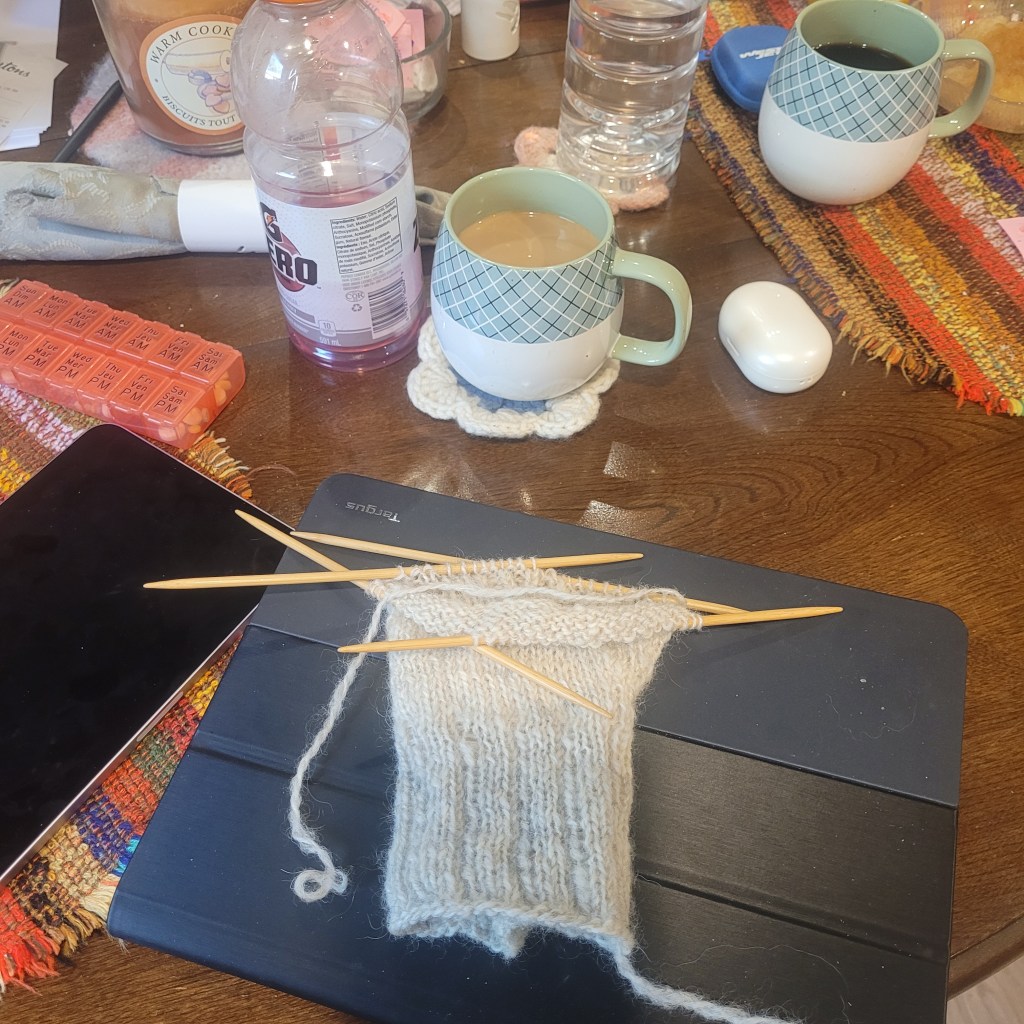
Before the day gathers speed, I brew a cup of coffee. Steam rises in the golden light. This simple act feels like prayer.

Today, I choose wool from a local farm, just thirty minutes away. It’s part of my 100 Mile Life journey. I practice sourcing as much as I can from within my own community. This includes food, fiber, and fellowship.

This wool carries the scent of pasture. It tells the story of hands who cared for the flock. It holds the promise of warmth yet to come.

🧶 Knitting

By the window, with the world outside draped in amber leaves, I start to knit.
The rhythm of the needles is its own music—a meditation on patience and purpose.

I let the process unfold slowly, without rush.
Each stitch holds the memory of where it came from: the sheep, the land, the hands that tended both.


🍎 Breakfast Interlude

A slow life calls for simple nourishment.
Warm porridge with cinnamon and apple slices—the taste of the season itself.

I’ve learned that preparing food, like knitting, roots us in the moment. It’s part of the rhythm of sustainable living. It honors the ingredients and the process. It also honors the care it takes to make something from scratch.


🌿 Reflection

“This,” I whisper, “is what sustainable living looks like.”
It isn’t grand or glamorous—it’s quiet, mindful, intentional. It’s making time for what matters: the people, the place, the practice of living close to the land.

The wool I knit today connects me to where I am. It reminds me that sustainability starts at home—with simple, beautiful acts of care.


✨ Closing

The coffee is gone, the light shifts, and my knitting rests softly in my lap.
Another morning well spent, another reminder that peace often hides in the ordinary.

What are you creating this autumn?

Gentle and Faith-filled:
“Thank you for sharing this quiet autumn morning with me. May your days be stitched with peace. May your hands find joy in creating. May your heart rest in the simple goodness of God’s world. Until next time — love, light, and woolly blessings. 💛
— Grannie Doll”

Practical Ways to Live a 100 Mile Life — March 20, 2025

Practical Ways to Live a 100 Mile Life

What if everything you ate, wore, and used came from within 100 miles of your home? No big-box stores, no global supply chains—just what’s near, what’s seasonal, and what’s truly local.

That’s the challenge I’ve taken on for 100 days: living as locally as possible. This isn’t just about food (though that’s a big part of it). It’s about fiber, household goods, and the relationships that sustain a truly local life.

What I’ve learned so far is that living locally isn’t about finding a perfect replacement for everything—it’s about rethinking what I actually need. It’s about discovering abundance in my own backyard.

Here are some of the ways I’m embracing this lifestyle, and practical steps you can take to live more locally, too.


Food & Cooking: Eating with the Seasons

Food is one of the biggest shifts when committing to a 100-mile life. We’re so used to having whatever we want, whenever we want it, that we forget food has a season.

  • Buy from Local Farmers – Farmers’ markets, CSAs (community-supported agriculture), and direct farm sales have become my go-to. Not only does the food taste better, but I’m also building relationships with the people who grow it.
  • Cook Seasonally – Instead of planning meals and shopping for specific ingredients, I’m flipping the approach—I buy what’s local and in season, then create meals around it.
  • Preserve the Harvest – I’m learning to can, freeze, and ferment so I can eat locally even in the off-season. (My first attempt at pickled beets was… interesting. But I’ll get better!)
  • Grow My Own – Even a small herb garden or a few raised beds can add fresh, local flavor to meals.
  • Trade & Barter – A neighbor has fresh eggs, another bakes sourdough bread. By swapping what we have, we all get a little more variety while staying local.

Clothing & Textiles: From Fleece to Fabric

Sourcing clothing locally is a challenge, but it’s one I’m excited about—especially since I love fiber arts.

  • Support Local Fiber Farms – I’ve been connecting with nearby sheep and alpaca farms to source fiber for my knitting and spinning projects. There’s something special about working with wool from animals raised close to home.
  • Make & Mend – Instead of buying new, I’m knitting my own socks and sweaters. And if something tears, I repair it instead of tossing it.
  • Experiment with Natural Dyeing – I’m trying out plant-based dyes from local sources like onion skins, acorns, and flowers. (I’ll report back on my results—expect some trial and error!)
  • Seek Out Local Makers – Weavers, seamstresses, and artisans are out there—you just have to look. Finding someone who crafts clothing locally is a rare but valuable connection.

Home & Living: Bringing It All Closer to Home

Beyond food and fiber, I’m also thinking about the everyday things I use at home.

  • Use Local Wood – Whether for furniture, crafts, or even firewood, sourcing wood locally is a more sustainable choice.
  • Find Local Artisans – Handmade pottery, candles, soap, and cleaning products can often be found close to home, supporting small businesses instead of big corporations.
  • Reduce Waste – Living locally isn’t just about buying local—it’s also about making things last. I’m focusing on repairing, repurposing, and reusing instead of replacing.

Community & Connection: The Heart of a Local Life

One of the most unexpected joys of this challenge has been the relationships I’m building. Living locally isn’t just about what I consume—it’s about the people I connect with.

  • Build Relationships with Local Producers – Knowing the farmers, spinners, and craftspeople in my area makes this journey feel richer and more meaningful.
  • Join a Local Exchange – Trading homemade or homegrown goods with others makes local living more sustainable and fun.
  • Learn Traditional Skills – Bread baking, cheese making, beekeeping—these skills are disappearing, but they make a huge difference in living a truly local life.
  • Support Local Businesses – Every dollar spent at a small, locally owned business strengthens the community.

Final Thoughts

This journey isn’t about perfection—it’s about intention. It’s about slowing down, paying attention, and living in rhythm with where I am.

I’d love to hear from you! What’s one way you could start living more locally? Let’s share ideas and encourage each other on this journey.

I’ll be sharing more updates, challenges, and lessons learned along the way—so stay tuned! 💛

Doll

What did we buy today? (100 Mile Adventure) — January 30, 2025

What did we buy today? (100 Mile Adventure)

We did some end of the month shopping today at a local store: Denninger’s. (3.5 KM from home)

I was looking for some liverwurst and asked at the Deli where it was made – right here in Hamilton she said. Bonus!

All that I purchased was 100 Mile except the grapes which came from Peru. This is not the best shop for low prices but the quality is so good and the staff always pleasant and kind.

We saved $14.15 by purchasing items marked down. Even the grapes were $2.00 off. Will we shop there again? For sure.

How have you made out with your shopping this week? Any great, local deals? Comment below. Let’s keep the conversation going.

Doll

Station Dairy 21.3 KM (we purchased at Denningers)

Hewitts Dairy 33.8 KM

I struggle with moving from miles to km so for me it’s almost always how long does it take to get there? 160 km = 100 mile LOL

The 100-Mile Life: Exploring Local Food Choices — January 27, 2025

The 100-Mile Life: Exploring Local Food Choices

Hello, my friends! Have you ever stopped to think about where your food comes from? Is it flown in from thousands of kilometers away or sourced just down the road?

Welcome! This is Doll from Doll Can Create, where I share my journey of crafting and living intentionally. Today, I’m diving into the second set of rules I’ve created for my 100-Mile Life Experiment.

Rule #1: Use What You Have

In my last post, I talked about sourcing local wool for my knitting and crafting projects. While I work towards fully local wool, I’ve also committed to using what I already have. My Sophie scarf, for example, was made from yarn already in my stash. It may not be local, but it’s a step toward sustainability.

Now, I’m turning my attention to food—where it’s grown, processed, and packaged. My goal is to source as much as possible from within a 100-mile radius of my home.

Rule #2: Local Meat

Finding locally sourced meat is tricky. Many grocery store options are imported, like New Zealand lamb. However, I know of at least one local processor, and I’m exploring food delivery services that prioritize local meat.

Prepared products require extra scrutiny—labels often reveal where meat was packaged, which may or may not meet my 100-mile rule. It’s all about reading labels and asking questions.

Rule #3: Local Cookies and Baking

When it comes to snacks, I’m rethinking my choices. For instance, Oreos are made in Montreal, which is outside my 100-mile zone. Instead, I’m revisiting local options like Dare cookies or baking my own treats.

To support this, I’ve revived my sourdough starter. The warmer temperature in my apartment has helped it thrive, and I’m excited to bake bread again. I’m also researching local grain mills for flour from nearby farms.

Rule #4: Produce and Dairy

Winter makes sourcing fresh, local produce challenging, but I’ve found creative solutions:

  • Local dairy: Summit Dairy, just outside Ancaster, produces excellent products from its own herd. While slightly more expensive, their milk, cream, and chocolate milk are worth it.
  • Produce options: I’ve started using services like Produce Express, which allows me to choose local fruits and vegetables.
  • Sprouting at home: To enjoy fresh greens year-round, I’ve begun sprouting mung beans, radishes, and pea shoots. It’s a quick and satisfying way to supplement my diet with homegrown nutrients.

A Few Exceptions

Of course, I have a few items that I’m allowing myself to buy outside the 100-mile rule, like matcha tea, green tea, and coffee. But even here, I plan to transition to local roasters once my current stash is used up.

Sharing the Journey

This journey is just beginning, and I’m excited to share more about my research and discoveries in future posts. From finding local suppliers to adapting recipes, it’s an adventure in mindful living.

What about you? Does the idea of sourcing food locally appeal to you, or does it feel daunting? Share your thoughts in the comments—I’d love to hear from you.

Until next time, this is Doll from Doll Can Create, reminding you that you can too. Let’s create a more intentional, sustainable life together.

Stay tuned, and bye for now! Blessings to you.