Doll Can Create

100 Mile Life/Grandma Core

🍂 Rocking Chair Reflections: What September Taught Me — September 27, 2025

🍂 Rocking Chair Reflections: What September Taught Me

Pull up a chair, pour yourself a cup of tea, and settle in with me. The needles are clicking softly in my hands. I think back over September. It has taught me more than I expected. The evenings are drawing in. The air has turned crisp. I find myself reflecting on what both DollCanCreate and this gentle GrandmaCore life have whispered into my days.


🌿 What DollCanCreate Reminded Me

  • Showing up matters. Some days, all I had to share was a sock half-knit. Occasionally, it was a quick glimpse of tomatoes from the farm store. But I learned again that it’s the rhythm of showing up, not the perfection of the finish, that connects us.
  • Local stories hold power. A skein of wool from down the road carries more than just flavor and texture. Apples from the orchard do as well. They carry a story. September proved that when I share those stories, others feel rooted too.
  • Different doors, same home. People came in through different channels, whether it was a blog post, a YouTube vlog, or a printable checklist. However, they all entered the same cozy home. That felt like a gift.

🧶 What GrandmaCore Whispered

  • Slow is a rebellion. Sitting in a rocking chair while the world rushes by isn’t laziness — it’s choosing presence. Each stitch is a small “no” to the frenzy and a gentle “yes” to peace.
  • Hospitality is holy. A warm welcome doesn’t always look like a grand dinner. Sometimes it’s sharing a cinnamon bun from the farm store, or simply offering listening ears and soft yarn to touch.
  • Faith knits it all together. The scriptures I carried this month reminded me of new mercies every morning. They spoke of scars healed in Christ and blessings of the harvest. This reminds me that GrandmaCore isn’t just about cozy living. It’s about rooted, faithful living.

✨ A Lesson for the Heart

If September had one message, it was this:
ordinary life is sacred. Slow living is not wasted living.

Every sock stitch, every apple pie, every whispered prayer is part of the greater pattern God is weaving. And sometimes the rocking chair is the holiest place of all.


📖 Scripture to Rock With

“The steadfast love of the Lord never ceases; his mercies never come to an end; they are new every morning; great is your faithfulness.”
— Lamentations 3:22–23


🌸 A Cozy Blessing

As you step into October, may you carry September’s gentle lessons with you.
May you find warmth in small joys. Find rest in quiet moments. Trust in God’s faithfulness — stitch by stitch, day by day.

From my rocking chair to yours,
Grannie Doll 🧶💜


Grocery Savings Without Feeling Deprived — September 19, 2025

Grocery Savings Without Feeling Deprived

“Embracing the 100 Mile Life for sustainable living”

Living a 100 Mile Life can seem like it cost more. This involves sourcing as much of our food, fibers, and essentials from within a 100-mile radius. But here’s the truth: When you embrace seasonal eating, you can discover grocery savings. Shopping local produce doesn’t leave you feeling deprived. In fact, the 100 Mile Life can actually make your meals richer, simpler, and more budget-friendly.

1. Shop Seasonal, Shop Abundant for Grocery Savings

One of the best grocery savings tips is buying what’s in season. Local fruits and vegetables are most affordable when they’re abundant. Instead of expensive imported strawberries in January, enjoy crisp apples in September, squash in October, or sweet corn in July.

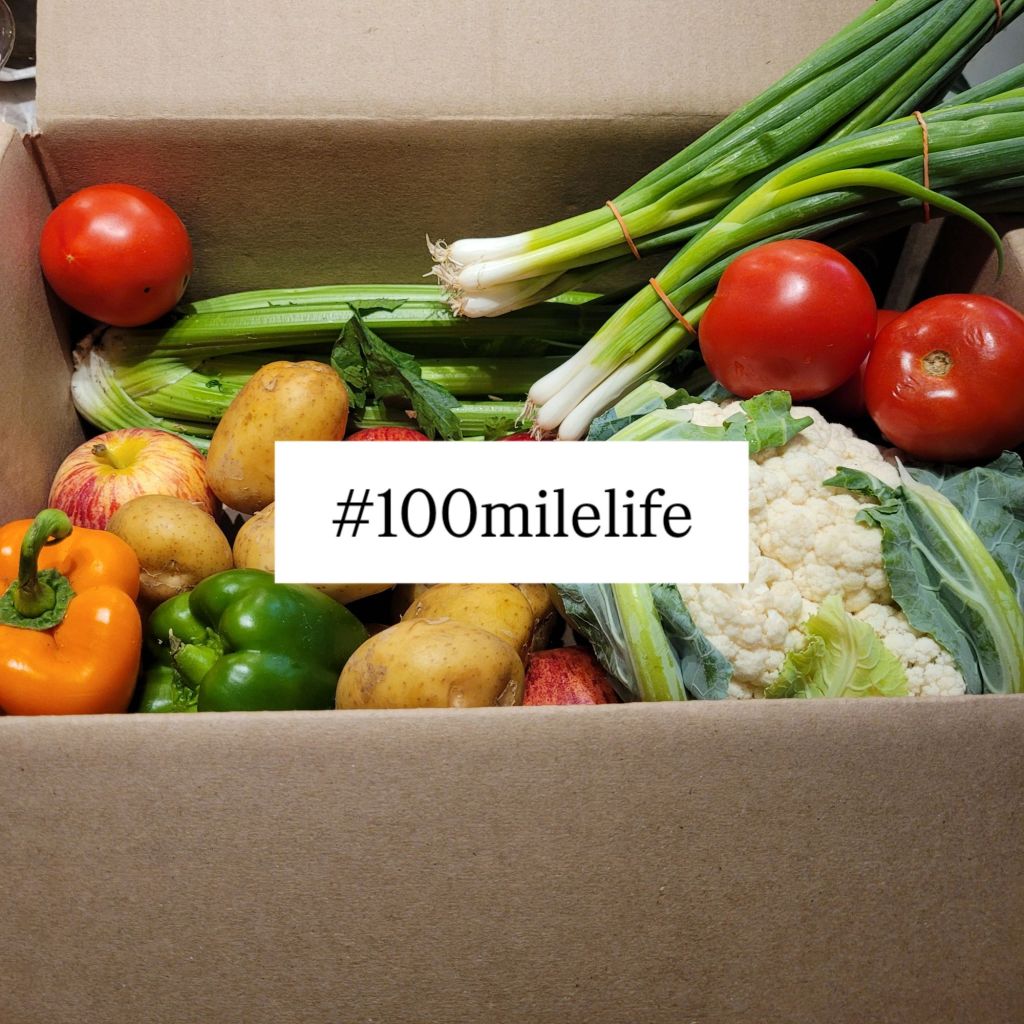
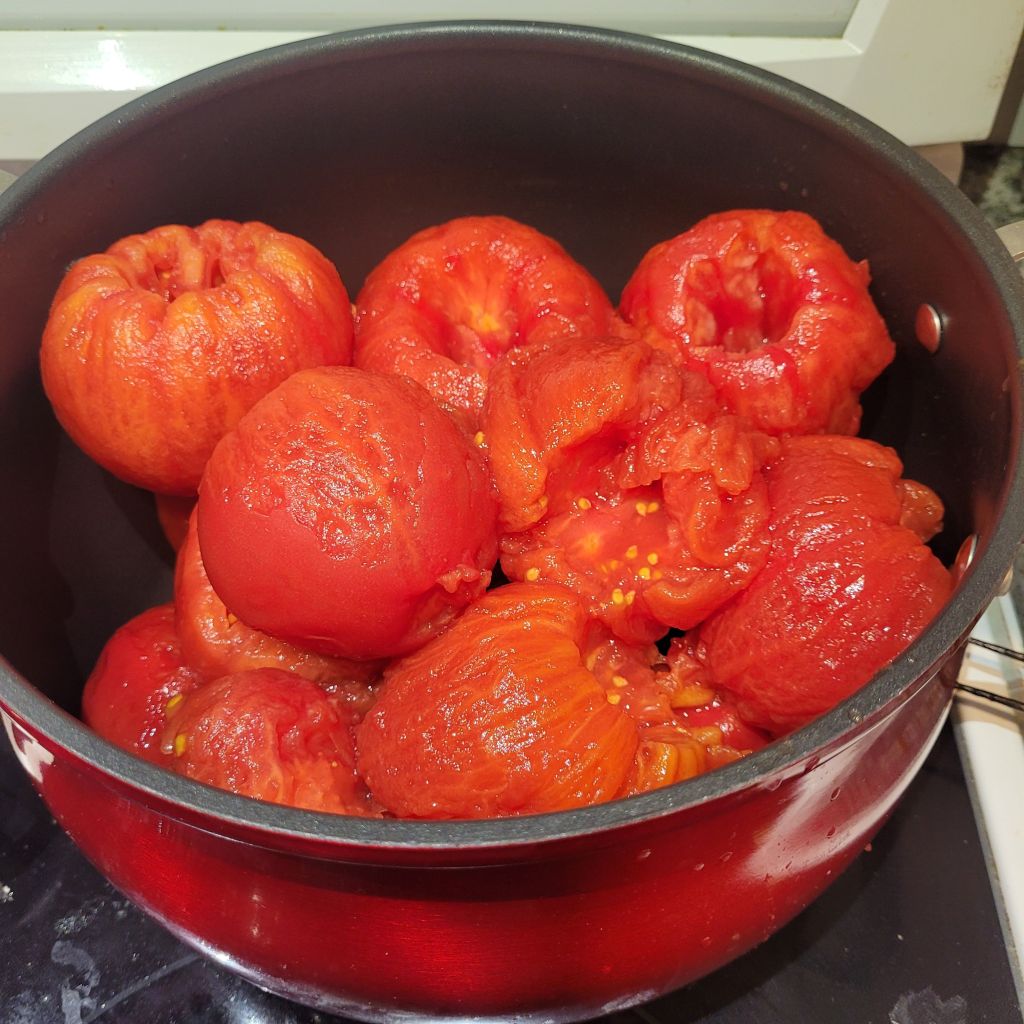
GrandmaCore wisdom: Buy in bulk when harvests are plentiful. A bushel of tomatoes or apples costs less per pound. With a little preserving, you’ll enjoy budget-friendly seasonal meals all winter.

2. Build Relationships With Local Farmers

Knowing your farmer means knowing your food—and often, saving money. Regular visits to a farm stand or market can result in small discounts. You will get bonus extras, like “take these cucumbers, they’re odd-shaped.” Sometimes, you can even barter. Supporting local farmers not only strengthens community, it helps you cut costs compared to supermarket shopping.

3. Embrace Simple, Frugal Meals

Local ingredients often encourage simpler recipes. A hearty soup made from root vegetables, beans, and fresh herbs can be filling and healthy. It can cost far less than take-out. These meals embody frugal grocery shopping while connecting you back to traditions of home-cooked care.

4. Reduce Waste and Stretch Your Grocery Budget

When you buy farm fresh food, it often lasts longer. Still, reducing waste is key. Roast beet greens with the roots, simmer chicken bones for broth, shred day-old bread into croutons. These small choices stretch every ingredient, creating grocery budget hacks that save you more than you realize.

5. Redefine “Treats” in the 100 Mile Life

A cinnamon bun from a local bakery, a wedge of regional cheese, or berries you picked yourself—these become meaningful luxuries. Because they’re intentional rather than impulse buys, you savor them more deeply while keeping your grocery budget in check.


The Joy of Enough

The secret to saving money on groceries without feeling deprived is embracing the joy of enough. Focus on seasonal eating. Support local farmers. Practice mindful shopping. You’ll find the 100 Mile Life doesn’t shrink your world. It expands it in surprising and satisfying ways.


Friend, what’s one local food swap you’ve made that saved you money? Share it in the comments—I’d love to hear!

💛
With gratitude and hope,
Grannie Doll

The Challenges of Living a 100-Mile Life 🌿 — September 18, 2025

The Challenges of Living a 100-Mile Life 🌿

When I first began

this 100-Mile Life journey, I knew it would be an adventure. It would be full of discoveries, creativity, and connections with local growers and makers. What I didn’t fully realize was just how many little challenges would rise up along the way. Each one has stretched me, sometimes frustrated me, and often surprised me. But they’ve also shaped this path into something deeper than just “buying local.”


🌱 Food & Meal Planning

One of the first things I noticed was how much my pantry had to change. Foods I once took for granted—bananas, coffee, rice—suddenly became special luxuries I had to think twice about. Planning meals meant paying close attention to the seasons. Strawberries in June are heavenly. Come January, I’d better have canned or frozen some if I want to taste summer sweetness.

It takes more work to preserve, to store, and to plan. But in that effort, I’ve found a rhythm of gratitude. Every jar of tomatoes in my cupboard feels like a victory.


🧶 Fiber & Clothing

Then there’s my love of wool and fiber arts. Finding local wool has been a joy, but it also comes with hurdles. Some farms don’t produce enough to supply bigger projects, and local mills are fewer than you’d think. If I want to spin or knit a sweater, it takes patience. I need to piece together skeins from different sources. I will also learn to work with blends I wouldn’t have chosen before.

Yet, those limitations have taught me something precious. The garment on my needles has a story. It is tied to my land, my hands, and my community.


🏡 Household & Lifestyle

I’ve also had to rethink the everyday items I once bought without a second thought. Spices, oils, cleaning supplies—many don’t come from within 100 miles. Some I can substitute, some I can make, and some I simply go without. Convenience has shifted too. There’s no longer quick trips to the big box store. Now it means going to farmers’ markets, local shops, or even a neighbor’s porch.


💰 Budget & Sustainability

Another challenge is the cost. Buying from small farms and artisans often means paying a little more. But here’s the flip side: That money goes straight into my community. It supports real people I can actually talk to and thank.

Time, too, is part of the cost. Local shopping doesn’t always happen in one big swoop—it takes more planning, more intentionality, and sometimes more patience.


🌍 The Emotional Side

And then, there’s the heart side of it all. Family and friends don’t always understand why I’d choose to “limit” myself. At times, it can feel like deprivation. But I’ve come to realize that what looks like a limitation is actually a doorway to creativity. Every missing item is an invitation to discover something new, to slow down, or to lean into community.


Closing Thoughts ✨

Living a 100-Mile Life isn’t simple. It has stretched me in ways I didn’t expect. But with each challenge comes a reward—deeper connections, greater creativity, and a growing sense of gratitude.

This isn’t about perfection. It’s about learning to live more fully where we are. We do this with what we have and alongside the people who share our corner of the world. 🌿

So yes, there are challenges. But they’re the kind that shape us into something stronger, wiser, and maybe even more joyful.

💬 I’d love to hear from you. What challenges have you faced if you tried living within 100 miles? Or do you imagine you’d face challenges? And what local treasures have you discovered along the way? Share your stories in the comments—I think we can learn so much from each other’s journeys.

With gratitude,
Grannie Doll
“The earth is the Lord’s, and everything in it.” – Psalm 24:1

Click to download the checklist

Support Local Producers: A 100-Mile Journey — September 16, 2025

Support Local Producers: A 100-Mile Journey

Day 16

Theme: Let’s connect a little deeper with the people who make your local food and goods.


Daily Task (active + simple)

  1. Take 20–45 minutes to map local producers within your 100-mile radius. Include farmers, mills, and bakers. Add yarn shops, honey producers, and maple syrup makers. Don’t forget cheesemakers, co-ops, and thrift stores.
  2. Pick one maker you don’t already buy from and plan a visit (or order one small item). If you can’t visit today, send an email or message. Ask them their story — who they are. Inquire about what they raise or make. Request one tip for shoppers.

Quick 100-mile recipe — Maple Pork Chop with Roasted Root Veggies

(Uses local pork, apples, maple syrup, root veg)

Ingredients (serves 2)

  • 2 local pork chops (about 150–200 g each)
  • 1 tbsp local maple syrup
  • 1 tsp mustard (local or pantry)
  • 1 apple, sliced thin (local)
  • 2 medium potatoes, cut into wedges (local)
  • 2 carrots, cut on the diagonal (local)
  • 1 small onion, quartered (local)
  • 1 tbsp olive oil (or local butter)
  • Salt & pepper, dried herbs (rosemary/thyme)

Method (30–40 min)

  1. Preheat oven to 425°F (220°C). Toss potatoes, carrots, onion with oil, salt, pepper, and herbs; roast on a tray for 25–30 min until golden.
  2. Meanwhile, heat a skillet. Sear pork chops 3–4 min per side until golden. Reduce heat; add apple slices to pan, pour on maple + mustard, spoon over chops and let glaze finish for 2–3 min.
  3. Rest chops 3 minutes. Serve with roasted veg and apples. Portion control: 1 chop + generous veg + 1 apple half per person.

Storage tip: If you bought extra local apples or veg, slice the apples thin. Dry them in the oven at a low temperature. Alternatively, simmer them in a little syrup to make a small jar of apple compote. It freezes or jars well.


Mini Craft / Maker-Love Activity (10–20 min)

  • Make a small thank-you/label card to include with your purchase from that maker. Add a hand-drawn logo or floral border. Include a short note: Example : “Bought with gratitude — Doll Creelman / 100-Mile Life.” Snap a photo for your socials.

Journal / Reflection Prompts

  • Who made the food in my kitchen today? Name them.
  • What surprised me about that maker’s story?
  • How does knowing who made my food change the way I eat or store it?
  • One small step I can take to support a local maker this week is…

Short devotional

“Small hands and steady work make the table possible. Today, by meeting a maker, we practice gratitude and stewardship — small choices that stitch us into our local community.”


Day-16 Checklist

  • Map 5 nearby makers (farm, mill, baker, yarn shop, co-op)
  • Visit or message one maker today
  • Buy one small local item (support local!)
  • Make a thank-you/label card to include with purchase
  • Cook the Maple Pork Chop recipe or try a local ingredient in a new way
  • Journal one reflection (line space)

“Little steps make a big difference. May peace and gratitude carry you through today.”

— Grannie Doll


Generated image

What Is the 100 Mile Life? Day 15 — September 15, 2025

What Is the 100 Mile Life? Day 15

Living Local, Simply, and Well

Have you ever wondered what it would be like to live more closely connected to your community? Imagine being closely tied to your farmers, your makers, and your land. That’s the heart of what I’ve been exploring through the 100 Mile Life Challenge.

In my recent live stream, I shared our half way point in this lifestyle. It is about committing to source as much of what we eat, wear, and use from within a 100-mile radius. It’s not about perfection—it’s about awareness, creativity, and building stronger connections with the people and places right around us.


What the 100 Mile Life Means 🌱

At its core, the 100 Mile Life is an invitation to slow down and live more intentionally. It asks us to:

  • Notice where our food, fibers, and household goods come from.
  • Choose local when we can, supporting nearby farms and artisans.
  • Celebrate the small joys of living simply and sustainably.

For me, it has meant rediscovering the flavor of local produce. I have relished in the beauty of hand-dyed yarn. I have also experienced the richness of community connections.


Why It Matters 💡

Living this way has been both surprising and rewarding. Sometimes it’s challenging—like figuring out how to replace ingredients I used to grab without thinking. But other times, it’s pure delight. I find honey from just down the road. I meet a farmer who grows the exact beans I love.

The journey has already reshaped my pantry and my perspective. It’s not just about what I buy—it’s about the stories and relationships woven into every choice.


An Invitation to You 🤝

Maybe you’re curious about what’s grown near you. Maybe you’d love to try sourcing just one ingredient locally. Or maybe you’re already on this path in your own way.

Here’s my challenge for you:

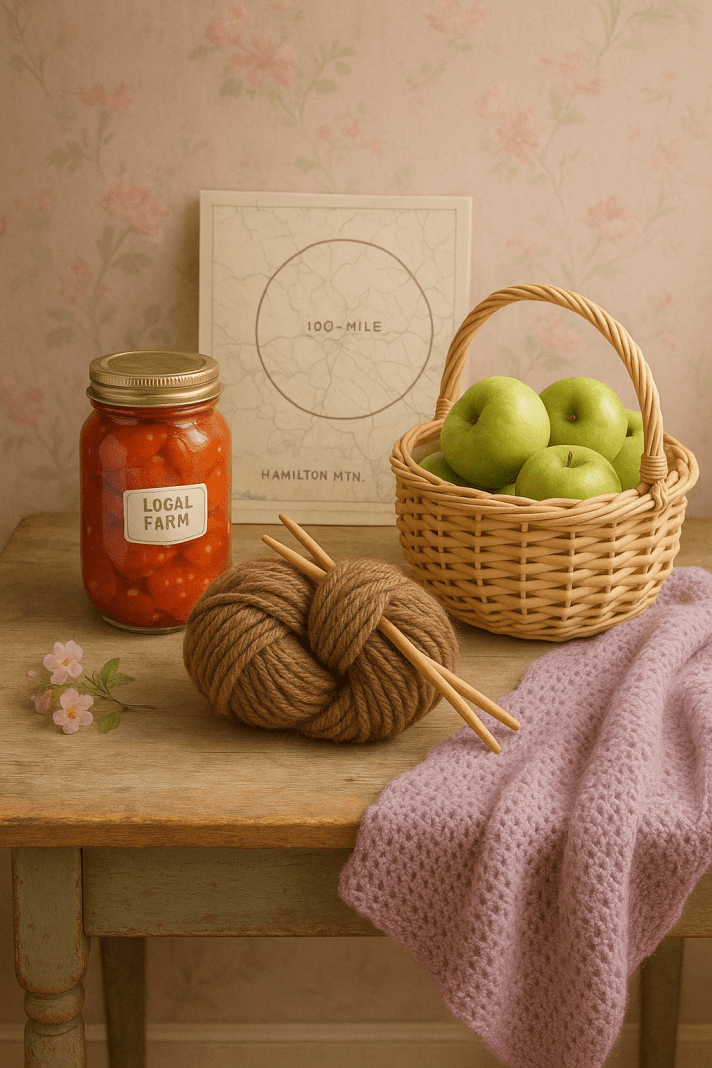
  • Draw your own circle. Look at a map and find your 100-mile radius.
  • Pick one thing. Choose a food, fiber, or product to swap for a local choice.
  • Share your story. Tell me in the comments or during the next live stream what you discovered!

Looking Ahead 🌸

There’s still time to join in the fun and I can’t wait to see how it unfolds. Together, we can learn and adapt. We will celebrate the joy of living more closely connected to the world right outside our doors.

✨ If you missed the live conversation, you can watch the replay here: YouTube Replay

Let’s keep this conversation going—what would living a little closer to home look like for you?

Week One of the 100 Mile Life Challenge: — September 5, 2025

Week One of the 100 Mile Life Challenge:

🌿 Gentle Beginnings

As September begins, I’ve started a 30-Day 100 Mile Life Challenge. I’d love for you to journey alongside me. This first week focuses on small, intentional steps. These steps ground us in place. They remind us why living locally and simply matters.

🌸 Day 1: My Why

Every meaningful journey begins with purpose. On Day 1, I wrote down my “Why.” Why does living within 100 miles matter to me? For me, it’s about slowing down, supporting local farmers, and discovering joy in simplicity.

👉 Reflection prompt: What would your “Why” be?


🌸 Day 2: Draw Your 100-Mile Map

With a simple circle on a map, I can see the farms, markets, and small businesses close to home. This circle isn’t a limit — it’s an invitation to rediscover my own community.


🌸 Day 3: Three Local Foods

I listed three foods I already buy locally — honey, meats, and vegetables. Naming what’s already part of my life reminded me I’m not starting from zero; I’m building on a foundation.


🌸 Day 4: One Small Swap

Today I swapped out a non-local item for something grown closer to home. I swapped out apples from South Africa for local apples. Small changes like this, meal by meal, item by item, create a ripple effect in how we eat and live.


🌸 Day 5: A Visit to the Farmer’s Stand

There’s nothing like the color and smell of fresh produce at a local stand. Shopping face-to-face with growers brings me into relationship with the people who nourish my community.


🌿 Reflections So Far

This week has been about awareness and gentle beginnings. By naming my why, drawing my circle, and making a few small swaps, I already feel more connected. It’s not about perfection, but about noticing and choosing differently, one day at a time.

💡 Cozy GrandmaCore reminder: Keep it simple. A loaf of bread, a pot of soup, and a kind word go a long way.


✨ Join Me

If you’re tracking along, I’d love to hear what you’ve discovered in your first week. Share your reflections in the comments — or even better, share your 100-mile finds with a photo.

“With love & stitches,
Grannie Doll 🌿🧶”

Download Check list here

Embracing the 100 Mile Life: A Journey to Living Locally — February 4, 2025

Embracing the 100 Mile Life: A Journey to Living Locally

Introduction and Welcome

Hello, friends! Have you ever paused to consider what a typical Tuesday afternoon might look like for me? Grab your favorite drink and join the conversation as we dive into life’s simple pleasures. I’m Doll, from Doll Can Create, inviting you to explore a day in my life.

Exploring the 100 Mile Life

Today, I’m excited to share insights about my 100 Mile Life journey. This adventure began with some self-imposed guidelines intended to encourage local living. While I strive to source within 100 miles—equivalent to 160 kilometers—not everything fits this boundary. Essentials like oranges, bananas, coffee, tea, and sometimes grapes remain exceptions due to practical reasons.

My 100 Mile radius encompasses significant parts of Lake Ontario and Lake Erie, which limits fresh produce, especially during winter. However, my reasons extend beyond mere locality; they’re about minimizing environmental impact by reducing global shipping dependencies.

Some may question the avoidance of big box stores, but in Southern Ontario, larger companies like Walmart and Amazon offer employment opportunities to many. While I do make use of these resources, I’m mindful about curbing my dependency for budgetary reasons.

For instance, recent purchases included grocery staples like cake mixes, graham crackers, and grapes—but there’s a conscious effort to make some of these from scratch. The yarn, however, remains non-negotiable for the foreseeable future; my current stash is more than sufficient.

Spinning and Fiber Projects

Currently, I’m working on various fiber projects. I have a spindle with German wool—a delightful gift part of an exchange event. A different roving, is 100 grams of beautifully hand-dyed wool excites my imagination, possibly inspiring a new pair of socks!

While I ponder different creative outcomes, my spinning continues. Often, I combine fibers for projects, such as socks, ensuring strength and durability in final products. Although not all yarns are local, they represent special gifts or accumulated resources ready to transform.

Supporting Local and Final Thoughts

The 100 Mile Life isn’t just a hobby; it’s an opportunity to forge meaningful local connections—working with shepherds, farmers, and craftspeople. Through this journey, I hope to compile a booklet for those intrigued by locavorism, offering practical steps to engage with their communities.

Central to my mission is supporting Canadian wool industries. Despite seeing vast shipments of Canadian wool abroad, I remain committed to utilizing local mills wherever feasible. Crafting personal items from Canadian wool furthers this goal, reducing unnecessary transport miles.

As I scale back on external purchases, festivals and sales become opportune spaces to engage with local artisans. Moving forward involves careful consideration of wants versus needs, especially when acquiring non-local items.

Recent reflections include shifting book purchases to a local bookstore instead of Amazon. This minor adjustment embodies the ethos of my initiative—supporting local economies and reducing carbon footprints.

Today, as I conclude my yarn spinning, the journey continues. Sharing moments like this with you reinforces the transformative power of mindful living. Until next time, remember: if I can create, so can you. Have a wonderful week, and let’s continue this exciting adventure. Bye for now, and take care! Doll