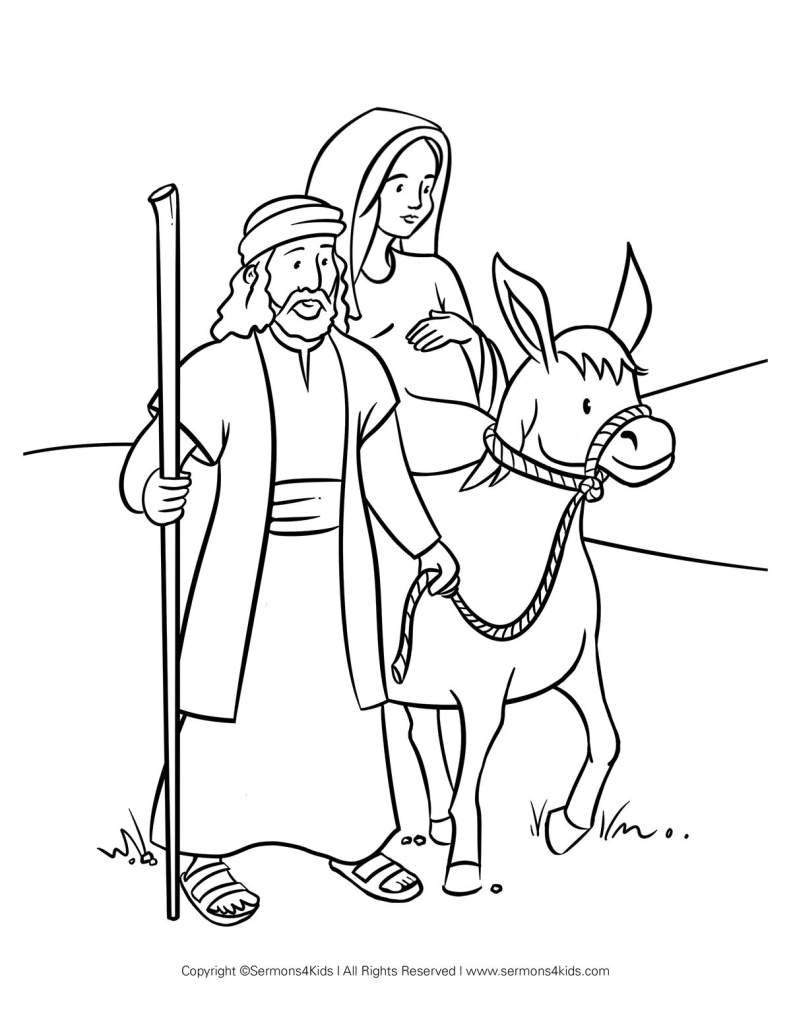
Week One: Fear of Change Theme Scripture: “Do not be afraid, Mary, for you have found favor with God.” — Luke 1:30 When God interrupts our lives, it can feel unsettling. Yet, within every divine disruption lies the seed of something holy. This week, we’ll walk with Mary as she learns to trust God through unexpected change.
Day 1 — When God Steps Into the Ordinary Scripture: Luke 1:26–29 Reflection: Mary’s story began on an ordinary day in Nazareth. Then Gabriel appeared, and the world changed. God often enters our everyday moments with quiet surprise — a whisper, a nudge, a turn in the path. Change can feel like loss, but sometimes it’s God’s invitation to a larger story. Practice: Light a candle and pray, “Lord, make me ready to notice Your presence in my ordinary day.”
Day 2 — Holy Interruptions Scripture: Luke 1:30–31 Reflection: Mary’s plans for marriage, home, and family were suddenly interrupted. Divine interruptions rarely come at convenient times. Yet what feels like disruption may be grace in disguise. Practice: Write one interruption you’ve faced this week and ask, “What if this, too, holds God’s purpose?”
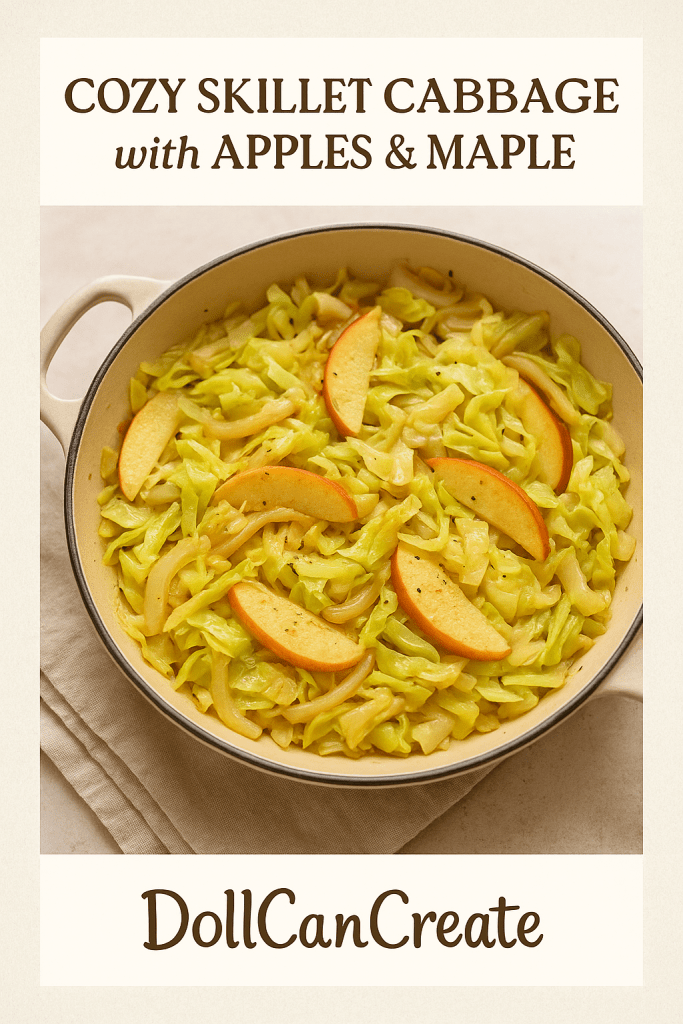
A simple, sweet-savory winter side dish made with local goodness.
There are certain vegetables we grow into over time, aren’t there?
I grew up eating boiled cabbage, and let me tell you — I did not enjoy it one bit. Limp, pale, and overcooked…it left an impression.
But cabbage, when treated with a little more love, is a different thing entirely.
Add apples. Add the warm sweetness of maple. Add a skillet instead of a pot. Suddenly this humble winter vegetable becomes something comforting, fragrant, and downright delicious.
Cabbage is one of those gorgeous, versatile staples that carries us through the colder months — a true winter workhorse. Packed with nutrients, easy to store, and budget-friendly, it fits beautifully into a frugal, local, slow-living kitchen.
This simple dish brings out everything cabbage can be: tender, flavourful, slightly sweet, and deeply cozy.
🥬 Ingredients
1 small green cabbage, thinly sliced 1 large apple (local if you can), thinly sliced 1 medium onion, sliced 2 tbsp butter or local oil 1–2 tbsp maple syrup 1 tbsp apple cider vinegar Salt and pepper to taste Optional: pinch of caraway seeds or thyme
🔥 Instructions
Heat butter in a large skillet over medium heat. Add the onion and sauté 3–4 minutes until softened. Stir in the sliced cabbage and cook until it begins to wilt, about 5 minutes. Add apple slices, maple syrup, and apple cider vinegar. Stir well. Continue cooking 10–12 minutes, stirring occasionally, until cabbage is tender and apples are soft. Season with salt, pepper, and herbs if using.
Serve alongside roasted meats, sausages, perogies, skillet dinners, or even with a simple baked potato.
🍏 A Note From My Kitchen
I grew up avoiding cabbage — it was always boiled and bland.
Cooking it this way, with apples and maple, feels like redemption for a childhood vegetable I never quite warmed up to.
Now it’s one of my favourite winter sides. Funny how that happens.
How do you enjoy this winter vegetable?
Do you have a childhood cabbage memory too — good or bad? Tell me in the comments!
🍁 100-Mile Life Notes
Cabbage is a winter staple that stores beautifully in a cold room or fridge. Apples, onions, and maple syrup are easy to source locally all year in many regions. This dish is frugal, nourishing, and firmly rooted in seasonal local eating.
If you make this recipe, tag me at #DollCanCreate — I love seeing your cozy kitchen creations.
And if you’re exploring your own 100-Mile Life journey, this is a beautiful place to begin.
DollCanCreate • Grannie-Core Living • Slow Wool • 100-Mile Life
Hello, dear friends — and happy December.
There is something sacred about turning the calendar to the final month of the year. The air feels softer and quieter. It is as if the world itself is settling under a quilt of frost. It whispers, “Slow down now. You’ve made it this far.”
This season, I’m choosing to start not with hustle, but with gentleness.
Not with rushing, but with roots.
Not with a to-do list, but with a warm mug between my hands.
Let’s step into December together the Grannie-Core way: slowly, creatively, and with gratitude.
🧶 This Week in the Wool Basket
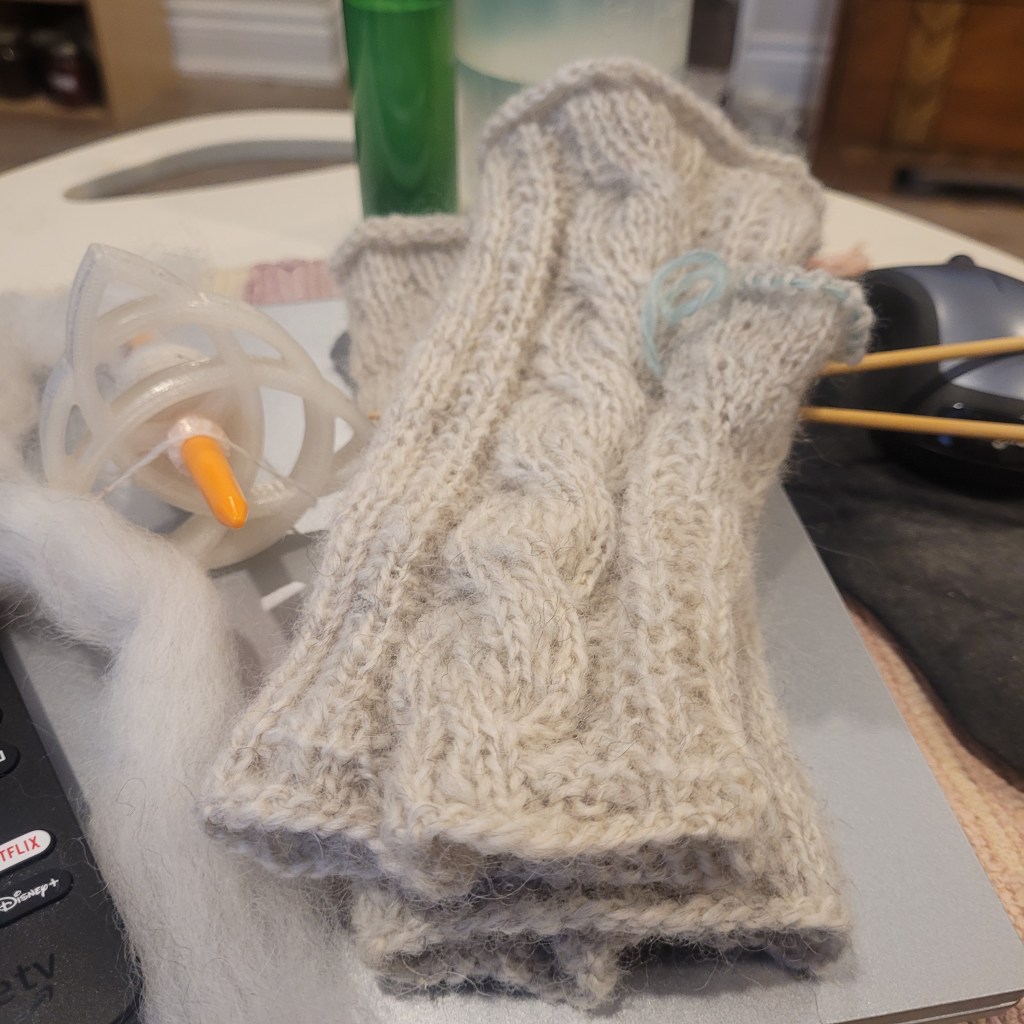
Spindle spinning has become my Advent practice this year — a tiny daily rhythm that invites stillness.
I’m working with local DK wool (you know my heart!) and letting the colours of early winter guide me:
soft rose, lilac, winter sky blue, fawn, and natural white.
Current Projects:
Knitting mittens (warm hands, warm heart) Spindling a little each day — #SlowSpinAlong continues in my heart, a cozy shawl for these short December days Small handmade gifts… the quiet work of love
If you need a gentle pause today, pick up whatever is on your needles and breathe slowly.
You don’t have to finish it.
Just start.
🌾 100 Mile Life Notes
December can be overwhelming, but the 100-Mile Life keeps me grounded.
This week I’m sourcing:
Local eggs Winter vegetables from a nearby farm Dairy from 30 minutes away Fresh bread from our neighbourhood bakery
Little choices woven together make a life that feels like home.
If you’re walking this journey with me, here’s your reminder:
It doesn’t have to be perfect. Just intentional.
One local choice at a time.
☕ In the Cozy Kitchen
Winter kitchen rhythms are my favourite. This week I’m making:
A simple carrot–leek bisque A pot of cinnamon-apple oats Freshly roasted root vegetables A pan of quick-bread cinnamon buns (Grannie-Core approved)
There’s something grounding about stirring a pot while snow taps at the window.
🕯 Gentle Advent Reflection
December 1 often lands near the start of Advent. This is the season of waiting and watching. It involves breathing hope into the world again.
The question I’m sitting with today:
Where is peace trying to find me?
Not where I should feel peaceful…
but where peace is already brushing up against my day:
the quiet corner of the couch,
the soft knitting in my hands,
the laughter of family,
the steady rhythm of prayer.
Let’s carry that with us as the month unfolds.
📹 Coming up on YouTube
This week on DollCanCreate:
Vlogmas/Spindlemas Day 1 — a gentle start, spindle spinning + cozy homemaking Handmade Peace: a quiet reflection on slowing down in December A local-living kitchen video
Make sure your tea is ready — December is going to be beautifully slow.
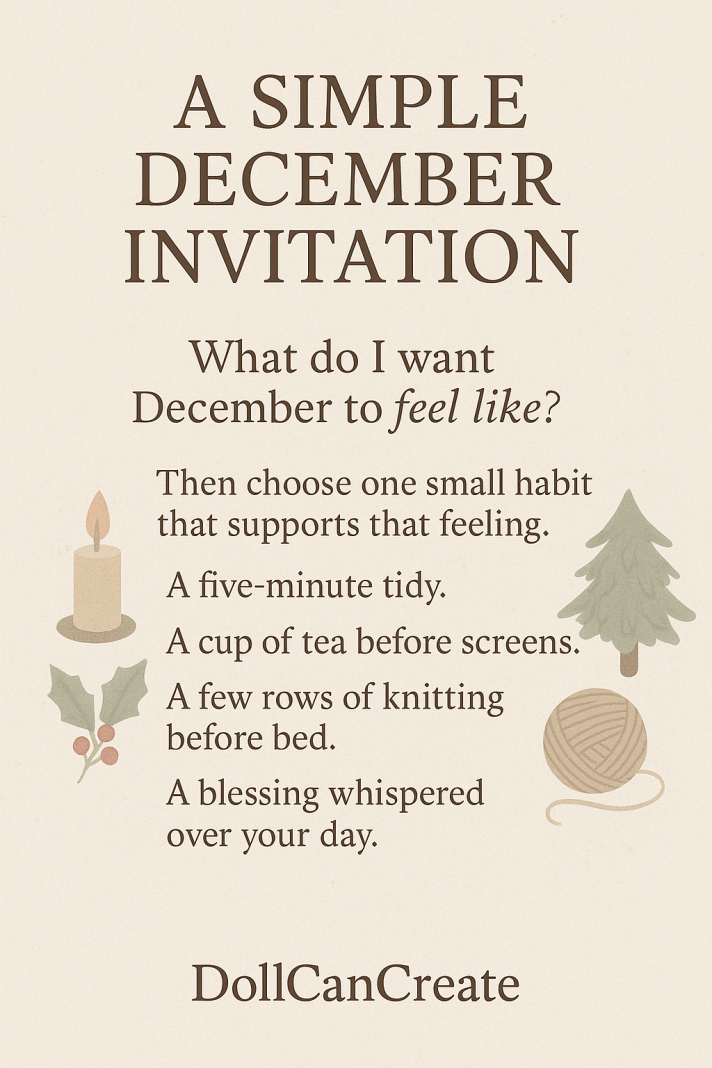
🎄 A Simple December Invitation
Before you dive into the bustle, ask yourself:
What do I want December to feel like?
Then choose one small habit that supports that feeling.
A five-minute tidy.
A cup of tea before screens.
A few rows of knitting before bed.
A blessing whispered over your day.
Small is enough.
Small is holy.
💌 From My Heart to Yours
Thank you for being here — for reading, crafting, spinning, praying, and living gently alongside me.
May your December begin with softness,
a warm shawl around your shoulders,
and the steady reassurance that
slow living is not falling behind — it’s catching up with your soul.
A cozy morning treat made with love, butter, and a little nostalgia
A Grannie Core Recipe
There are mornings when the kitchen feels like a refuge. The light comes softly through the curtains. The kettle hums. The world slows down just long enough to smell like cinnamon and butter. That’s the heart of GrannieCore. It involves simple comforts, humble ingredients, and the joy of making something warm with your own two hands.
These quick bread cinnamon buns don’t ask for much — no yeast, no waiting, no fuss. Just a bowl, a spoon, and a quiet moment before the day begins.
They come together in less than an hour. However, the memory they create will linger far longer. Imagine the smell of cinnamon filling the house. Feel the buttery sweetness on your fingertips. Hear the sound of a loved one saying, “These taste like home.”
✨ Ingredients
For the dough
2 cups locally milled flour (all-purpose or a blend with stone-ground whole wheat)
2 tbsp sugar
1 tbsp baking powder
½ tsp salt
¾ cup local milk or buttermilk
¼ cup melted farm butter (plus extra for brushing)
1 tsp vanilla extract
For the filling
¼ cup melted butter
½ cup brown sugar + 1 tbsp local honey or maple syrup
1½ tsp cinnamon
Optional: ¼ cup finely chopped apples, walnuts, or raisins
For the glaze
2 tbsp melted butter
1 tbsp honey or maple syrup
¼ tsp cinnamon
🕰️ Directions
Preheat your oven to 375°F (190°C). Grease an 8-inch round or square baking dish with butter.
Make the dough: In a large bowl, whisk together flour, sugar, baking powder, and salt. Stir in milk, melted butter, and vanilla until a soft dough forms.
Knead gently 4–5 times on a floured surface until smooth.
Roll out the dough into a rectangle (about 12×8 inches).
Spread the filling: Brush with melted butter, then sprinkle the brown sugar mixture evenly over top. Add apples or nuts if using.
Roll up tightly from the long side and slice into 1-inch pieces.
Arrange the rolls in your buttered pan, leaving a little space between each one. Brush the tops with a bit more butter.
Bake for 25–30 minutes, until golden brown and fragrant.
Glaze: While warm, drizzle with the honey-butter glaze or a simple icing made from powdered sugar and milk whisked in a teacup.
🌸 GrannieCore Serving Ideas
Serve on a vintage plate or enamel pan, lined with a crocheted doily.
Pair with a pot of tea or freshly brewed coffee in your favorite mug.
Wrap a few buns in parchment, tie with twine, and tuck in a sprig of rosemary for gifting.
Keep one on the counter for yourself. GrannieCore is as much about nurturing you as it is about others.
💭 A Note from the Kitchen
This morning, I used flour from a 100 mile mill and honey from our local apiary. The dough came together quickly, and the house filled with that familiar scent that seems to whisper, “All is well.”
That’s the heart of GrannieCore — not perfection, but presence. Not fancy, but faithful. The gentle rhythm of stirring, rolling, and baking your love right into the day.
🪶 Closing Thought
If you make these buns, take a photo before they disappear. Tag it #GrannieCoreBaking or #DollCanCreate. I’d love to see your cozy kitchens and cinnamon-swirled smiles.
Let’s keep these simple, handmade moments alive — one bun, one morning, one act of love at a time.
Late November has always felt like a hinge in the year. It is that quiet, often-overlooked moment between autumn’s last colours and the gentle hush before Advent. The world is slowing down, even if the stores and schedules insist on doing the opposite. And here, in this pause, I find myself reaching for handmade peace.
Not perfection. Not productivity. Just… peace. Peace crafted slowly. Peace grown stitch by stitch. Peace rediscovered in the things made by loving hands.
The Softening of November
There’s a softness to these late-November days. The last leaves let go. The skies turn a shade of warm grey. My kettle works overtime, and the house seems to lean inward just a little.
This is the season where my Grannie-Core heart feels most at home. There are blankets on chairs and woolen socks on my feet. A candle burns while I tidy up the kitchen after supper. The pace of the world shifts, and I shift with it.
In these two weeks before Advent, I’m not rushing. I’m returning.
Knitting Peace Into the Everyday
Most mornings start the same way. I have a cup of tea. A knitted blanket is wrapped over my knees. I work on a few quiet rows of whatever project is calling my name. Lately it’s been mittens. Warm, sturdy, practical mittens knit from my own DK handspun — a rich brown I spun earlier in the year.
There’s something healing about watching your own wool become something useful. Something about the rhythm of it — knit, purl, breathe again.
Knitting reminds me that peace doesn’t arrive in grand gestures. It grows in tiny movements. One stitch at a time. One row after the next. A little like faith, a little like prayer.
And this time of year? My knitting slows down my heartbeat in the best possible way.
Spinning as a Path Back to Stillness
While knitting fills my mornings, spinning restores my afternoons. I don’t rush at my wheel or my spindle this time of year. I let the twist build gently. I feel the wool between my fingers. I remember that this is old work — ancient work — sacred work.
Late November spinning always feels like a conversation with my grandmother. She didn’t rush her hands. She didn’t force a rhythm. She understood that handmade things carry more than fibre — they carry memory.
And in that, I find peace.
Sometimes I spin local fawn wool; sometimes I blend colours softly. Sometimes I just sit with the motion, letting the spindle turn until the world slows down beside me.
The 100-Mile Life: Peace on a Plate
Handmade peace for me also happens in the kitchen.
This is the season of root vegetables, local honey, hearty soups, and earthy flavours. Simple, humble, beautiful food from farms not far from my doorstep. A pot of carrots and sweet potatoes simmers on the stove. It feels just as comforting as a wool blanket over my feet.
Living a 100-Mile Life in late November feels grounding. It feels as though I’m part of the land that’s preparing to rest. The meals aren’t complicated. They’re just enough. Enough warmth. Enough nourishment. Enough peace.
There’s a deep comfort in cooking with what’s close to home.
Peace as a Practice
As the nights grow longer and the mornings darker, I find myself leaning into slow routines:
A candle lit before breakfast
A few rows of knitting while the kettle boils
A quiet moment at the window, watching the sky
A simple prayer whispered between tasks
A soft landing into the evening with wool in my hands
Peace isn’t a feeling we stumble into. It’s a practice. A rhythm. A handmade thing.
These last two weeks of November invite us to breathe. They encourage us to make room. We should prepare our hearts for the season of light.
A Gentle Blessing for Your November
If your days feel rushed, may you find one slow moment today. If you feel pulled in too many directions, may your hands return to something soft and grounding. And if your heart is carrying heaviness, may a small handmade moment bring you back to peace.
Peace that is steady. Peace that is quiet. Peace that is born from the work of your hands.
“May your yarn never tangle, your stitches stay kind, and your spirit spin gently toward peace.” Grannie Doll
There’s something wonderfully grounding about the rhythm of peeling apples on a chilly morning. The kitchen fills with the scent of cinnamon and cider. The kettle hums in the background. For a moment, the whole world feels still. This is slow living at its finest. It is a reminder that homegrown goodness often sits right within 100 miles of our front door.
A Local Harvest in a Pot
The apples came from a nearby orchard just down the road. They are crisp and tart. The apples are also speckled with the soft blush of late autumn. Honey from local hives replaces the sugar, and the apple cider is pressed locally too. (I use apple juice I have on hand) It’s simple, but that’s the beauty of it. When we choose local ingredients, we’re not just making food. We are preserving community and taste. We also keep alive the stories of the land that sustain us.
The Recipe
You’ll Need
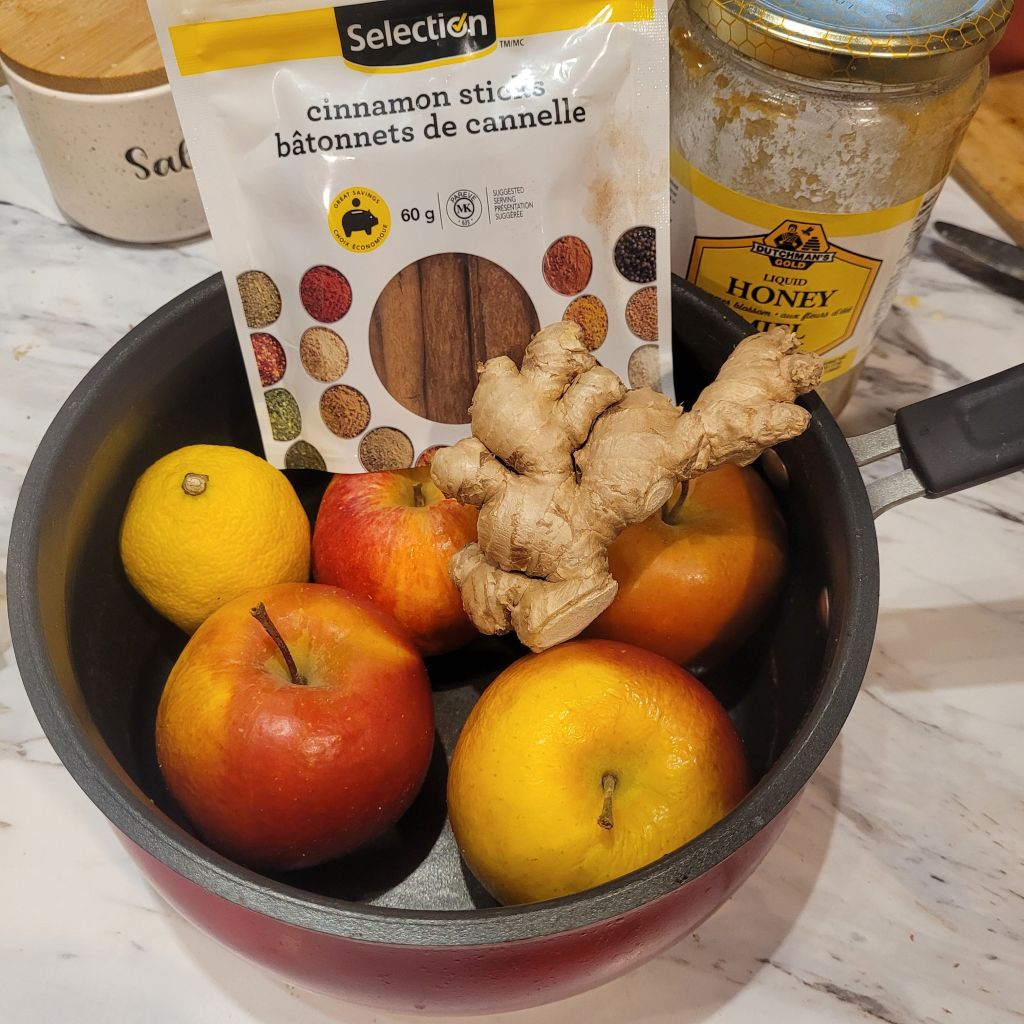
4 local apples (Honeycrisp, Cortland, or whatever your orchard grows best)
2 cups water
1 cup local apple cider
½ cup honey or brown sugar
1 cinnamon stick (or 1 tsp ground cinnamon)
½ tsp each of cloves and allspice
Optional: a few slices of ginger or lemon for brightness
How To
Peel and core your apples, then slice into even rings.
In a saucepan, combine the cider, water, honey, and spices. Let it simmer gently for about 5 minutes — this is the scent of cozy days ahead.
Add your apple rings and simmer until tender, about 10–15 minutes.
Let them cool in their syrup and store in jars in the fridge.
These spiced rings are delightful over oatmeal. They are tasty tucked beside roast pork. You can also eat them straight from the jar while standing at the window watching leaves swirl down the street.
Why It Matters
Living the 100-Mile Life isn’t about perfection. It’s about paying attention. Notice what grows near us. Appreciate the hands that cultivate it. Follow the pace that feels right for the season we’re in. Each jar of spiced apple rings is a quiet act of belonging. It connects us to our neighbours, our soil, and our sense of home.
So as the wind turns cooler and the days shorten, let the warmth of cinnamon and cider fill your kitchen. You’re not just preserving apples — you’re preserving a way of life.
What’s growing near you this season? Visit a local orchard, farm stand, or honey producer and see what simple, slow recipes you can bring home.#100MileLife and #DollCanCreate — let’s celebrate the flavour of where we live.
Hand-Spun Wool, Slow Hands, and the Gentle Joy of Making
There is something deeply comforting about knitting mittens as the seasons turn colder. Perhaps it’s the way wool slips through your fingers, warm even before it becomes fabric. Or maybe it’s the quiet knowing that soon, these stitches will cradle someone’s hands through winter winds.
For me, mittens are more than a project. They are a story—of wool, of the land, of slow living, and of the heart.
From Fleece to Fingers: The Story Behind the Wool
These mittens began long before I cast on. The wool came from a little farm well within my 100-mile radius. The sheep graze on open fields there, and the shepherd knows them by name.
I brought home a cloud of fawn-coloured fleece. I washed it and carded it. Then, I spun it into DK-weight yarn on my spindle. It was my own quiet rhythm of morning prayer and gentle breathing.
By the time the yarn was ready, it already felt like a blessing.
Hand-Spun Mittens & the Art of Slow Living
In a world that pushes us to rush, knitting mittens is my way of resisting the hurry.
Hand-spun wool takes its time:
Fibre becomes rolags
Rolags become singles
Singles become plied yarn
The yarn becomes something warm enough to hold a life story
There is holiness in those slow steps. A reminder that God often works in us the same way—layer by layer, twist by twist, shaping us gently.
Warm hands start with slow hands… and so does a warm heart.
Why Hand-Spun Makes the Best Mittens
Hand-spun yarn carries a charm that commercial yarn simply can’t imitate. It holds:
Loft that traps heat
Natural lanolin that softens the wool and repels moisture
A cozy thickness unique to your spinning
Personality in every slight variation
The resulting mittens feel alive—with warmth built into every fibre.
A Mitten Pattern Journey of My Own
I always start with a simple shape—cuff up or top down, depending on the yarn’s mood. This pair grew softly on my needles, the thumb gusset forming like a gentle hug around the hand.
Some rows held prayer. Some held worries released. Some held gratitude.
All held intention.
Knitting with hand-spun is never just after a pattern. It’s listening.
Colours That Hold Meaning
The palette for these mittens came from nature’s own hand. Soft browns and warm tans are included. There are also gentle shades you only get from sheep who live close to home.
You can add colour work in your own soothing tones:
Lavender for calm
Blues for peace
Rose for compassion
Imagine each row carrying a blessing for the person who will wear them.
The First Snow Test
There is nothing like slipping on a pair of new mittens when the first snowfall blankets the world. The wool is warm, the cuff snug, and the snowflakes melt gently against the fibres.
A cup of hot tea waits indoors. And in that small moment, everything feels right.
Warm hands, warm heart… and the simple joy of living slowly.
Hand-Spun Mittens as Quiet Ministry
Knitting mittens isn’t just crafting—it’s caring. A small ministry of warmth.
Someone out there needs a reminder that they’re held. Maybe it’s a neighbour. Maybe it’s a grandchild. Maybe it’s you.
Handmade warmth is one of the oldest love languages we have.
“God, bless these mittens. Bless the hands that made them, and bless the hands they will warm.”
Living Local, Living Loved
These mittens are part of my 100-Mile Life journey. I choose materials close to home. I support local farms. I honour the land that sustains me.
A life of slow stitches, local wool, and homemade comfort feels like a gentle rebellion against fast living. And it’s a rebellion I’m happy to join.
A Cozy Call to Action
Tell me in the comments: What are you knitting to keep warm this season? Have you ever tried knitting mittens from your own hand-spun? I’d love to hear your stories.
Until next time, May your hands stay warm, your heart stay open, and your stitches lead you into quiet joy.
Mid-November arrives with a hush. It’s an in-between place. The last of autumn clings to the trees. Winter begins whispering at the windowpanes. It’s a time of year that nudges us toward warmth, slowness, and deeper paying attention.
This morning, I let myself lean into that quiet. Instead of rushing headlong into tasks and screens and lists, I savoured the beginning of the day. A soft shawl was wrapped around my shoulders. My favourite mug warmed my hands. The gentle light of a late-fall morning became my companion.
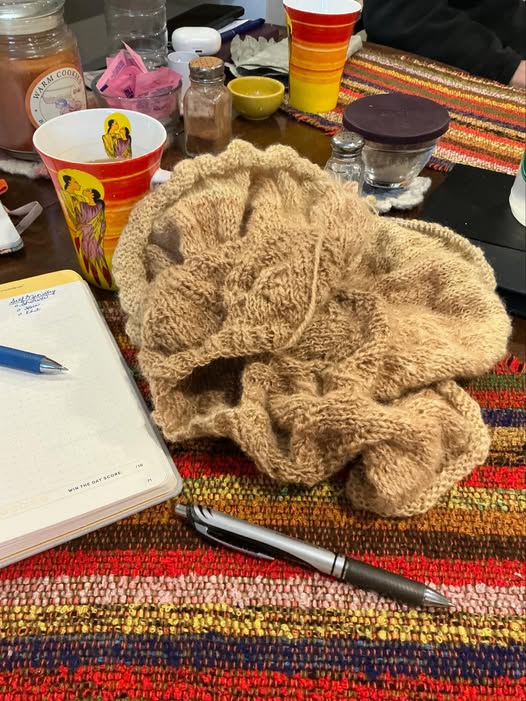
Beside me: my journal, my calendar, and my knitting— a little trio that reminds me how I want to live my life.
I opened my journal first. I let my thoughts spill out like a slow river. I noted what I’m grateful for, what’s weighing on me, and what I hope to make space for. Then my calendar, where I gently sorted the “must-dos” from the “can-waits.” And finally, my knitting is always there to steady my heart. It slows my pace. It reminds me that life is built one mindful stitch at a time.
There’s such wisdom in a slower rhythm, the kind our grandmothers understood without ever naming it. Living the 100-Mile Life has taught me to tend what is close. I have learned to care for what is mine to care for. I choose local and meaningful over hurried and distracted.
How often do we push ourselves through busyness simply because we’re used to it? Thoughtful Thursdays are my reminder that I don’t have to live that way. I can choose calm. I can choose to start slowly. I can choose to savour these mid-November days as they are—quiet, honest, and full of small, holy pauses.
As I knitted those first few stitches this morning, I felt it again: A gentle invitation emerged. It urged me to live more intentionally, more locally, and more lovingly.
Here’s to Thoughtful Thursdays. These are little pockets of calm carved out in the middle of our week. During these moments, we return to ourselves and our values. This happens one small choice at a time.
Join the conversation:
Take a moment today to check in with yourself. Brew something warm, wrap up in something handmade, and ask: What can rest today? And what deserves my gentle attention?
Share your own Thoughtful Thursday moments in the comments—I’d love to hear how you’re slowing down this season.
1 large apple (crisp and tart, like Honeycrisp or Cortland), julienne or grated
1 medium carrot, shredded
2 green onions, thinly sliced
¼ cup chopped walnuts or sunflower seeds (toasted, optional)
¼ cup dried cranberries or raisins
2 tbsp fresh parsley, chopped (optional)
🍯 Maple Dijon Dressing
3 tbsp olive oil or cold-pressed canola oil (local if available)
1½ tbsp apple cider vinegar
1 tbsp maple syrup
1 tsp Dijon mustard
Salt and pepper to taste
Optional: A pinch of garlic powder or a squeeze of lemon for brightness
🥣 Instructions
Prep the vegetables. Finely shred the red cabbage using a sharp knife or grater. Grate or julienne the apple and carrot. Place all in a large mixing bowl.
Mix the dressing. In a small jar or bowl, combine olive oil, vinegar, maple syrup, Dijon mustard, (I used regular prepared mustard, salt, and pepper. Whisk the ingredients until the mixture is smooth and creamy.
Combine. Pour dressing over the salad ingredients. Toss gently until the cabbage is evenly coated.
Add toppings. Stir in green onions, nuts, dried fruit, and parsley. Adjust seasoning to taste.
Chill before serving. Let sit for at least 30 minutes before serving to allow flavors to meld and the cabbage to soften slightly.
🌸 Serving Ideas
Serve alongside roast pork, chicken, or bacon-potato frittata for a complete local meal.
For a heartier option, add crumbled cheese (like local feta or aged cheddar) before serving. I left out the dairy since it’s not a favourite of mine.
Keeps well in the fridge for up to 3 days — perfect for make-ahead lunches.
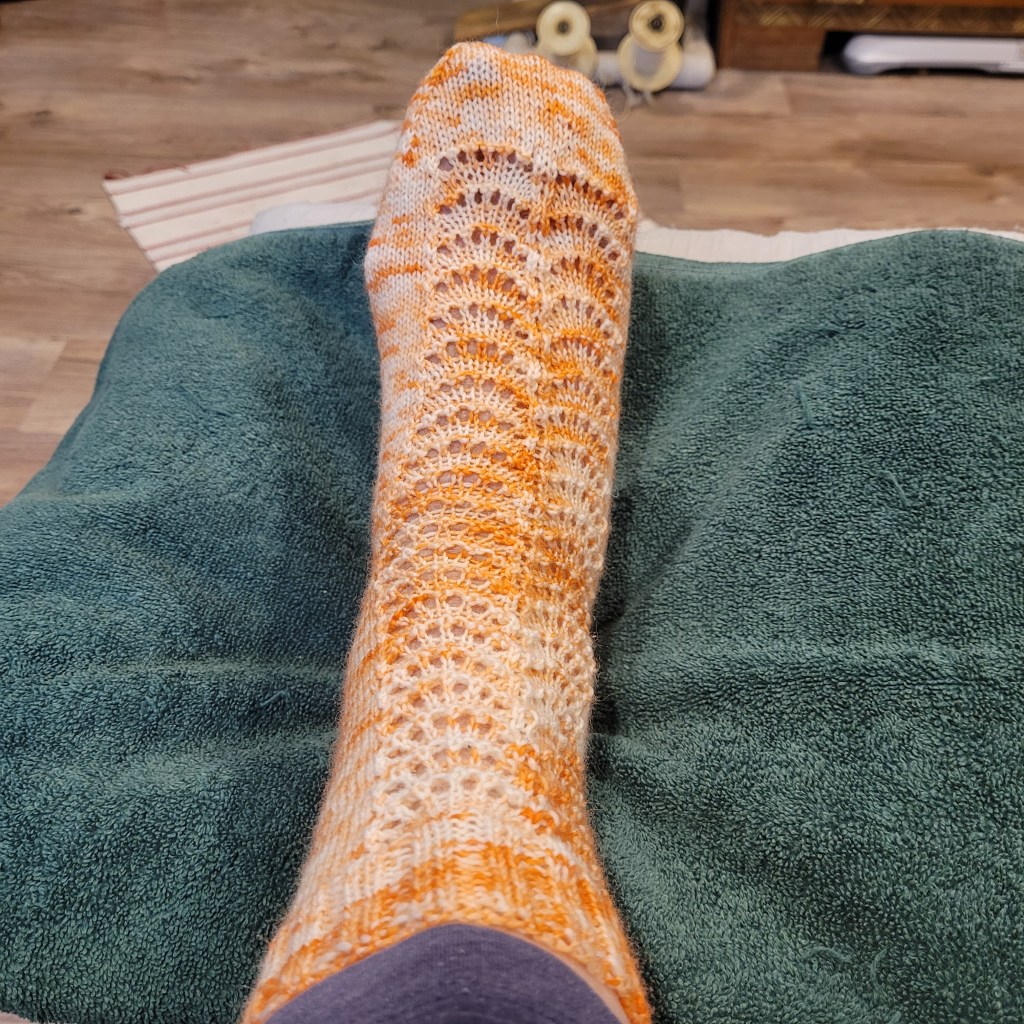
Finishing a pair of hand-knit socks is deeply satisfying. This is especially true when the leaves are falling and the air turns crisp. Socktober was my month of cozy commitment. It was a time where stitches met stories. Every round on the needles felt like an act of calm in motion.
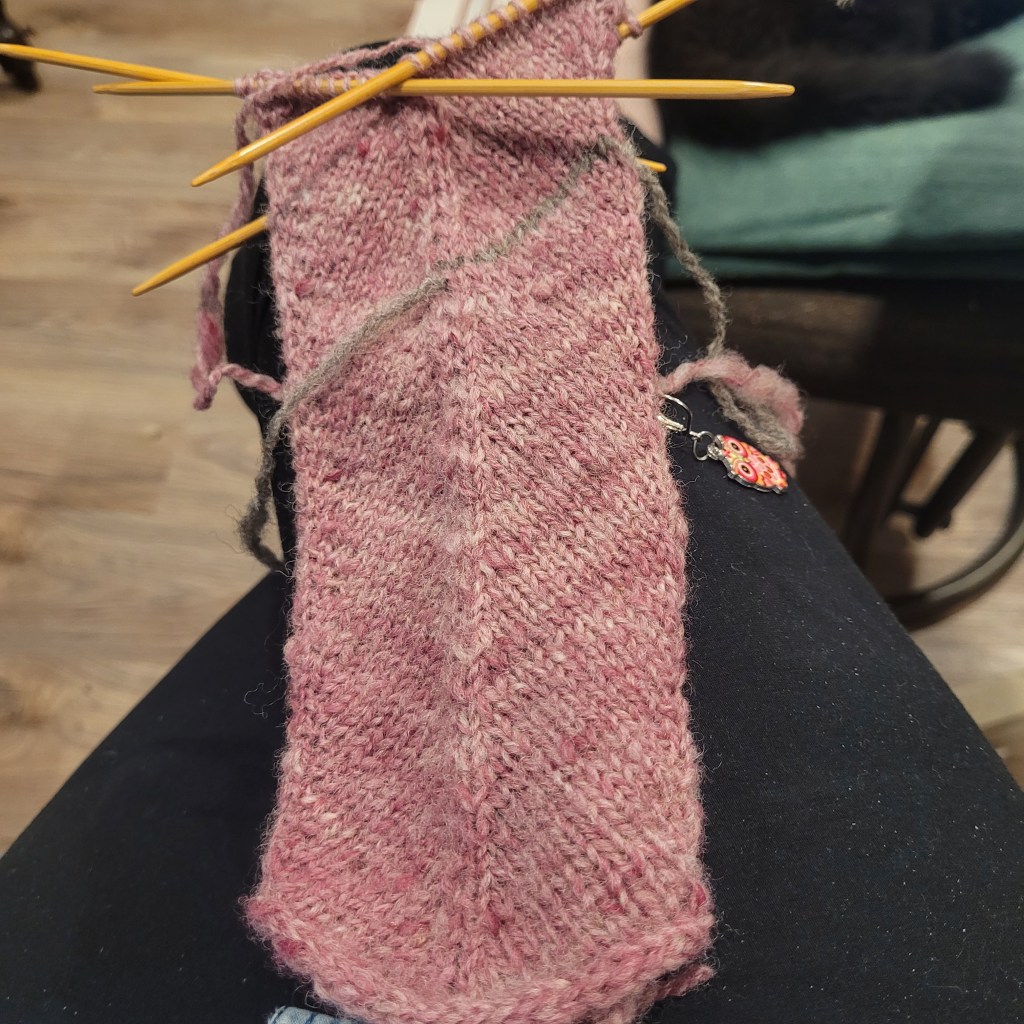
This year, I completed two full pairs of socks. Each had its own rhythm and its own story. These stories were spun through wool and quiet evenings. The first pair became my everyday comfort socks, simple ribbing and soft hues that reminded me of early autumn mornings. The second pair carried more adventure. It featured an afterthought heel construction. There was also a hand dyed yarn that had been waiting patiently in my basket since last spring.
Each pair taught me something — not just about technique, but about time. There’s a rhythm to knitting socks, a steady pulse that mirrors the turning of the season. Socktober wasn’t about speed; it was about settling into slowness, about honouring the process as much as the product.
🍂 On the Needles for November
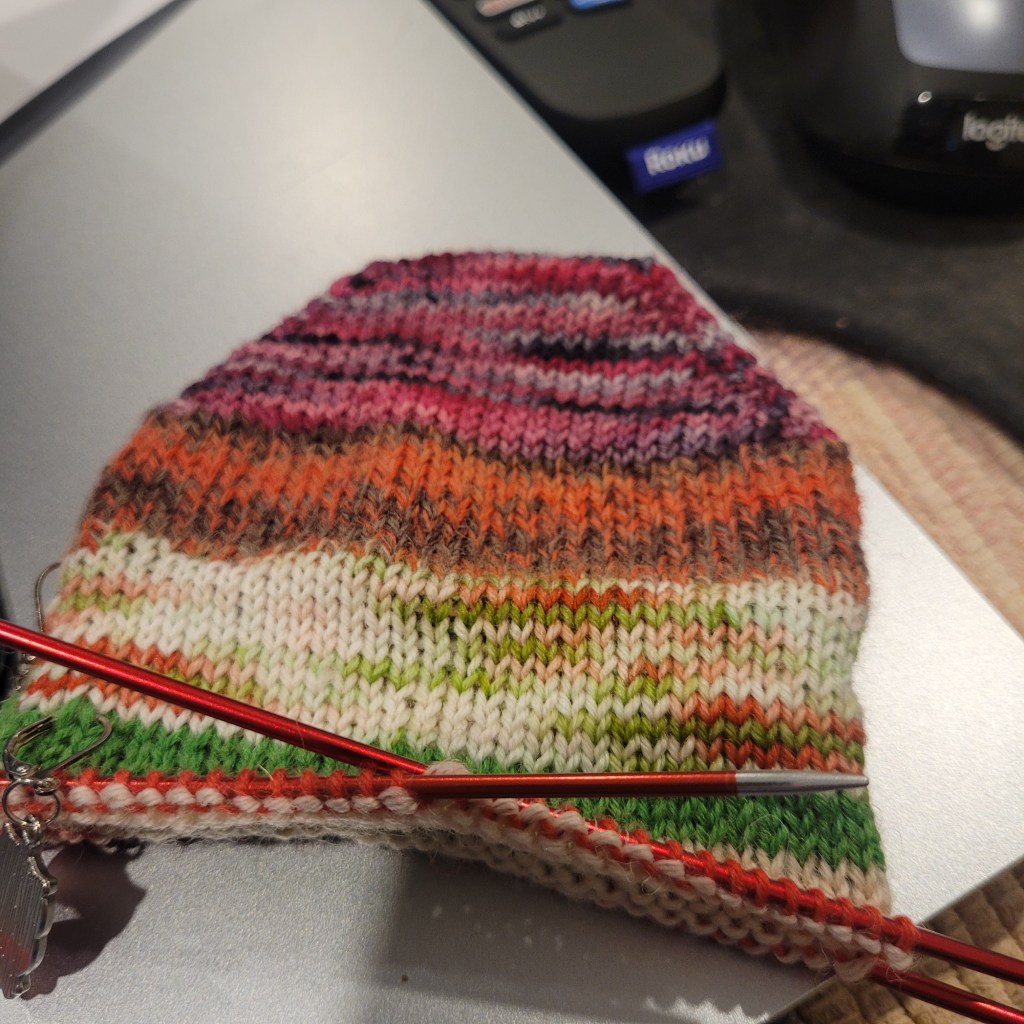
Now that Socktober has wrapped up, November’s projects are already whispering from my basket. A new pair of woolly socks is underway (because let’s be honest, we never stop at two). There’s also comfort knitting happening. There is a mitten project and a hat. Maybe even a small gift or two as Advent approaches.
This month feels quieter, more reflective — the knitting that pairs well with candlelight and evening tea.
🧶 Reflecting on the Season
Socktober reminded me that small goals can lead to big satisfaction. Two pairs may not sound like much. Still, in a world that moves too fast, finishing something handmade is its own quiet rebellion.
🌧️ From Socktober to November’s Knits
The days are getting shorter as November settles in. I’m finding my knitting shifting too. It moves from the lively energy of Socktober to something softer, slower, and more contemplative. There’s a comfort in the familiar click of needles on a grey afternoon. There is comfort in the quiet promise of projects that will carry me through the colder days ahead. In my latest video, I share what’s now on my needles. It provides a peek into November’s creative rhythm. Each stitch feels like a small act of warmth against the coming winter.
✨ A Season of Making and Meaning
Knitting through October reminded me that creativity doesn’t have to be grand to be meaningful. Two pairs of socks, a basket of yarn, and the rhythm of the needles were enough. They filled my days with purpose and peace. Every stitch felt like a small act of gratitude. I felt thankful for the wool. I was grateful for the warmth. I appreciated the hands that made it possible.
As November unfolds, I’m leaning into that same spirit. I enjoy slower mornings and mindful making. I am involved in projects that bring both comfort and joy. The darker days are not without light — they simply invite us to create our own.
So whether you finished a single sock or several pairs, take a moment to celebrate what your hands have made. Each stitch tells a story, and together, they weave the quiet beauty of a handmade life.
💬 Join the Conversation
What did Socktober look like for you this year? Did you try new patterns, finish old projects, or discover a favorite yarn? Share your Socktober stories in the comments below — I’d love to hear what’s been on your needles.