Doll Can Create

100 Mile Life/Grandma Core

Knitting Local, Living Local: Wool Within 100 Miles — October 25, 2025

Knitting Local, Living Local: Wool Within 100 Miles

*scroll down for the video

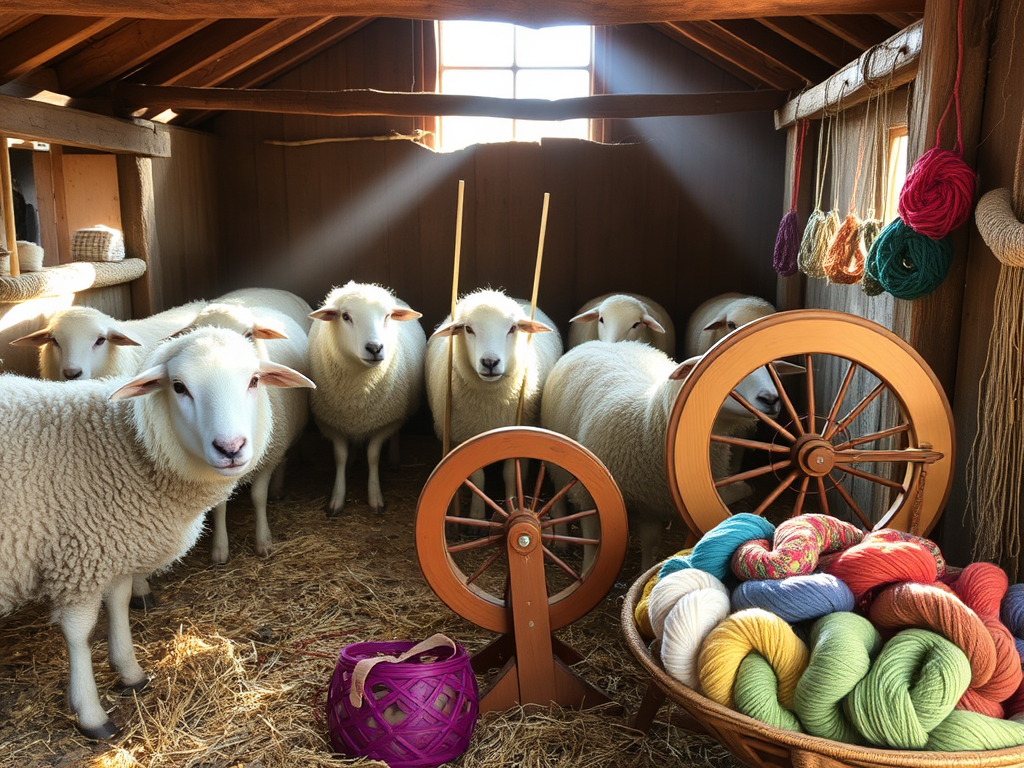
There’s something quietly revolutionary about knitting with yarn that hasn’t traveled farther than you have. So much arrives by truck, plane, or cargo ship. In contrast, the idea of local wool feels like an act of stewardship. It is grown, shorn, spun, and dyed within a hundred miles. It connects our hands to our land.

The Story Behind Local Wool

When I began exploring the 100 Mile Life, I thought mostly about food. Local apples, farm-fresh eggs, and bread from the mill down the road were on my mind. But soon, I found myself tracing another thread—wool. Where did the yarn in my basket come from? Whose sheep had offered their fleece? Was there a mill close enough to spin it into something beautiful?

The answers were closer than I imagined. A small flock of Shetlands grazing in the next township. A local mill humming beside the river. A dyer who uses plants gathered from her own garden. Each step, within that hundred-mile circle, felt like re-discovering the rhythms of home.

Spinning for Socks: From Fleece to Footwear

This season, I’ve been spinning with socks in mind—turning local fleece into sturdy, beautiful yarn that can handle daily wear. There’s a deep satisfaction in transforming raw fiber into something so practical and personal. Each draft of the spindle feels like a prayer, each twist a meditation on patience and purpose.

Sock yarn needs just the right balance of softness and strength. A little Shetland or BFL for durability, a touch of Merino or alpaca for comfort. When you’ve spun and plied the wool yourself, you know its story. You know what farm it came from and which sheep. You also understand how the fiber behaved in your hands. It gives new meaning to “putting your best foot forward.”

Knitting Socks that Stay Close to Home

Knitting socks from local wool is a small act of grace. Each stitch carries warmth from the land beneath your feet, quite literally grounding you in your community. Handspun yarn adds a touch of unpredictability. Those subtle color shifts and texture changes remind me that perfection isn’t the goal. Connection is.

There’s joy in knowing that every step I take in these socks is supported by a circle of care. The shepherd, spinner, knitter, and home soil are all woven together. It’s slow fashion at its most intimate, and every pair becomes a quiet testimony to place, patience, and provision.

Why It Matters

When we knit with local wool, we’re not just making socks or shawls—we’re investing in our neighbors. Every skein carries the story of a shepherd, a spinner, a maker who lives nearby. It reduces transport costs, supports small farms, and encourages sustainable land use.

And there’s another layer of warmth that comes from knitting local. The texture of local fleece often reflects the land itself—soft and sturdy, windswept and rooted. When I hold a skein from a nearby farm, I can almost hear the echo of the fields. I can also hear the hum of the spinning wheel.

Living the 100 Mile Way

Living local isn’t about restriction—it’s about relationship. It means knowing the hands that feed and clothe us. It means buying less, but cherishing more. It’s walking into a farm store and greeting people by name. It’s mending a sweater instead of replacing it.

This autumn, as the nights grow cooler, I’m wrapping myself in that slow, local warmth. My projects for October are built from within that 100 mile circle—simple knits with a story in every stitch.

How to Start Your Own Local Wool Journey

  1. Map your fiber circle. Search for farms, mills, and fiber festivals within 100 miles.
  2. Visit and listen. Talk to shepherds and small producers—they love sharing their process.
  3. Start small. Buy one skein from a local farm and use it in your next project.
  4. Share the story. When someone compliments your hat or shawl, tell them where it came from.

Every local project begins with one conscious choice.

Reflection & Faith

“She seeks wool and flax, and works with willing hands.” — Proverbs 31:13

When we live and create within our local circle, we echo a sacred rhythm of gratitude and provision. The earth gives; we receive; and through our craft, we give back beauty.

Now it’s your turn:

What’s growing or grazing within your 100 mile circle? Could your next skein—or your next pair of cozy socks—come from a nearby farm or mill? I’d love to hear about your discoveries. You can share your local wool stories in the comments. Tag me with #100MileWool on Instagram.

You get purchase my new ebook here!


🪡 With gratitude and woolly warmth,
Grannie Doll 🩷
Living the 100 Mile Life, one stitch at a time.

Why Source Wool Locally? — September 23, 2025

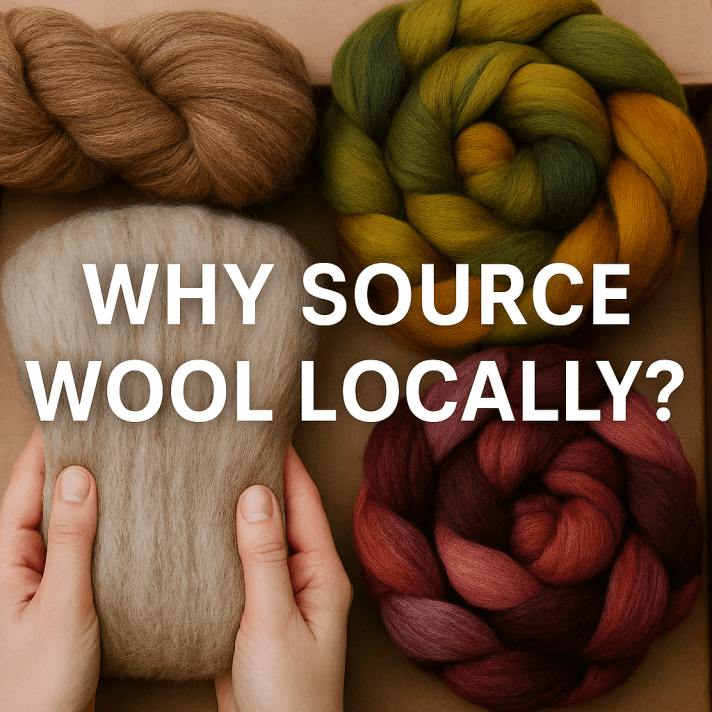
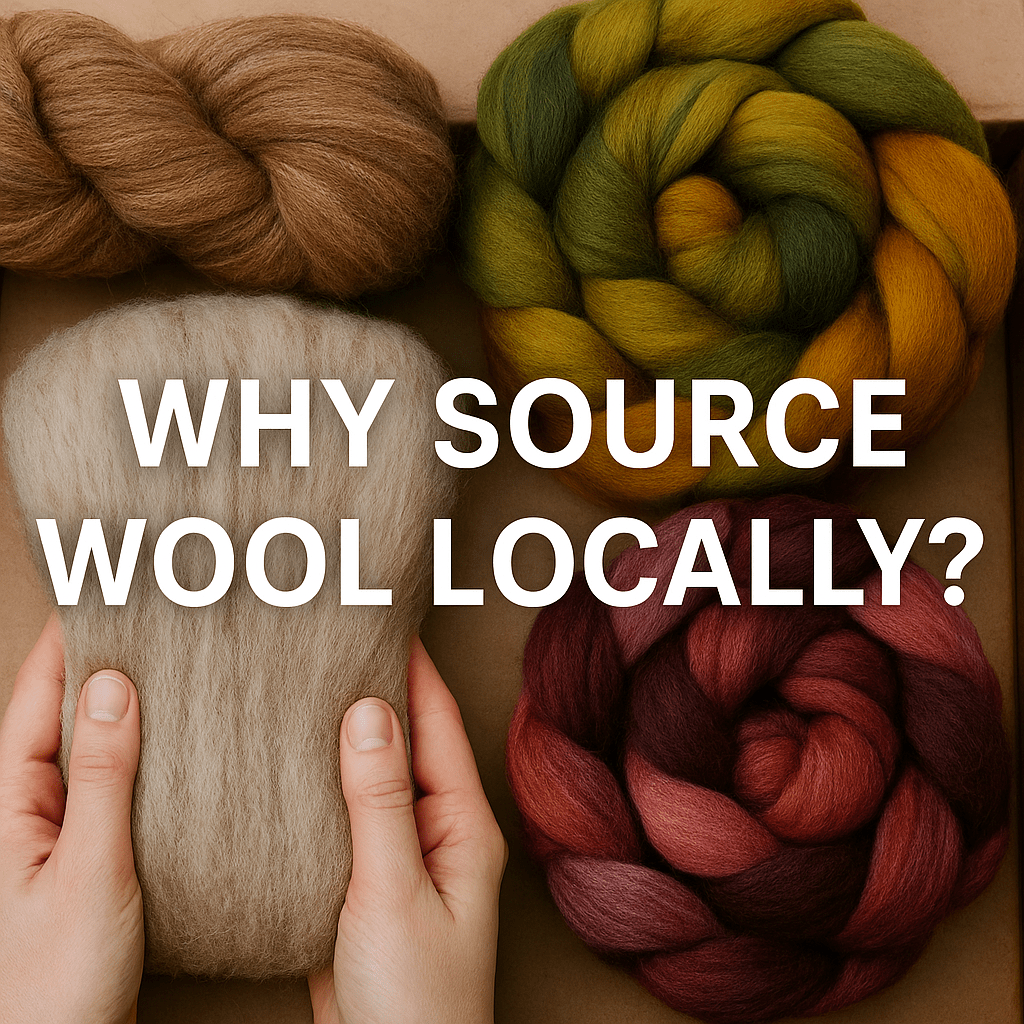
Why Source Wool Locally?

Unboxing Provenance Fibre Club

There’s something magical about opening a box of fibre. The colours, the textures, the promise of what it will become. When my Provenance Fibre Club subscription from Julia arrived, I couldn’t wait to dive in. Each braid held not just fibre—but a story.

As I unwrapped each treasure, I felt my excitement grow. But it also reminded me of the bigger question: why source wool locally?


Connection to Place

When we choose local fibre, we’re literally spinning the land around us. Each lock carries the imprint of the farm, the fields, and the seasons. It’s a way of holding our home in our hands.

Supporting Farmers and Makers

Behind every fleece is a shepherd who has cared for those animals through storms and sunshine. By sourcing locally, we honour their work and help keep small farms thriving.

Sustainability

Local wool travels fewer miles to reach us. That means less fuel, less packaging, and a gentler footprint on the earth. It’s one small but meaningful way to live in harmony with our values.

Unique Character

Local breeds raised in particular climates develop distinct textures and qualities. These fibres can’t be replicated elsewhere—they are one-of-a-kind.

Storytelling

Every skein spun from local wool carries a story. It’s not just yarn—it’s the voice of the farm, the shepherd, and the land. When we knit or weave, we share that story with others.


As I spin through my Provenance Fibre Club box, I imagine: this is more than fibre. It’s connection, sustainability, and creativity wrapped up together.

If you’ve never tried local wool, let this be your invitation. Visit a nearby farm, sign up for a local fibre club, or swap with a neighbour. Discover the joy of spinning stories that belong to your own backyard.

Every skein has a story, and every stitch holds a place. May your fibre journey keep you rooted, keep you warm, and keep you close to home. Until next time, spin gently and live locally.

Grannie Doll

Why Wool Matters 🐑🌿 — September 22, 2025

Why Wool Matters 🐑🌿

Today, as I sit with my knitting in hand,

I reflect on a fiber that has been part of my life for so long. That fiber is wool. It may seem like a simple thing. It is a skein of yarn spun from a sheep’s fleece. Nevertheless, for me and for many of us living closer to the land, wool carries a story that’s worth telling.

Wool Is Local

When I choose wool from nearby farms, I’m not just buying yarn. I’m supporting shepherds, small mills, and rural communities who care for their flocks with dedication. Each skein connects me to the fields, pastures, and farmers within my 100-mile circle.

Wool Is Sustainable

Wool is renewable, biodegradable, and natural. Unlike synthetic fibers that linger in landfills, wool eventually returns to the soil, nourishing it. It’s a beautiful example of creation’s design—what’s given to us can also be returned with care.

Wool Is Practical

It’s warm in winter, breathable in summer, and it resists odours in ways synthetic fibers can’t match. A well-made wool garment can last for decades, passed down through families like a quilt of memory and comfort.

Wool Is Comfort

For me, spinning, knitting, or simply handling wool has always been calming. It quiets my racing thoughts and steadies my heart. In every stitch, there’s a prayer. There’s a rhythm of stillness. It connects me to God’s peace and the slow work of my hands.


A Gentle Reminder

Wool is important for many reasons. It is more than a material. It signifies a way of living simply. It involves caring for the earth and honoring those who bring it to us. When we wrap ourselves in wool, we wrap ourselves in connection.


💬 Let’s Talk

Do you have a favorite wool story? Maybe a cozy blanket, a beloved sweater, or even a project on your needles right now? Share it in the comments—I’d love to hear!

👉 If you’d like to follow along on this journey of slow, local living, make sure you’re subscribed. Subscribe to my YouTube channel to stay updated. Subscribing will keep you updated on new content. I share each day of the 30-Day 100 Mile Life Challenge there. Together, we’re discovering that living closer to home brings us closer to what really matters.

🌸 With gratitude, living life 1 stitch at a time,
Grannie Doll

Rocking Chair Chat: Spinning, Stitching, and Living Local — August 6, 2025

Rocking Chair Chat: Spinning, Stitching, and Living Local


By DollCanCreate

There’s something about August that invites a slower pace. Maybe it’s the heat, or the way the golden light lingers just a little longer in the evenings. Or maybe it’s the feeling that summer is quietly slipping through our fingers. Whatever the reason, I find myself drawn to the rocking chair more often these days. I sit with a spindle and knitting needles in hand. My heart is full of reflection.

Wrapping Up Tour de Fleece

As Tour de Fleece came to a close, I finished my final skeins. I felt both a sense of satisfaction and a tinge of sadness. There’s such rhythm in spinning daily — a meditative motion that anchors the day. I loved watching my handspun pile grow, knowing that each yard was crafted with intention.

My last skeins came off the spindle with a deep sense of pride. Some are destined for a vest, others for future projects I haven’t dreamed up yet. But more than the yarn itself, I’m grateful for what the tour gave me: routine, resilience, and connection.

Sock Knitting & Small Joys

Now that the spinning has eased, my knitting projects are taking center stage. The socks on my needles are growing steadily — a simple pattern, yet rich with purpose. Socks are such a humble knitting. They go where I go, stitch by stitch becoming something warm and useful.

Alongside the socks, I’m knitting a cozy hat and a lacy scarf. These feel like comfort knitting — pieces that ask little of me beyond time and attention. And that’s what I need most right now.

What’s Next?

That’s the big question, isn’t it? As I rock and stitch, I’m letting ideas bubble up. Maybe a sweater from my Tour de Fleece yarn. Maybe a mini spin-along. Maybe just more rocking and dreaming. August feels like a bridge between the seasons — the perfect time to listen for what’s next.

Living the 100 Mile Life

Lately, I’ve also been leaning into my 100 Mile Life journey — choosing local wherever I can. It’s food from a nearby farm. It’s wool from a local flock. It’s supporting a maker just down the road. I’m reminded how rich and full life can be when we look close to home.

It’s not always easy, and it’s definitely not perfect. But it feels right. It feels rooted.


So tell me — what’s on your needles or spindle right now? What small joys are anchoring your days?
Pull up a chair and let’s chat. 💬🧶

Dollcancreate

Handmade. Slow Made. Joy Made.

Meet the Maker: How I Fell in Love with Spinning and Knitting — May 15, 2025

Meet the Maker: How I Fell in Love with Spinning and Knitting

Introducing Myself: A Journey in Wool
By [Doll Creelman]

Welcome to my corner of the internet. I wanted to introduce myself. Let me share a little bit about the passions that shape my life and work. If you’re here, you probably love fiber arts. You enjoy handmade things. Or, you’re just curious about the person behind the yarn. Either way—I’m glad you’re here.

The Roots of My Passion

My love for fiber arts didn’t start in a craft store or a YouTube tutorial—it started in a sheep pen.

As a child and even into my teenage years, I remember watching the sheep on my great-uncle Silas’s farm. There was something deeply moving about the way the sheep responded to his voice. He would call, and they would come. It was a simple yet sacred ritual that stirred something pastoral in me. That’s when I knew I wanted to dive deeper. I was intrigued not just with the sheep. I was also captivated by the wool they gave and the stories it would tell.

Back then, I knew how to knit a little and crochet some, but I longed for more. I wanted to learn to spin.

A Fiber Journey Begins

At first, wool felt out of reach. Buying 100% wool yarn was expensive, and spinning wheels were even more so. I had never heard of a drop spindle until one day I stumbled across it online. That discovery changed everything. I realized I start spinning on a budget. eBay, YouTube tutorials, and fiber forums became my teachers.

We found a local farm having a shearing day. I jumped at the chance to help. I paid for a sheep’s injections that year in exchange for the fleece. I took it home—dirty, greasy, and full of potential. Washing, drying, carding—it was all a massive learning curve, but slowly I started to understand the rhythm of the wool.

I spun enough for a pair of socks. I was so proud. Then I found a used plastic spinning wheel from Wisconsin—affordable and practical. It arrived in a box, and before long, I was spinning with both hands and heart.

From Wool to Wardrobe

The learning curve was real—drive bands breaking, fiber filled with neps, uneven bits and short pieces. But those frustrations became milestones. Each little hiccup taught me something new.

Now, I have a stash (as most crafters do). More fiber than projects. More yarn than ideas. And yet, choosing what to spin, how to dye, and what to knit still brings me joy. Some projects are for me. Some are gifts. Some are experiments in texture and color. That’s part of the magic.

The most exciting project? Probably that first pair of socks from my handspun yarn. But honestly, each finished project—whether from hand-dyed yarn or commercial wool—feels like a little victory.

Why It Matters

I’m passionate about fiber arts because I feel like I’m part of the process. From fleece to yarn to garment, I get to shape something with my hands that’s both beautiful and practical. It reminds me of ministry, too—how something raw can be transformed with care and intention.

Fiber art teaches me patience, persistence, and presence. And it connects me to something older than myself—an ancient rhythm of craft, care, and community.

Thanks for taking the time to get to know me a little better. Whether you’re here to learn or be inspired, I’m happy we met. I’m also delighted to share in the joy of handmade living with you.

Thanks for taking the time to get to know me a little better. Whether you’re here to learn or be inspired, I’m glad we’ve crossed paths. You also be here to simply share in the joy of handmade living.

I’d love to hear your story too.
Do you spin, knit, crochet, or sew? Have you ever worked with raw wool or dreamed of trying? Drop a comment below or send me a message—I truly enjoy connecting with fellow makers.

If you’d like to follow along on my fiber journey, you can get tutorials and project updates. It also includes reflections on faith and creativity. Subscribe to the blog or follow me on Instagram @Dollcan.

Let’s keep creating, learning, and finding joy in the process—together.

Doll

Finding Grace in the Ordinary — April 22, 2025

Finding Grace in the Ordinary

What does it mean to find grace in the ordinary?

So often, we think of grace as something grand—a divine moment wrapped in light, a miracle, or a profound transformation. But what if grace is also hidden in the simple things? In the barely noticeable pauses. In the timing of a pot just before it boils dry. In the breath you didn’t know you needed until you took it.

Grace is when you expect disaster and instead find relief. You rush to the stove and catch the pot just in time. That tiny rescue, that breath of “thank goodness,” is grace. It’s not dramatic. But it’s real.

We don’t often recognize ordinary life as a place where grace lives. We overlook the everyday rhythms of making tea, folding laundry, walking to the mailbox. But maybe grace shows up right there—in the normal, the unnoticed.

Like when it rains on a day you’ve secretly been longing to slow down. That shower from the sky feels like permission to breathe. To rest. To stay home and not feel guilty about it. Is that not a grace?

Or when a loved one responds with gentleness instead of anger, with kindness instead of criticism—those are grace-filled moments too. Little glimpses of love where we braced for something less.

Grace can surprise us in worship too. When you say something simple and someone’s response is so heartfelt, so affirming, it stays with you. You didn’t expect it. You didn’t ask for it. But you feel lifted. That’s grace.

So grace isn’t always dramatic or dazzling. Maybe grace often looks like ordinary life simply unfolding. It can catch your heart off guard. It makes you whisper, “Thank you.”

And maybe, just maybe, that’s the point.

Spinning for 100 Days: Finding Joy, Rhythm, and Mindfulness — April 2, 2025

Spinning for 100 Days: Finding Joy, Rhythm, and Mindfulness

  • Hi friends! It’s Doll from Doll Can Create.
  • Sharing my 100-day spindle spinning challenge.
  • A fun and engaging challenge with a group of us.
  • Today, I’m spinning fiber that was a Christmas gift.

The Joy of Handspun and Modular Knitting

  • Wearing a handspun, modular knit scarf (ENTRALAC pattern).
  • Made this scarf years ago—still a favorite.
  • Modular knitting is a satisfying and creative process.

Why a 100-Day Challenge?

  • Creates space to slow down and breathe.
  • Spinning is calming and meditative.
  • Establishes a routine—spindle does the work.
  • My two goals:
    1. Spin 100+ grams of fiber on a spindle.
    2. Document the journey and share my next steps.
  • Storing singles on a jar for plying later.

The Rhythm of Spinning

  • Currently on Day 7 of 100.
  • Challenge ends as Tour de Fleece begins.
  • Tour de Fleece → switch to wheel spinning.
  • Spinning is part of my daily routine (morning or refocus time).
  • BFL blend fiber with hints of yellow—feels soft and luxurious.

Challenges and Magic in the Process

  • Breakage happens—especially while meditating.
  • Accidental reverse spinning weakens the twist.
  • Drop spindle really does drop sometimes!
  • Spinning is a sensory experience:
    • Feel the fiber.
    • Watch the spindle spin.
    • Listen to the soft whir.
  • Connects to mindfulness, prayer, and meditation.

My Favorite Spindles

  • Lightweight spindle by Nick (cherished piece).
  • Heavier spindle with a moose design (great for blending/plying).
  • Hand-painted spindle by Annie May (2004, found on eBay)
    • Heavier, good for beginners.
    • Marked an inch for wraps-per-inch checks.
    • My first spindle

The Satisfaction of Handmade Yarn

  • Spinning takes time but is deeply rewarding.
  • Even imperfect yarn (thick, thin, uneven) is beautiful.
  • Handmade yarn is art—you create something unique.

Join Me on This Journey

  • Follow along with my 100-day challenge!
  • Share your spinning progress if you’re joining.
  • More spinning conversations and tutorials coming soon.
  • Whatever you’re creating—be proud of it!
  • You are not alone—I’m cheering you on!

Be blessed.

Doll from Doll Can Create

March Reflections: Fiber, Faith & Finding Calm — March 31, 2025

March Reflections: Fiber, Faith & Finding Calm

Hello friends,

As March draws to a close, I’ve been reflecting on the rhythm of my days—filled with fibre, faith, and finding small ways to bring more peace into my life. This month has been about creativity, mindful making, and managing anxiety with intention. Here’s a glimpse into what I’ve been working on and learning.

Spinning & Knitting Updates

March has been a full month on my needles and spindle! Here’s what’s been keeping my hands busy:

  • Socks, a shawl, a sweater, and a blanket—each one growing stitch by stitch.
  • Spindling DK brown & spinning fawn—finding joy in slow, meditative movement.
  • Carding white & brown wool—preparing fiber is just as satisfying as spinning it!
  • English Paper Piecing (EPP)—a quiet, mindful project for piecing beauty together.
  • Knitting a hat—because there’s always room for one more.

I’m also planning recorded a spindle plying tutorial, which I’m excited to share soon! You’ll see this later today.

Lenten Knitting & YouTube

I continue to work on a Lenten knitting project, setting aside an hour a day to stitch with intention. This ties into a YouTube video I’m creating about faith and knitting, where I explore how these practices intertwine.

Another video I create is this shortform: “Finding Calm: Strategies for Managing Anxiety.” I’d shared how spinning and knitting has become powerful tools in my journey, along with other techniques that help me reset when anxiety starts creeping in.

Managing Anxiety: What’s Been Helping

Anxiety has a way of showing up uninvited, but I’ve been focusing on small, tangible ways to shift my mindset. Here are some go-to strategies I’ve been leaning on:

  • Fresh air & water—getting outside, even for a few minutes, helps.
  • Knitting—stitching my worries into something tangible.
  • Watching something funny—laughter truly is medicine.
  • Healthy food—choosing what nourishes both body and mind.
  • Writing down blessings—a simple way to shift perspective.
  • Decluttering—turning tidying into a game keeps it from feeling overwhelming.
  • Driving—sometimes a change of scenery is all I need.

Recognizing the early signs of anxiety—like staying up too late or feeling a racing heart—has also been key in catching it before it takes over.

Sourcing Local: My 100-Mile Life Challenge

Another focus lately has been my 100-Mile Life in 100 Days challenge. I’m continuing to seek out locally sourced wool and other products, making mindful choices about where my materials come from. It’s been an eye-opening experience, deepening my connection to both my craft and my community.

Looking Ahead

As April approaches, I’m eager to continue these projects and see where they lead. If you’re also on a journey of mindful making, I’d love to hear from you—what’s been on your needles, spindle, or heart this month?

Until next time,

Doll from Doll Can Create

5 Must-Have Items to Start Spinning with a Spindle — March 17, 2025

5 Must-Have Items to Start Spinning with a Spindle

Welcome! If you’re new to spinning, this post is for you. I’ll be sharing five essential items that will help you get started. Spinning is an ancient craft, one that predates the spinning wheel itself. Before the wheel, people used a simple yet effective tool: the spindle. Let’s dive into what you need to begin your own spinning journey.

1. A Spindle

When I first started spinning, I was looking for an affordable way to make 100% wool socks. The yarn available in my area was mostly plain white or brown, so someone suggested that I try spinning my own. That’s when I discovered the drop spindle.

I bought my first spindle on eBay, and it came with some fiber to practice on. Over time, I’ve gathered several different spindles, each with unique characteristics:

  • DIY Spindles: My husband made one using a dowel, a round piece of wood, and a cup hook.
  • Plastic Spindles: I have a small 3D-printed spindle that’s lightweight and easy to use.
  • Top and Bottom Whorl Spindles: Both work well; it’s all about personal preference.
  • Turkish Spindles: These allow you to create a center-pull ball as you spin.
  • Heavier Spindles: Ideal for plying and getting a leader started.

The key is finding a spindle that spins smoothly and suits your style.

2. Fiber and Fiber Preparation Tools

Once you have a spindle, you’ll need fiber! You can buy pre-washed and prepared fiber or process raw fleece yourself. If you’re preparing fiber at home, you’ll need tools to help:

  • Dog Brushes: Before I bought hand cards, I used two dog brushes to prepare fiber.
  • Hand Cards and Drum Carders: These tools help align fibers for easier spinning.
  • Combs: Useful for finer fiber preparation.

Spinning starts with good fiber prep, so having the right tools can make a big difference.

3. A Niddy Noddy

A niddy noddy is a tool that helps measure and skein your yarn. I have a handmade wooden niddy noddy that my husband crafted in 2004. I also have a 3D-printed version that is more compact and versatile.

By wrapping yarn around the niddy noddy, I can measure my yardage and prepare the yarn for setting. Whether you choose wood or plastic, this tool is incredibly helpful for any spinner.

4. Wraps Per Inch (WPI) Tool

A WPI tool helps determine the thickness of your yarn by counting how many times it wraps around a set measurement. If you don’t have a WPI gauge, a standard ruler works just as well!

Knowing your WPI helps ensure that your handspun yarn is the right weight for your project, whether you’re making socks, shawls, or sweaters.

5. A Lazy Kate or Alternative Plying Solution

If you plan to ply your yarn, a lazy kate can be very useful. While some wheels have built-in lazy kates, I’ve also used DIY solutions:

  • Handmade Lazy Kate: My husband made one using a log and dowels.
  • Plying Bracelet: When working with a single ply, I sometimes wrap it around my wrist and ply from there.

A lazy kate or an alternative plying method helps keep tension even and makes plying much easier.

Bonus: The Joy of Slow Spinning

Spinning is more than just making yarn—it’s a meditative and mindful process. Whether I’m in my rocking chair spinning, or walking outside with a spindle in hand, I find that this craft allows me to slow down and be present. Sometimes, I even use my spinning time for prayer and reflection.

There’s something deeply satisfying about creating yarn from fiber, knowing that each step of the process is part of a long-standing tradition. So if you’re just starting out, take your time, enjoy the process, and embrace the rhythm of spinning.

If you’d like to see a spindle demonstration, let me know! And don’t forget to subscribe, comment, and share your spinning journey. May you find blessings in each day. Happy spinning!

Self-Care, Mindful Rest & Creativity: A Day in My Life — February 18, 2025

Self-Care, Mindful Rest & Creativity: A Day in My Life

Hi everyone, it’s Doll from Doll Can Create and You can too.

Today, I want to talk a little bit about self-care—taking care of myself. You can probably tell from my voice that I’m just a little under the weather, though I’m feeling better than I was. I just wanted to set this up, so it looks okay—there we go.

So, I was watching a YouTube channel by Transformed Homemakers Society, and she was talking about a dopamine menu. I thought, “Okay, I’ve never heard of that before.” So, I jotted down a few things. But what really caught my attention was the idea of mindful rest—not just collapsing into bed from exhaustion, but purposeful napping.

Sometimes, when we are feeling low energy, we beat ourselves up over unfinished tasks. But when you are sick with a cold, self-care must come first, right? A few things from the video stood out to me, and I will try to remember to link it below because I found it useful.

Simple self-care activities like getting fresh air, watering plants, journaling, crafting, listening to music, thrifting, and gardening can make a significant impact. Even small tasks, like watering plants, can bring joy—seeing them soak up water and thrive the next day is a little reward.

Then there are the tasks I tend to put off, like changing the bedding. It takes five minutes, yet I procrastinate. Why? Once it is done, you feel accomplished, and then you can nap without guilt. Laundry is another one—it only takes five to ten minutes to start, yet I hesitate. But once it is going, it’s done, and I can move on to something else (or, again, take a guilt-free rest!).

There is this misconception that slowing down is laziness, or that we don’t deserve rest. But we do. You are important. You matter—to yourself and to others. And as the saying goes, you must fill your own cup first.

So, what am I doing today? Well, I started some laundry and changed two beds—one in the office and one in the bedroom. I went upstairs to feed the cat and water his plants. I even stepped outside for a few minutes to get some fresh air and clear the steps of snow.

Another thing that helps me when I am feeling sick is watching my favorite YouTube channels and listening to motivational speakers—people who have struggled and found a way through. It is a reminder that we all go through tough moments, and sometimes, we need to lean on others for guidance and encouragement.

Of course, if you have followed me for a while, you know I create things. Right now, I’m working on a sock, a sweater, and a hat. My goal is to finish the sock by the end of the month—sooner, if possible. Knitting is mostly what I am doing today. A few days ago, during the storm, I barely managed a couple of rows. Yesterday, I felt better and made more progress. You can only push yourself so far, right?

I am also working on my to-do list (or as I like to call it, my to-done list). Here’s what’s on it:

  • Sending out an email [done]
  • Taking out the trash and recycling
  • Planning videos and social media posts
  • Filling Nick’s medication tray
  • Looking for a good protein ball recipe
  • Continuing with my budgeting
  • Time-blocking the week (though, since this is turning into a sick week, I might have to be flexible)

House chores like sweeping, swiffering, and picking up (hopefully, I can delegate some of that to Nick!)

One tool I use is the Eisenhower Matrix, sorting tasks into urgent/important, urgent/not important, things I can delegate, and things that are not important right now. That way, I know what truly needs my attention and what can wait.

But enough about me—what are you doing today? Do you have a plan for the week? I’d love to hear how you organize your tasks. Do you use an online calendar, a bullet journal, or a happy planner? Let me know! For now, I’m going to keep knitting—working on socks, a hat, and a sweater. If you have any questions about any of those projects, just ask! I love helping others with their creative pursuits.

Oh, and my rabbit just decided to make a racket with the water bottle, so I guess that’s my cue to wrap things up!

I hope this post has been inspiring. Even when you’re feeling low, you can find little things to lift your spirit—and remember, a nap is always a good thing.

This is Doll from Doll Can Create and you can too. Don’t forget to like, subscribe, and share. See you in the next one!

Bye for now!