Doll Can Create

100 Mile Life/Grandma Core

How I Create a Calm Life When I’m Busy — August 21, 2026

How I Create a Calm Life When I’m Busy

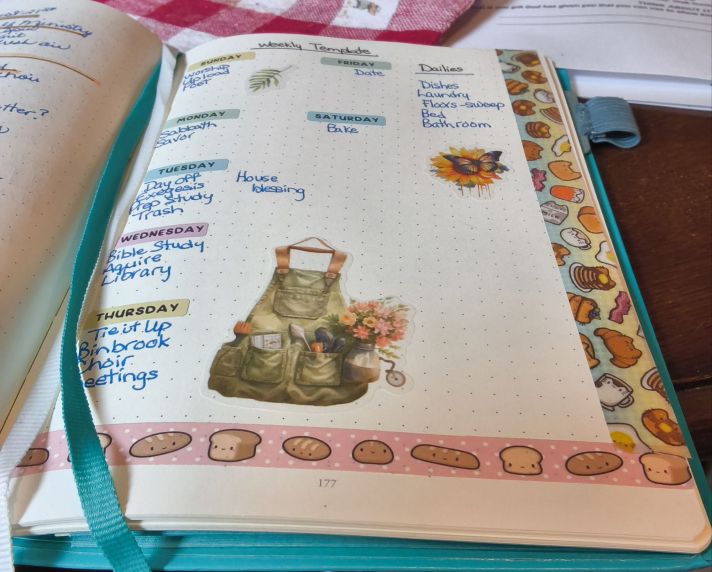
My weekly journal may not look calm at first glance.

There is worship to prepare and lead, a Bible study, meetings, choir practice, household chores, errands, exercise, baking, and online work. Like most people, I have days when one responsibility seems to run directly into the next.

Yet I am learning that a calm life does not have to be an empty life.

Calm comes from knowing where things belong.

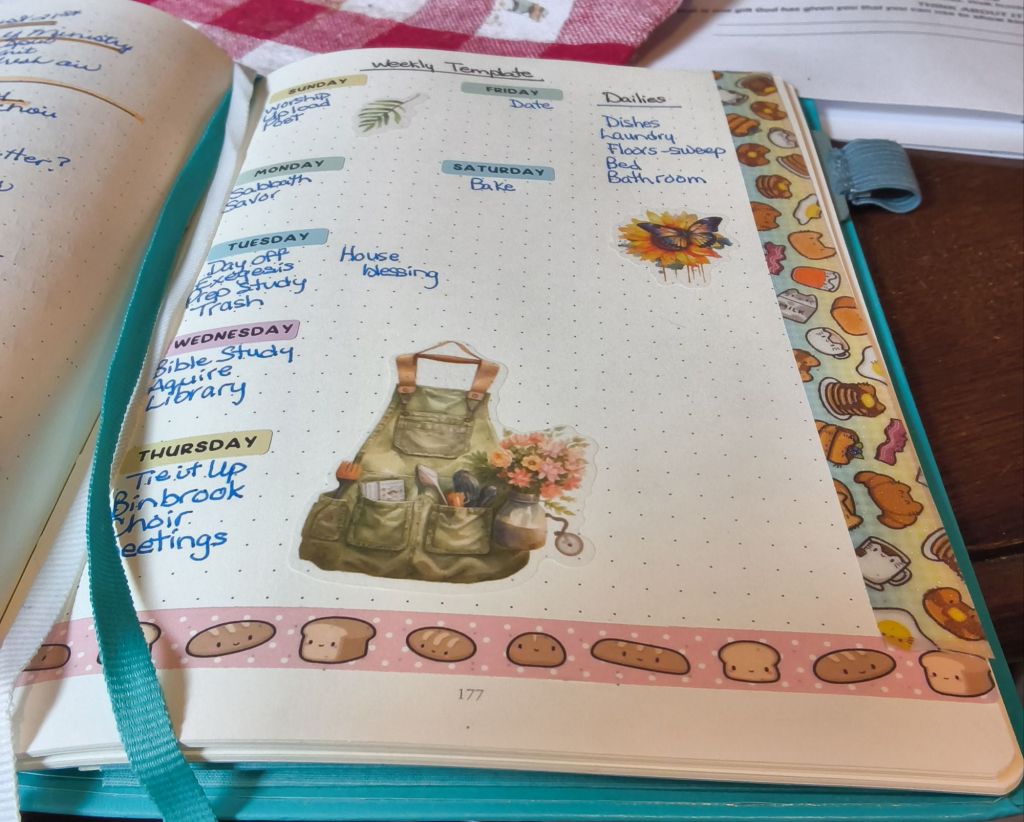
When I sit down to create my weekly journal page, I give each day a gentle purpose. Sunday is for worship. Monday is my Sabbath—a day to rest and savour. Tuesday holds study preparation and household tasks. Wednesday brings Bible study and errands. Thursday is shaped by church responsibilities and meetings. Friday offers space for a date, and Saturday is often a day for baking.

Not every week unfolds exactly as I have written it. Life rarely stays neatly inside the boxes we draw for it. Still, creating this rhythm helps me see that everything does not have to happen today.

That thought alone brings peace.

I also keep a short list of daily household tasks: dishes, laundry, floors, the bed, and the bathroom. These are not meant to become a demanding list of expectations. They are simply small reminders of what helps our home feel cared for.

I don’t need to deep-clean the whole apartment every day. I can wash a few dishes, make the bed, sweep one floor, or put on a load of laundry. Small acts of care, repeated gently, keep the house from becoming overwhelming.

I’m also discovering the importance of leaving open space on the page.

There was a time when I might have looked at an empty section of my planner and wondered what else I could fit into it. Now I see that open space differently. It represents breathing room. It gives me somewhere to place an unexpected task, a needed rest, a quiet cup of tea, or a few peaceful rows of knitting.

A full life needs margins.

My journal also helps me protect what matters most. Writing “Sabbath” on Monday is more than adding another task. It is a promise to myself that rest belongs in my week. Adding “date” to Friday reminds me that relationships deserve time too. Writing “bake” on Saturday makes room for something that nourishes both my home and my spirit.

These things are not extras to be squeezed in after the “important” work is finished. They are part of creating a life that feels whole.

When I become busy, my temptation is to move faster. I start thinking about the next three things while I am still trying to finish the first. But hurrying rarely creates peace. More often, it leaves me feeling scattered.

Instead, I am practicing a slower question:

What belongs in this moment?

If I am preparing Bible study, that is where I need to be. If I am washing dishes, I can simply wash the dishes. If I am resting, I do not need to turn rest into another productivity project.

Calm does not come from completing everything. It comes from being present to the life I am living.

My little weekly page—with its handwriting, stickers, bread-patterned tape, and open spaces—is not only a planner. It is a picture of the life I am trying to create: faithful, useful, creative, nourishing, and gentle.

There will always be busy seasons. Ministry, home, family, creativity, and everyday responsibilities will continue to fill my days. But I can choose the pace at which I meet them.

I can give my work a place.

I can allow small tasks to be enough.

I can protect rest before exhaustion demands it.

I can leave room for beauty, baking, conversation, prayer, and the unexpected.

Perhaps a calm life is not a life in which nothing is happening.

Perhaps it is a life in which we know what matters, make room for it, and trust that we do not have to carry the whole week at once.

One day is enough.

One task is enough.

One quiet moment can help steady the whole day.

What gentle rhythm could you add to your week to create a little more breathing room?

A Use-What-I-Have Loaf: Baking Bread with Beans — August 19, 2026

A Use-What-I-Have Loaf: Baking Bread with Beans

Today’s bread began with a simple question: What can I make with what I already have?

I had been reading about Ezekiel bread, inspired by the words of Ezekiel 4:9:

“Take wheat and barley, beans and lentils, millet and spelt; put them in a storage jar and use them to make bread for yourself.”

I didn’t have all those grains in my cupboard, and I wasn’t interested in making a special shopping trip. Instead, I decided to borrow the spirit of the bread: bringing beans and grains together to make something nourishing.

I started with about two cups of cooked mixed beans. I blended them until fairly smooth and then added what I had available:

  • 2 cups cooked mixed beans, puréed
  • ¼ cup rye flour
  • A mixture of white and whole-wheat flour
  • A generous handful of rolled oats
  • 3 tablespoons honey
  • 2 tablespoons olive oil
  • Commercial yeast
  • Warm water and salt

I added the flour gradually, watching and feeling the dough rather than following exact measurements. That is often how bread happens in my kitchen. You begin with an idea, pay attention to what the dough is telling you and adjust as you go.

The dough rose beautifully. The beans gave it substance without making it impossibly heavy. The rye, whole wheat and rolled oats brought their own texture and flavour, while the honey added a gentle sweetness and the olive oil helped create a soft, tender loaf.

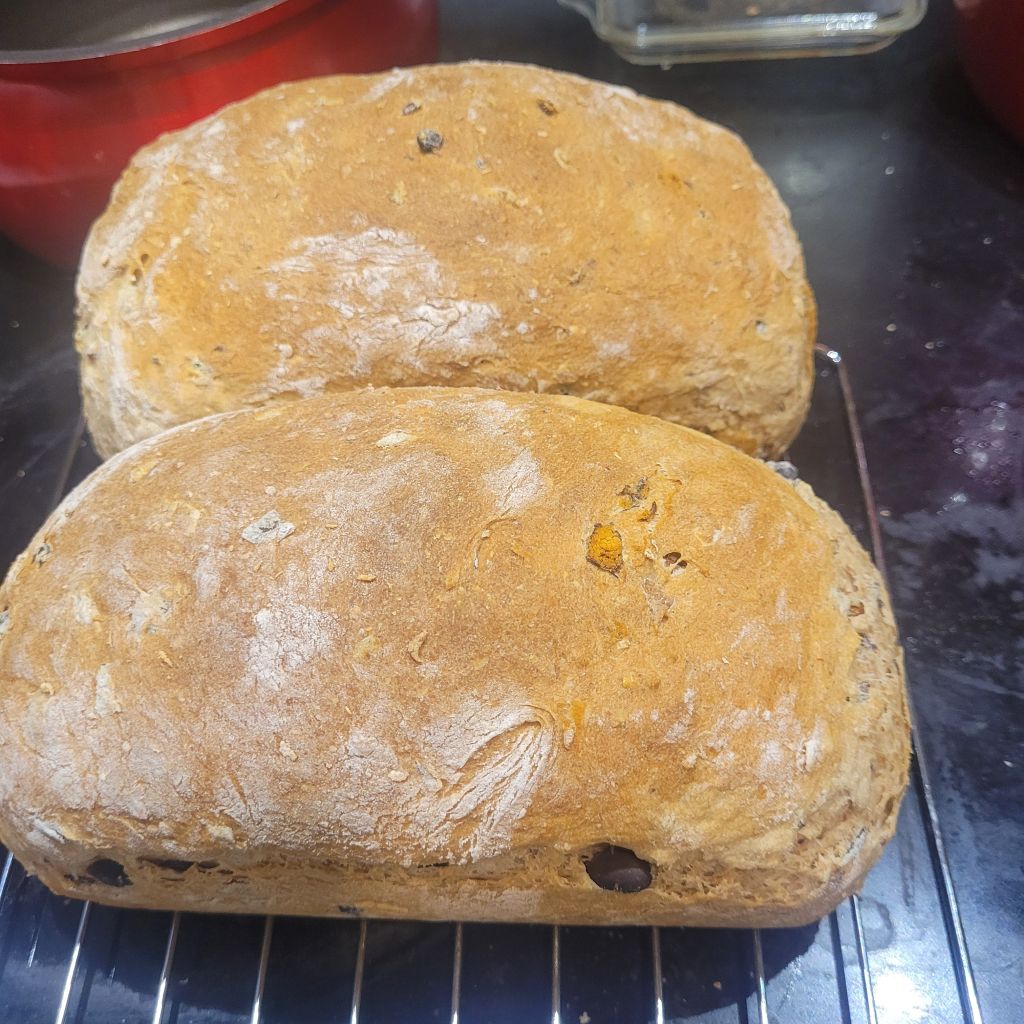
As I write this, the bread is cooling on the counter. It looks wonderful, although I’m resisting the temptation to cut into it too soon. Bread needs that cooling time to finish setting inside—even when the smell makes waiting difficult!

This isn’t an exact replica of commercial Ezekiel bread. It is my own cupboard-friendly version: a nourishing loaf made from beans, grains and a willingness to experiment.

There is something deeply satisfying about making good food from what is already close at hand. It reduces waste, stretches the pantry and reminds me that creativity often begins with limits. We don’t always need the perfect ingredients or the perfect recipe. Sometimes we simply need to begin with what we have.

And today, what I had became bread.

A Few Notes for Next Time

Because I measured much of the flour by feel, this loaf may never be reproduced in precisely the same way—and that’s all right. Next time, I may try adding barley or millet flour, lentils or a scattering of seeds.

For now, I’m waiting for the loaf to cool, the kettle is ready, and I’m looking forward to that first slice.

Have you ever made a successful loaf—or an entire meal—by simply using what you already had in the cupboard?

The Stewardship Life: More Than Taking Care — August 7, 2026

The Stewardship Life: More Than Taking Care

There are some words that quietly fade from everyday conversation.

Stewardship is one of them.

For many of us, the word immediately brings to mind church budgets, fundraising campaigns, or managing our finances wisely. Those things certainly have their place, but I have been wondering if stewardship is much bigger than that.

What if stewardship is really about caring well for every gift we’ve been given?

As I look around, I notice that we’re surrounded by messages encouraging us to live a little greener. Some are thoughtful and helpful. Others are simply clever marketing. It’s easy to believe that buying a different product will somehow make us better caretakers of the world.

But I’ve come to believe that the deeper question isn’t what we purchase.

The deeper question is:

What kind of life are we creating?

That question has led me to a new season of reflection.

Over the coming weeks, I’d like to explore what I’m calling The Stewardship Life—a way of living that is rooted in gratitude, shaped by intention, and guided by the belief that everything we have is ultimately a gift from God.

Together we’ll explore four areas of stewardship.

We’ll consider the land that feeds us and how our daily choices connect us with creation.

We’ll spend time in our homes, discovering that cooking, mending, creating, and welcoming others are holy acts of hospitality.

We’ll talk honestly about caring for our bodies with gentleness instead of criticism, remembering that they, too, are gifts entrusted to us.

And we’ll turn our attention inward to the stewardship of our hearts—our thoughts, our relationships, our faith, and the habits that quietly shape our lives over time.

If you’ve followed me for a while, you’ll know this won’t be a polished lifestyle series.

You’ll find me baking bread, spinning wool, knitting socks, visiting local markets, wandering through thrift shops, mending clothes, and enjoying a quiet cup of tea.

Those ordinary moments aren’t the point.

They’re simply the places where I’ve discovered that everyday life can become sacred when lived with care.

My hope is that these reflections won’t leave us feeling guilty for what we haven’t done. Instead, I hope they’ll encourage us to notice what God has already placed in our hands and ask one simple question:

How can I care for this well?

Perhaps that’s what stewardship has always been.

Not striving for perfection.

Not chasing more.

But faithfully tending the gifts we’ve already been given.

I’d be honoured if you joined me as we begin this journey together.

Welcome to The Stewardship Life.

Living with intention, gratitude, and enough.

Grannie Doll

What’s Going On in Grannie Doll’s Kitchen? — August 5, 2026

What’s Going On in Grannie Doll’s Kitchen?

It’s Wednesday, and my kitchen is quietly at work.

The dried beans that soaked overnight are now simmering on the stove. There’s no hurrying them. They will soften in their own good time and be ready for another meal later in the week.

A basket of strawberries is waiting to be washed, trimmed, and tucked into the freezer—a little taste of summer saved for colder days.

Chicken noodle soup is warming in the Instant Pot for lunch, while pork chops thaw for dinner. I’ll cook some rice to go alongside them and perhaps add a vegetable or two. Nothing fancy, but nourishing and dependable.

The dishwasher has been emptied and is ready to be filled again. Isn’t that the rhythm of a kitchen? We empty, wash, cook, eat—and begin once more.

Now it’s time to update the shopping list, taking note of what we’ve used and what we will need for the next few days. Shopping from the kitchen begins by noticing what is already here.

And then there is the bread.

Am I ready to mix a batch today? Possibly.

The flour is waiting. The kitchen is already warm and busy. Perhaps a bowl of dough rising on the counter is exactly what this Wednesday needs.

This is what’s happening in Grannie Doll’s kitchen today: food simmering, summer being saved, supper taking shape, and the ordinary work of home carrying on.

What’s simmering in your kitchen today?

Grannie Doll—keeping the kitchen warm and the pantry ready.

What If I Stopped Watching the Clock? — July 28, 2026

What If I Stopped Watching the Clock?

Part of my Right the Ship series

This week, I gave myself permission to have a slow day.

No agenda. No timetable. Just space.

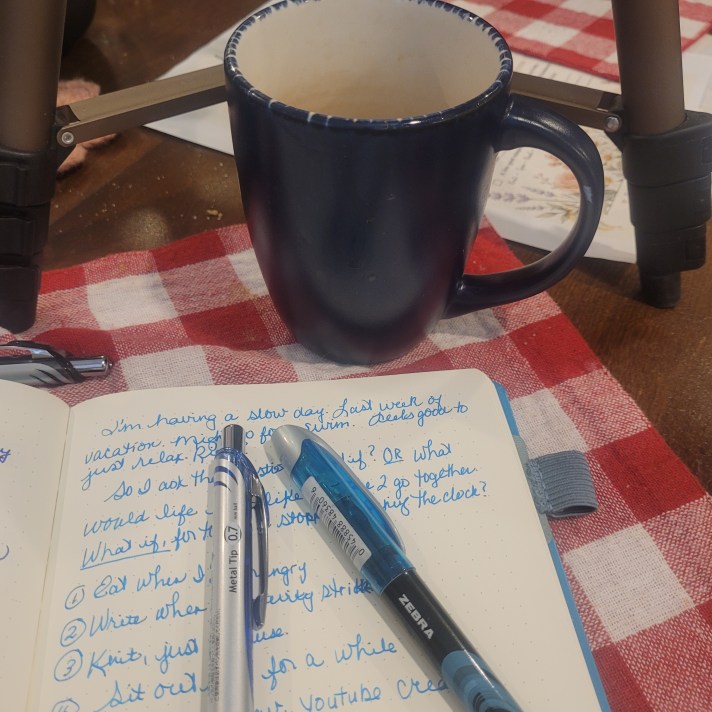
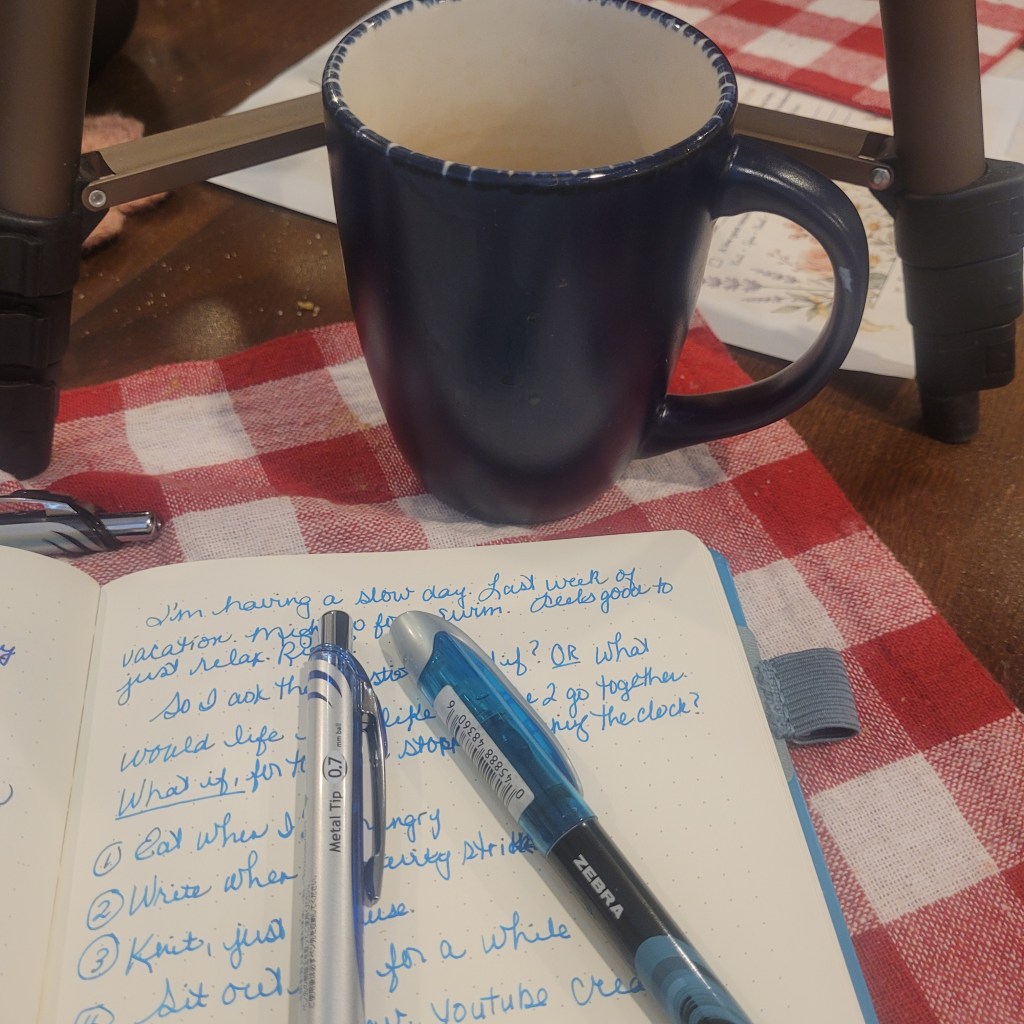
As I sat with my journal and a cup of coffee, a simple question surfaced:

What if I stopped watching the clock? (video is found below)

Not forever.

Just for today.

It’s amazing how much of life is dictated by time. We eat because it’s noon. We write because it’s on the calendar. We rush because the next thing is waiting.

Some days I wonder if I’m following the clock more faithfully than I’m following the gentle rhythms God built into me.

So I made a little list.

  • Eat when I’m hungry.
  • Write when creativity arrives.
  • Knit just because.
  • Sit outside for a while.
  • Watch one of my favourite YouTube creators.
  • Record something simply because I have something to share.

Nothing extraordinary.

Nothing that would earn a gold star for productivity.

Yet somehow, everything on that list felt like life.

When Control Stops Serving Us

I’ve realized I spend a lot of energy trying to manage every detail of my day.

If everything goes according to plan, I feel successful.

If it doesn’t, I quietly convince myself I’ve somehow fallen behind.

That’s exhausting.

More importantly, it isn’t who I want to become.

There is wisdom in planning. I don’t believe slow living means living carelessly.

But I’ve also learned that a tightly controlled life can leave very little room for surprise, delight, or the quiet nudges of the Holy Spirit.

Sometimes the most meaningful moments aren’t scheduled.

They’re noticed.

Right the Ship

This summer I’ve been living with a simple phrase:

Right the Ship.

It began as a reminder to care for my health.

But it’s becoming much more than that.

It’s about aligning my life with what truly matters.

It’s choosing presence over pressure.

Rhythm over hurry.

Grace over guilt.

Little by little, I can feel the ship beginning to steady.

Not because I’ve created the perfect routine.

But because I’m learning to loosen my grip on the clock.

A Question for You

So I’ll leave you with the same question that found me that quiet morning.

What if you stopped watching the clock… just for today?

What would you notice?

What joy have you been rushing past?

Perhaps the most important thing waiting for us isn’t another task.

Perhaps it’s simply the next moment.


I’d love to hear from you.

If you gave yourself one day without constantly checking the time, what would you do? I’d enjoy reading your thoughts in the comments. 🌿

Grannie Doll,

Living the 100 mile life one moment at a time.

Make, Thrift, Mend: Small Circles, Deep Roots — July 24, 2026

Make, Thrift, Mend: Small Circles, Deep Roots

Lately I’ve been thinking a lot about clothing.

Not in the “What’s in style?” sort of way, but in a quieter, more thoughtful way.

What if we simply paused?

What if, before buying another sweater, another pair of jeans, or another shirt, we slowed down long enough to look at what we already own?

As Katrina Rodabaugh writes, “If we could just pause our shopping habits, slow down our consumption, pay attention to the clothes we bring into our homes, we’d collectively make a huge shift.”

That idea has stayed with me.

Progress, Not Perfection

This isn’t about never buying anything again.

It’s about making thoughtful choices.

Perhaps we ask ourselves:

  • Do I really need this?
  • Do I truly love it?
  • Will I actually wear it?

Simple questions. Honest answers.

Slow fashion isn’t built on perfection. It’s built on paying attention.

As with so much in life, we simply start where we are.

Pause

One idea I’m considering is a fashion fast.

Maybe thirty days.

Maybe three months.

Maybe even a year of intentionally avoiding unnecessary purchases.

Not as a punishment—but as an opportunity to notice what I already have.

Sometimes enough has been sitting quietly in the closet all along.

Assess

I’ve also been thinking about creating a personal uniform.

Not identical outfits every day, but understanding what I genuinely enjoy wearing.

What pieces make me feel comfortable?

What colours do I reach for?

Where are the gaps that truly need filling?

Knowing this makes shopping far less impulsive.

Organize

Before bringing anything new home, it helps to sort what is already here.

Keep. Donate. Maybe.

And then ask another question:

Can this be repaired? Repurposed? Dyed a new colour? Turned into patchwork?

A worn shirt may become quilt squares. A faded linen dress might find new life in a dye pot. A sweater with a tiny hole might simply need ten minutes with a needle and thread.

There is something deeply hopeful about giving things another chance.

Gather Inspiration

I enjoy noticing what other people wear—not to copy them, but to better understand my own style.

Pinterest boards. Magazine clippings. Walking through town.

Watching how people layer clothing in every season. Slowly a picture begins to emerge of what feels authentic.

Learn

Visible mending. Natural dyeing. Ethical brands made in Canada. (or where ever you live)

Where to donate. Where textiles can be recycled.

There is always something new to learn, and every new skill makes us a little less dependent on buying our way through life.

Perhaps I need to host a little dye day with friends. A pot simmering on the stove, well-loved garments waiting for fresh colour, laughter around the table. That sounds like a lovely afternoon to me.

Care

One of the simplest lessons?

Wash our clothes less. Care for them gently. Hang them to dry. Treat them like companions rather than disposable products.

The clothes that serve us well deserve our gratitude.

Create Boundaries

I’ve also begun asking myself:

What am I willing to splurge on?

And just as importantly:

Where will I happily save money?

Sometimes buying one beautiful, well-made garment that will last ten years is wiser than buying five inexpensive ones that won’t last a season. Thoughtful spending isn’t about deprivation. It’s about stewardship.

Connection

Perhaps this is the part that matters most.

Slow fashion isn’t really about clothing. It’s about connection. Connection to the people who made our clothes.

Connection to the materials. Connection to our own values. Connection to the earth.

For me, this fits beautifully alongside my 100 Mile Life journey.

Small Circles. Deep Roots.

Repair. Repurpose. Remember.

Those three words feel almost spiritual.

Because every stitch we mend, every garment we rescue, every thoughtful purchase we make reminds us that abundance isn’t found in having more.

It’s found in caring more deeply for what we already have.

So today, before clicking “Add to Cart,” perhaps we’ll simply pause.

We might discover that the richest wardrobe isn’t the biggest one.

It’s the one that tells the story of a life lived with intention.

Blessings,

Grannie Doll 🌿
Small Circles. Deep Roots.

Holiday at Home: Collecting Moments — July 18, 2026

Holiday at Home: Collecting Moments

Coming home from the campground always feels a little bittersweet. The trailer is unpacked, the laundry is folded, and suddenly it can feel as though the holiday is over.

But is it?

This year I still have two weeks of vacation ahead of me, and I’m choosing to think about them a little differently. Rather than wishing I were still away, I’m inviting myself into a holiday at home.

After all, rest isn’t really about where we are. It’s about how we choose to be present.

The days don’t need to be filled with big adventures. They can be anchored by simple rhythms that help my heart settle. A slow cup of coffee in the morning. A few quiet pages in my journal. Time at my spinning wheel or knitting a few rows on my sweater. A swim on a warm afternoon. Perhaps a visit to a local farm stand or an hour wandering through a thrift shop with no particular goal in mind.

These aren’t chores. They’re invitations.

I’m learning that vacations don’t have to be busy to be meaningful. In fact, the older I get, the more I treasure the ordinary moments that become extraordinary simply because I slow down enough to notice them.

Instead of making a long list of things to accomplish, I’m asking myself a different question:

What would make today feel restful?

That question changes everything.

Maybe it means baking a loaf of bread. Maybe it means sitting outside with a candle as evening settles in. Maybe it means spinning for half an hour while listening to the birds. Maybe it simply means taking care of my health with gratitude and gentleness.

I’m beginning to think that the best souvenirs aren’t things we buy while travelling.

They’re moments we collect.

A finished skein of yarn.

Blueberry-stained fingers.

The smell of fresh bread.

A quiet prayer.

A chapter of a good book.

A gentle walk.

A laugh shared with family.

These are the treasures I want to carry with me long after vacation ends.

So for these next two weeks, I’m not chasing productivity.

I’m collecting moments.

And perhaps that’s the most restful holiday of all.

What small moment could you collect today that your future self will remember with gratitude?

From Grannie Doll’s quiet corner

A Gentle Monday — July 6, 2026

A Gentle Monday

Holiday Mondays have their own rhythm.

The day begins the way it often does—with my journal, recording my personal stats, and a slow cup of coffee. I map out the week ahead, breathe deeply, and let the calm of the morning settle over me.

After a quick kitchen tidy on this third day of Tour de Fleece, I settle at my spinning wheel with a protein smoothie close by. There’s nothing pressing today. No urgent tasks demanding my attention. Just the quiet hum of the wheel, a few favourite YouTubers keeping me company, and the simple joy of creating.

Sometimes the greatest gift is an unhurried day. A day to breathe, to spin, to be thankful.

I hope your day unfolds with a little peace, a little purpose, and moments that remind you to slow down. Blessings on your Monday.

— Grannie Doll
Spinning grace, one peaceful day at a time.

Preparing the Spindles for July — June 13, 2026

Preparing the Spindles for July

July is just around the corner, and in the fiber arts world that means one thing for many of us: challenge season. The baskets come out, the fiber gets sorted, and suddenly every spindle in the house is asking for attention.

This week I’ve been focusing on preparing my spindles for the July 2026 spinning event. There is something deeply satisfying about getting ready before the first official day begins. Choosing tools, organizing fiber, testing balance and spin — it all feels like part of the ritual.

Some people train for races.

I prepare spindles.

What I love most about these events is not necessarily the speed or the output, although both can be exciting. It’s the way a challenge encourages me to pay closer attention to my craft. I notice my drafting more. I experiment with different fibers. I become more intentional with my spinning rhythm.

Preparation matters.

Before the spinning even begins, there’s a quiet season of planning:

  • Which spindle feels best in my hands right now?
  • What fibers do I want to work through?
  • Do I want comfort spinning or skill stretching?
  • What goals actually feel realistic for this season of life?

As I sorted through my spindle collection, I realized each one carries its own personality and memory. Some are fast and lively. Others are steady companions for evening spinning in the rocking chair. A few are connected to previous spin-alongs and long winter nights.

That’s part of the beauty of hand spinning. The tools themselves become part of the story.

I also know myself well enough now to understand that preparation helps me stay grounded during a challenge. When the fiber is organized and the tools are ready, I can simply sit down and spin. No scrambling. No searching. Just fiber moving through my hands one draft at a time.

And honestly? I enjoy the anticipation almost as much as the event itself.

There is joy in sharpening skills at any age. There is joy in setting personal goals simply because we love the craft. Whether you are spinning for sweaters, socks, prayer shawls, or simply for peace of mind, every yard spun by hand carries something meaningful within it.

If you are joining the July spinning event, I’d love to hear what you are preparing. Are you focusing on consistency? Speed? Learning a new technique? Working from stash?

Let’s encourage one another along the way.

Until then, I’ll be over here with my baskets of wool, a growing spindle lineup, and a cup of matcha nearby — getting ready one spin at a time.

Blessings,

Grannie Doll – living the 100 Mile Life, one spin at a time.

Deep Roots & Small Circles —

Deep Roots & Small Circles

Weekly Notes from Grannie Doll

Hello friends,

This week has been quieter in spirit, and honestly, I think I needed that.

There are seasons when life asks us to push harder, hurry faster, and keep producing. Then there are weeks like this one — where the invitation is simply to steady the ship. To rest. To return to the small things that help us feel grounded again.

For me, that has looked like English paper piecing in the evening light, knitting on a sock while listening to the sounds of home, and slowly continuing this journey of living the 100 Mile Path life.

The hand stitching especially has been speaking to me lately. Tiny stitches. Tiny movements. Tiny acts of care. It reminds me that not all progress is loud. Some of the most meaningful work we do is almost invisible to the world.

The sock knitting has become its own kind of prayer. Row after row, heel turns and familiar rhythms, creating warmth from wool in my own hands. There is comfort in making useful things slowly.

I’ve also been thinking a great deal about rest — true rest — not quitting, not laziness, but deep replenishment. I think many of us carry exhaustion we rarely speak aloud. We move from task to task, responsibility to responsibility, until our souls begin asking for softer places to land.

So this week I leaned into slower meals, local foods, simple routines, and familiar comforts. Living the 100 Mile Path continues to shape how I think about abundance. Not abundance through excess, but abundance through connection:

  • local food
  • handmade work
  • deep community
  • enough on the table
  • enough in the pantry
  • enough in the soul

There is something deeply healing about knowing where things come from — whether it’s the wool in my hands, the vegetables on my plate, or the people in my circle.

This life may look small from the outside.

But it feels rich to me.

As we move toward another busy season, I hope you too can find one small grounding practice this week:
a cup of tea,
a walk,
a quiet prayer,
a loaf of bread,
a row of knitting,
a few stitches by hand.

Small circles.
Deep roots.
Steady hearts.

With love,

Grannie Doll