Doll Can Create

100 Mile Life/Grandma Core

Embracing the 100 Mile Life: A Journey to Living Locally — February 4, 2025

Embracing the 100 Mile Life: A Journey to Living Locally

Introduction and Welcome

Hello, friends! Have you ever paused to consider what a typical Tuesday afternoon might look like for me? Grab your favorite drink and join the conversation as we dive into life’s simple pleasures. I’m Doll, from Doll Can Create, inviting you to explore a day in my life.

Exploring the 100 Mile Life

Today, I’m excited to share insights about my 100 Mile Life journey. This adventure began with some self-imposed guidelines intended to encourage local living. While I strive to source within 100 miles—equivalent to 160 kilometers—not everything fits this boundary. Essentials like oranges, bananas, coffee, tea, and sometimes grapes remain exceptions due to practical reasons.

My 100 Mile radius encompasses significant parts of Lake Ontario and Lake Erie, which limits fresh produce, especially during winter. However, my reasons extend beyond mere locality; they’re about minimizing environmental impact by reducing global shipping dependencies.

Some may question the avoidance of big box stores, but in Southern Ontario, larger companies like Walmart and Amazon offer employment opportunities to many. While I do make use of these resources, I’m mindful about curbing my dependency for budgetary reasons.

For instance, recent purchases included grocery staples like cake mixes, graham crackers, and grapes—but there’s a conscious effort to make some of these from scratch. The yarn, however, remains non-negotiable for the foreseeable future; my current stash is more than sufficient.

Spinning and Fiber Projects

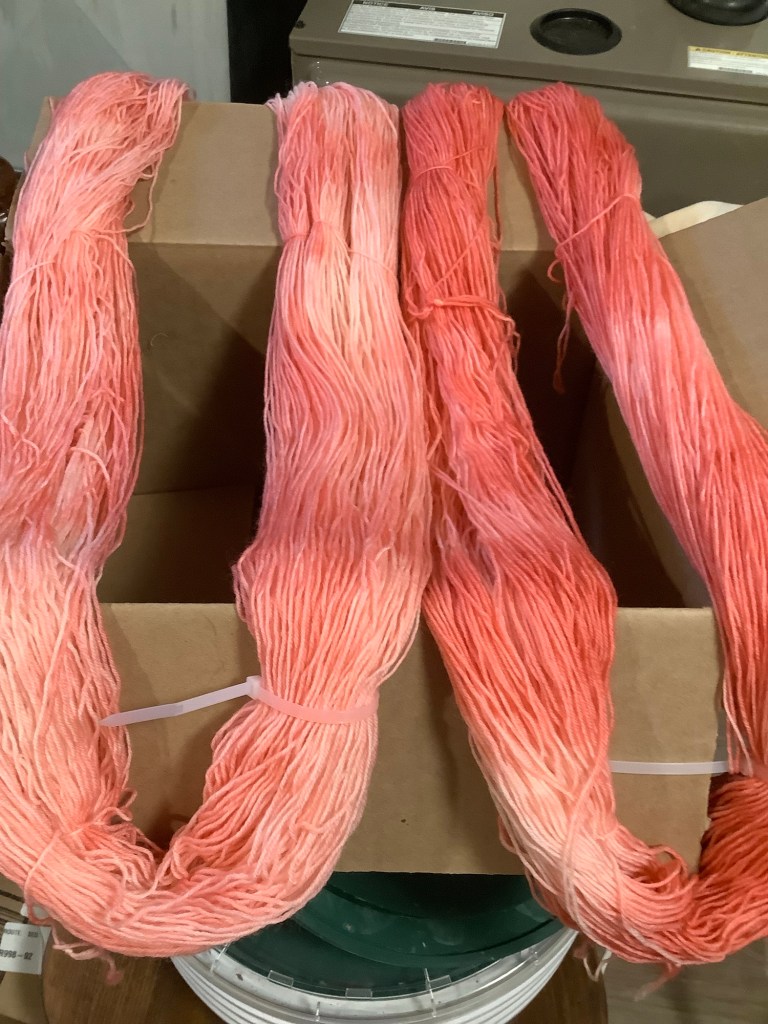
Currently, I’m working on various fiber projects. I have a spindle with German wool—a delightful gift part of an exchange event. A different roving, is 100 grams of beautifully hand-dyed wool excites my imagination, possibly inspiring a new pair of socks!

While I ponder different creative outcomes, my spinning continues. Often, I combine fibers for projects, such as socks, ensuring strength and durability in final products. Although not all yarns are local, they represent special gifts or accumulated resources ready to transform.

Supporting Local and Final Thoughts

The 100 Mile Life isn’t just a hobby; it’s an opportunity to forge meaningful local connections—working with shepherds, farmers, and craftspeople. Through this journey, I hope to compile a booklet for those intrigued by locavorism, offering practical steps to engage with their communities.

Central to my mission is supporting Canadian wool industries. Despite seeing vast shipments of Canadian wool abroad, I remain committed to utilizing local mills wherever feasible. Crafting personal items from Canadian wool furthers this goal, reducing unnecessary transport miles.

As I scale back on external purchases, festivals and sales become opportune spaces to engage with local artisans. Moving forward involves careful consideration of wants versus needs, especially when acquiring non-local items.

Recent reflections include shifting book purchases to a local bookstore instead of Amazon. This minor adjustment embodies the ethos of my initiative—supporting local economies and reducing carbon footprints.

Today, as I conclude my yarn spinning, the journey continues. Sharing moments like this with you reinforces the transformative power of mindful living. Until next time, remember: if I can create, so can you. Have a wonderful week, and let’s continue this exciting adventure. Bye for now, and take care! Doll

Rocking Chair Knit & Chat – A Rainy Friday Afternoon — February 1, 2025

Rocking Chair Knit & Chat – A Rainy Friday Afternoon

  • Host: Doll from Doll Can Create – and you can too!
  • Live Knit & Chat:
    • A cozy session during a rainy Friday afternoon.
    • Reflecting on self-care, or as a pastor, “self-ministry.”
    • Importance of ministering to oneself with kindness and uplifting activities.

A List of what I shared:

Current Knitting Projects

  1. Socks:
    1. Working on the toe of a sock, almost done.
    2. Using a standard wedge toe method.
    3. Yarn: Kroy Sox FX (75% wool, 25% nylon).
    4. Unsure if there’s enough yarn for heels and toes.
    5. Following “Vanilla Latte” pattern from Ravelry.
    6. Heel pattern from Tracy at thepassionknitspinner.
    7. Planning to cast on the next sock immediately after finishing this one. (which I did)
  2. Fingerless Mitts for Husband:
    1. Still working on the cuff.
    2. Used hand-spun yarn for the project.
  3. Hat:
    1. Designed by Tracy (thepassioknitspinner).
    2. Brioche knitting in the round.
    3. Using a heavier yarn, opting for a single strand instead of two-ply.
    4. Folded brim for extra warmth.
  4. Sweater (Whatever Sweater):
    1. Using Briggs & Little single-ply yarn.
    2. Knitting the bottom section, still a work in progress.

Other Crafting & Spinning

  • Neglected Spinning:
    • No spindling, wheel spinning, or fiber prep this week.
    • Plans to get spinning back into the routine.
  • Dyeing Experiment:
    • Used onion skins and avocado pits/peels.
    • Will share in a future video.
  • Spinning for Mittens:
  • Hand-Dyed Sock Yarn (Royal Oak):
    • Dyed with acorns collected by daughter and granddaughter.
    • Moving towards using locally sourced fiber for future sock yarns.
    • Wool sourced from a local farm (Rampart Farms)  (Merino & BFL cross).

Other Creative Interests

  • Crochet:
    • Enjoys crocheting but does it less often.
    • Working on a wall hanging using Arne & Carlos pattern. (Astrid)
    • Has a mile-a-minute blanket in progress.
    • Used to enjoy crocheting doilies and small projects.
  • Sewing:
    • Plans to start sewing again.
    • Purchased a Simplicity skirt pattern.
    • Prefers avoiding zippers in sewing projects.
    • Looking to use fabric from donated church supplies.
    • Would love to work with linen in the future.

100-Mile Life Challenge

  • Buying locally:
    • Focused on grocery shopping within a 100-mile radius.
    • Allowing exceptions for bananas, oranges, and some imported fruit.
    • Exploring thrifting for clothing.
    • Prioritizing local wool for fiber arts.

Home & Life Updates

  • Plants:
    • Revived a nearly dead money tree before Christmas.
    • Thriving with new leaves after proper care.
  • Matcha Tea:
    • Recently started making matcha using a traditional set.
    • Enjoys the earthy taste and daily ritual.

Community & Interaction

    • What are you working on?
    • Any new projects or patterns you want to try?
    • Do you crochet?
    • Where are you watching from?

Final Thoughts

  • Wrap-up & Invitations:
    • Subscribe & follow Dollcancreate.com for more.
    • Newly launched Patreon for additional content.
    • Wishing everyone a great weekend. Stay safe & God bless!

Bye for now! 👋

What did we buy today? (100 Mile Adventure) — January 30, 2025

What did we buy today? (100 Mile Adventure)

We did some end of the month shopping today at a local store: Denninger’s. (3.5 KM from home)

I was looking for some liverwurst and asked at the Deli where it was made – right here in Hamilton she said. Bonus!

All that I purchased was 100 Mile except the grapes which came from Peru. This is not the best shop for low prices but the quality is so good and the staff always pleasant and kind.

We saved $14.15 by purchasing items marked down. Even the grapes were $2.00 off. Will we shop there again? For sure.

How have you made out with your shopping this week? Any great, local deals? Comment below. Let’s keep the conversation going.

Doll

Station Dairy 21.3 KM (we purchased at Denningers)

Hewitts Dairy 33.8 KM

I struggle with moving from miles to km so for me it’s almost always how long does it take to get there? 160 km = 100 mile LOL

Decluttering and Embracing the 100 Mile Life — January 29, 2025

Decluttering and Embracing the 100 Mile Life

Hi friends, and welcome! I’m so glad you could join me. This past weekend, I went through a huge decluttering session with a group of others online, and it made me realize just how much stuff I have. Have you ever taken a moment to think about how many items are in your kitchen, in that one forgotten corner, or scattered throughout your home?

As I continue my journey with the 100 Mile Life, I want to dive into household essentials—what we need, what we don’t, and how we can replace items sustainably within our local area.

The Reality Check on Household Items

Take a moment to consider: How many dishes do you own? How many pots, pans, gadgets, and miscellaneous tools are in your kitchen? More importantly, when something breaks, what is your instinct? Do you immediately turn to Amazon for a replacement? That used to be me. But if we’re truly committed to the 100 Mile Life, we need a different approach.

For me, the answer is thrifting. Right now, I’m searching for a square baking pan—either an 8×8 or 9×9. Sure, I could order one online and have it delivered tomorrow. But instead, I’m choosing to visit a local thrift store, where I’m almost certain to find one. And even if I don’t, I already have round baking pans that will serve the same purpose. Do I truly need to spend money at all?

Thrift stores are treasure troves filled with baking items, dishes, utensils, glassware, and even kitchen electronics. However, it’s easy to walk out with more than you need, so I follow the “one in, one out” rule—if I bring something new into my home, something old must go.

Thinking Beyond Convenience

The convenience of new products often comes at a cost. Many household goods travel thousands of miles from manufacturing sites in China, India, and other distant locations. The transportation industry is massive, and while I love tracking ships on the Great Lakes and seeing what goods they carry, I’ve decided I don’t want to contribute unnecessarily to that cycle. I have enough.

Reducing Paper and Cleaning Products

Household sustainability isn’t just about dishes and gadgets—it extends to disposable products as well. How much paper do we really need? Could we use rags instead of paper towels? And while I won’t dive into the topic of toilet paper just yet, it’s another area worth considering.

Cleaning products are another area for reflection. Do we really need a chemical-based cleaner for every surface? Often, a simple spray bottle with water will do the trick. I plan to use up the cleaning products I already own before deciding on more eco-friendly alternatives. While sustainable options can be more expensive, buying fewer unnecessary items makes room in the budget for quality, local products.

Moving Forward with the 100 Mile Life

So, what can you do in your home to make it more 100 Mile Life-friendly? Are there items you could source locally instead of buying new? Are there ways to simplify and reduce waste?

I’d love to hear your thoughts! If you have any insights or questions, feel free to leave a comment and share this with anyone who might be interested. The 100 Mile Diet has its challenges—especially in winter—but I’m committed to finding a way, whether it’s through fiber, food, household goods, or clothing (which we’ll discuss in the next post).

Let’s create a life that is not only fulfilling but also conscious of our impact.

Buy locally. Live sustainably.

This is Doll from Doll Can Create and you can too. Thanks for reading—see you next time!

Might not be easy but it is possible. — January 28, 2025

Might not be easy but it is possible.

Hi friends,

How are you doing in your 100 Mile Life? If you’ve been following me, you’ll know that I’ve embarked on a journey to create a life within a 100-mile radius of where we’re living.

Hi, this is Doll from Doll Can Create. You can too!

In Canada right now, there’s a big push to buy Canadian, which I understand. But my thought is—why not buy 100 miles? Let’s cut down on shipping, trucking, and the environmental impact. Let’s be good to this big, beautiful world that we live in. Right? That’s where I’m coming from.

I started this challenge and this journey before last week’s shift in government and before last week’s announcements about a federal and provincial election. This started before that, and I want to bring you along with me.

So if you’re interested, like, subscribe, and share with your friends. Know that I’m here to help, and through my longer videos and blog posts, I’ll share strategies and things to look for as you enjoy your 100 Mile Life—not just today, but for many days to come.

Till then, God bless. See you next time!

Bye for now.

The 100-Mile Life: Exploring Local Food Choices — January 27, 2025

The 100-Mile Life: Exploring Local Food Choices

Hello, my friends! Have you ever stopped to think about where your food comes from? Is it flown in from thousands of kilometers away or sourced just down the road?

Welcome! This is Doll from Doll Can Create, where I share my journey of crafting and living intentionally. Today, I’m diving into the second set of rules I’ve created for my 100-Mile Life Experiment.

Rule #1: Use What You Have

In my last post, I talked about sourcing local wool for my knitting and crafting projects. While I work towards fully local wool, I’ve also committed to using what I already have. My Sophie scarf, for example, was made from yarn already in my stash. It may not be local, but it’s a step toward sustainability.

Now, I’m turning my attention to food—where it’s grown, processed, and packaged. My goal is to source as much as possible from within a 100-mile radius of my home.

Rule #2: Local Meat

Finding locally sourced meat is tricky. Many grocery store options are imported, like New Zealand lamb. However, I know of at least one local processor, and I’m exploring food delivery services that prioritize local meat.

Prepared products require extra scrutiny—labels often reveal where meat was packaged, which may or may not meet my 100-mile rule. It’s all about reading labels and asking questions.

Rule #3: Local Cookies and Baking

When it comes to snacks, I’m rethinking my choices. For instance, Oreos are made in Montreal, which is outside my 100-mile zone. Instead, I’m revisiting local options like Dare cookies or baking my own treats.

To support this, I’ve revived my sourdough starter. The warmer temperature in my apartment has helped it thrive, and I’m excited to bake bread again. I’m also researching local grain mills for flour from nearby farms.

Rule #4: Produce and Dairy

Winter makes sourcing fresh, local produce challenging, but I’ve found creative solutions:

  • Local dairy: Summit Dairy, just outside Ancaster, produces excellent products from its own herd. While slightly more expensive, their milk, cream, and chocolate milk are worth it.
  • Produce options: I’ve started using services like Produce Express, which allows me to choose local fruits and vegetables.
  • Sprouting at home: To enjoy fresh greens year-round, I’ve begun sprouting mung beans, radishes, and pea shoots. It’s a quick and satisfying way to supplement my diet with homegrown nutrients.

A Few Exceptions

Of course, I have a few items that I’m allowing myself to buy outside the 100-mile rule, like matcha tea, green tea, and coffee. But even here, I plan to transition to local roasters once my current stash is used up.

Sharing the Journey

This journey is just beginning, and I’m excited to share more about my research and discoveries in future posts. From finding local suppliers to adapting recipes, it’s an adventure in mindful living.

What about you? Does the idea of sourcing food locally appeal to you, or does it feel daunting? Share your thoughts in the comments—I’d love to hear from you.

Until next time, this is Doll from Doll Can Create, reminding you that you can too. Let’s create a more intentional, sustainable life together.

Stay tuned, and bye for now! Blessings to you.

Living the 100-Mile Life: First Up, Fibre — January 25, 2025

Living the 100-Mile Life: First Up, Fibre

Hey friends, welcome to my journey! I’m embarking on a 100-mile life adventure, and I’d love for you to come along. My mission? To live as locally as possible, sourcing everything within a 100-mile radius of my home. My first focus is on fibre, specifically wool, crafting, and all the amazing things that come with it.

Let’s dive in!

A Quick Fibre Tour

So, here’s what I’m working with. I’ve taken stock of my fibre stash, and let me tell you, it’s impressive and a little over-whelming; even embarrassing.

  • Bins full of fibre.
  • Bags that haven’t even been opened yet.
  • Work-in-progress projects and more fibre tucked away.

Honestly, do you think I have enough? I think so! This hidden treasure trove is a great start for my journey. Now, the plan: use what I have, source local fibres, and dive deep into the crafting process.

The Three Rules

  1. Use What I Have: I’m committed to using my existing fibre stash. I have my spindles, my spinning wheel, and even some natural dyes I’ve been eager to experiment with.
  2. Source Local Fibres: Supporting local shepherds and fibre farms is a top priority. I already know of a few farms within my 100-mile radius where I can visit, meet the shepherds, and select the fibres I need.
  3. Explore Local Tools: While I don’t necessarily need new tools, I’m curious about local artisans who might create spindles or other crafting tools. It’s all part of staying true to the 100-mile life.

No More Impulse Buys

This journey isn’t just about where I source my materials; it’s also about curbing unnecessary spending. No more buying yarn just because it’s pretty. Instead, I’ll focus on:

  • Attending local fiber festivals (like the one coming up in March).
  • Visiting thrift stores for second-hand supplies when needed.
  • Making do with what I already own.

Wool’s Journey

Have you ever thought about from where your wool comes ? Shipping fibre across the globe is expensive and environmentally costly. For example, wool shipped from New Zealand to Vancouver and then across Canada incurs tremendous costs, both financially and environmentally. By choosing local, I can minimise this impact while supporting Canadian wool growers and fibre mills.

Beyond Fiber

This journey extends beyond fiber into other areas of my life, including food, clothing, and more. For clothing, I’ll use the fabric I already have or source it second-hand. I’ve heard that church groups often have surplus fabric they’re happy to share, which is a great way to keep things sustainable. As for undergarments… well, that might be a bridge too far for my crafting skills!

A Question for You

What steps can you take to support your local economy? Have you considered from where your crafting materials come? Living a 100-mile life is about more than just sustainability—it’s about building connections and strengthening local communities.

Stay tuned for my next post, where I’ll dive into the topic of food. For now, think about your craft supplies. Are there ways you can source more locally or reduce waste? Let’s create a more sustainable world together.

This is Doll from Doll Can Create, reminding you that you can too. Many blessings, and bye for now!

Living Local: My 100 Mile Life Challenge — January 23, 2025

Living Local: My 100 Mile Life Challenge

Living Local: My 100 Mile Life Challenge

(this is not a direct transcript)

Have you ever stopped to think about how far the things you use every day have traveled? From the food on your plate to the clothes in your closet, many of these items have journeyed thousands of miles before reaching you. What if we could change that? What if we could bring it all closer to home?

That’s the inspiration behind my latest adventure: the “100 Mile Life in 100 Days” challenge. Over the next three months, I’ll be focusing on sourcing everything—from food to household goods to wool—within 100 miles of where I live. It’s a journey that’s about much more than just shopping locally. It’s about connecting with my community, reducing my environmental footprint, and uncovering the incredible resources in my own backyard.

Why 100 Miles?

This challenge takes inspiration from the “100 Mile Diet,” a movement that encourages eating locally and sustainably. But I’m expanding the concept beyond just food. By incorporating wool and other locally made goods, I’m embracing the richness of what’s nearby while supporting sustainable practices. Wool is a big focus for me—it’s a chance to connect with local producers and celebrate the artistry of textiles created right here at home.

The Rules of the Challenge

There will be a few rules I’ll set out for myself. If you follow along your rules might be different.

  1. Stay Within the 100-Mile Radius: Everything I purchase must come from within this boundary.
  2. Allow Necessary Exceptions: Some items, like medicine, may not be available locally, but I’ll aim to minimize these exceptions.
  3. Focus on Learning: This isn’t about perfection. It’s about discovering new ways to live more sustainably and sharing what I learn along the way.

What to Expect

Over the next 100 days, I’ll be documenting this journey—the successes, the challenges, and everything in between. From finding local flour for baking to meeting incredible farmers, artisans, and wool producers, there will be no shortage of stories to share. Along the way, I’ll also offer tips and tricks for anyone who wants to try living more locally. Whether it’s sourcing one meal a week from local producers or supporting a nearby wool artisan, even small steps can make a big difference.

Why It Matters

Choosing to live within 100 miles is about more than convenience. It’s a way to:

  • Support Local Economies: Every purchase invests in the community and keeps resources circulating locally.
  • Reduce Environmental Impact: Local goods often require less transportation, cutting down on greenhouse gas emissions.
  • Rediscover Seasonal Living: Eating and living locally means aligning with the rhythm of the seasons, which can be both grounding and fulfilling.

Join Me on This Journey

I’d love for you to follow along or even join in your own way! Whether it’s by exploring local farmers’ markets, trying out regional recipes, or seeking out local wool for your next knitting project, there are countless ways to embrace the 100 Mile Life. Want local wool to spin or use in your crafting? I have a few options for you. Send me a message or check out my Patreon for more information.

Are you ready to explore the richness of what’s right around you? Let’s embark on this adventure together and see how local we can go. Here’s to discovering the beauty of living closer to home!

Enjoy!

Fresh Sprouts and Saving Big: A Day in the Kitchen with Doll — January 21, 2025

Fresh Sprouts and Saving Big: A Day in the Kitchen with Doll

Hi friends! Doll here from Doll Can Create, and today I’m hanging out in the kitchen—one of my favorite creative spaces. 🌱✨

Let me show you what I’ve got going on! These little greens you see here? They’re pea shoots I ordered from my favorite produce supplier. I snipped a handful to make a quick salad for myself, and of course, I shared some with the bunny. (He loves them as much as I do!)

But wait—there’s more! I’m gearing up for some serious sprouting action. Let me give you a little tour of my setup.


The Big Sprouter

Over here, I’ve got my trusty big sprouter. Right now, it’s soaking green peas. These are the kind you sprout, not the dried ones for cooking. Tomorrow, I’ll rinse them and transfer them to the top layer of the sprouter. This thing has been with me forever, and it still works like a charm.


The Sprouting Towers

On the other side of the room, I have my sprouting towers. These are so fun to use!

  • Tower One: It’s a mix of sprouts—daikon radish and mung beans. I even found a couple of rogue sunflower seeds in there (a surprise gift from the sprouting mix, perhaps?).
  • How It Works: You water the top, and it flows down to the bottom, nourishing all the layers. By the weekend, I’ll have a delicious variety of sprouts ready to enjoy.

Why Sprout?

Fresh sprouts are so versatile. You can toss them in salads, soups, or stir-fries—or just snack on them straight out of the sprouter. They’re crunchy, nutritious, and incredibly satisfying. Plus, they’re a fantastic way to save on grocery bills. Doing your own sprouting means fresher, tastier greens at a fraction of the cost.


Do you sprout? If you do, let me know in the comments! I’d love to hear what you’re growing and how you enjoy them.

Until next time, friends—this is Doll from Doll Can Create. Remember, if I can do it, you can too!

Bye for now! 💚

Rocking Chair knit and chat — January 16, 2025

Rocking Chair knit and chat

Join me in my cozy corner as we chat and knit or craft together in this mid-January edition of 2025!

In this relaxing session, I’ll be sharing my latest knitting projects, including a pair of cozy socks made from Patons sock yarn. As a passionate member of the knitting community, I love sharing my creations and hearing about yours.

Whether you’re a seasoned knitter or just starting out, I hope you’ll find inspiration in our chat. From spinning wool to creating unique pieces, I’m excited to share my yarn addiction with you. So grab your knitting needles, or crafting project, sit back, and let’s get cozy!

Have a blessed day!

Join me on my new Patreon platform. https://patreon.com/DollCreelman

Thank you for liking, subscribing, and sharing with your friends.