Doll Can Create

100 Mile Life/Grandma Core

God Provides: Finding Daily Bread in the Wilderness — October 5, 2025

God Provides: Finding Daily Bread in the Wilderness

Have you ever had one of those days when the worries of tomorrow press in so hard? It can be difficult to see the blessings of today. Bills stack up, cupboards look bare, and your heart begins to grumble. You’re not alone—God’s people in Exodus 16 felt the same way.

The Israelites had just experienced the miracle of crossing the Red Sea. They found themselves wandering in the wilderness with empty stomachs. Their hearts were fearful. They complained, longing for the food they remembered in Egypt. Isn’t it striking how quickly we forget God’s faithfulness when we are uncomfortable?

And yet, God answered not with anger, but with mercy. Each morning, bread from heaven—manna—appeared on the ground, and in the evening quail filled their camp. Enough for the day. Not enough to hoard, but enough to teach them to trust.


Lessons in God’s Daily Provision

1. Complaining clouds gratitude.
Israel looked backward instead of upward. When we complain, we miss the evidence of God’s hand right in front of us.

2. God provides for today.
The manna was daily bread. Just as His mercies are new every morning, His provision comes in daily trust.

3. His gifts are sufficient.
No one gathered too much or too little. Each had exactly what was needed. That truth still holds: God’s grace fits your life perfectly.


From Manna to Christ

Centuries later, Jesus declared, “I am the Bread of Life” (John 6:35). The manna in the wilderness was just a glimpse of the greater gift—Christ Himself, who sustains us in every season. When we feel empty, He fills. When tomorrow looks uncertain, He reminds us He is already there.


A Thought to Carry

Today, pause and notice the manna God has placed before you—the mercies you might have overlooked. Breathe in gratitude. Trust that tomorrow’s bread will come, because the same God who fed Israel feeds your soul.

“The steadfast love of the Lord never ceases; his mercies never come to an end; they are new every morning; great is your faithfulness.” — Lamentations 3:22–23


Let’s Share Together
Have you noticed “manna moments” in your life lately? These are little daily provisions. They remind you that God is near. I’d love to hear from you in the comments. If this reflection spoke to your heart, please consider subscribing. This way, we can walk this journey of faith together week by week.

What is Socktober? A Gentle Knitter’s Guide — October 4, 2025

What is Socktober? A Gentle Knitter’s Guide

There’s a chill in the air on the Hamilton Mountain these days. The leaves are turning. The teacup is warm in my hands. My knitting basket sits beside me like an old friend. October has a way of drawing us inward — toward hearth, toward family, toward the things that keep us warm.

And so, every October, knitters the world over gather together in a gentle, joyful tradition called Socktober.


The Heart of Socktober

Socktober is just what it sounds like: a month dedicated to socks. But it’s more than knitting a cozy pair for yourself. It’s about sharing warmth. It raises awareness of those who need it most. You can find joy in the small, steady rhythm of stitches.

A sock, after all, is humble but essential. It keeps us warm, carries us mile after mile, and reminds us that little things matter. Knitters in every corner of the world pick up their needles each October to create socks. These socks will be worn, gifted, or donated. It’s community, one stitch at a time.


A Gentle Knitter’s Guide

If you’re wondering how to join in, here’s a cozy path you can take:

  1. Pick Your Yarn – Maybe it’s that skein of wool you spun on your spindle this summer. Or perhaps it’s a hand-dyed treasure from a local farm within your 100-mile circle. Choosing local wool supports farmers and mills nearby. It also connects you more deeply to the land that keeps you warm.
  2. Choose a Pattern – From the simplest ribbed sock to the fanciest lace, Socktober welcomes every style. Around here, I lean toward practical, hearty socks. These are the kind you can wear for chores, walks, or when curled up with a book.
  3. Set a Gentle Goal – This isn’t a race. Maybe you’ll finish a pair, maybe only a single sock. That’s perfectly fine. The joy is in the making.
  4. Share the Journey – Share your work on Instagram under #Socktober. You can also share it in a knitting circle. Even sharing with a dear friend who admires your work is great. Sharing keeps the community cozy.

Community and Care

One of the loveliest things about Socktober is the giving. Many knitters donate socks to shelters or gift them to someone who use extra warmth. For me, this ties so sweetly into my 100 Mile Life. I choose to eat local food and support small farms. I can knit socks that serve and support the people nearest to me.

It’s a beautiful reminder that our creativity has purpose: warming both body and heart.


A Spiritual Thread

I can’t help but see socks as a metaphor for our walk of faith. Each tiny stitch seems small on its own, but together they create something whole, useful, and beautiful.

The prophet Zechariah reminds us: “Do not despise these small beginnings, for the Lord rejoices to see the work begin” (Zechariah 4:10). Just as socks are knit stitch by stitch, our lives of faith are lived step by step — each act of kindness, each prayer, each handmade gift carrying us along.


A Cozy Invitation

Dear reader, whether you are a seasoned sock knitter or not, I invite you to join me in Socktober. You’ve never cast on a cuff in your life. Knit a sock. Knit a pair. Gift one away. Or simply curl up with a teacup and watch the yarn flow through your fingers.

Here at DollCanCreate, I’ll be sharing my Socktober moments, my cozy local yarns, and the joy of knitting slowly. You’ll share yours too — I’d love to hear your Socktober story.


A Blessing to Close

May your October be filled with warm stitches. Enjoy gentle evenings. Experience the joy of walking in love, one sock at a time. And may every pair of socks remind us that even the simplest things can carry us through the journey.

With gratitude and wool,
Grannie Doll 💕🧶

Transformative Journey: Reflections on the 30-Day 100 Mile Challenge —

Transformative Journey: Reflections on the 30-Day 100 Mile Challenge

I didn’t have a perfect plan when I began the 30-Day 100 Mile Life Challenge. I also did not spend weeks preparing. I simply felt the nudge to start. The “why” was clear. The shifting world situation contributed to this. Rising transportation costs also played a role. There was the fragility of small businesses. Additionally, my own wish to play a meaningful part in shaping a more sustainable way of living was important.

Starting With “Why”

At first, my preparation was simple—pulling out a map and drawing that 100-mile (120-kilometer) circle around my home. That radius became both a boundary and a guide. From there, I peeked into my pantry with fresh eyes: What do I really need? What do I do without? And most importantly, how can I source what I do need? How can I do this in a way that strengthens both my household and my community?

Shifts in Awareness

One of the biggest transformations has been in my awareness. I no longer glance at labels occasionally; now, it’s a daily habit. Where was this made? Who raised the animals? Does this company run ethically? Does my buy ripple out to support my local world rather than drain from it? These questions are no longer optional—they’re part of how I live.

Even my refrigerator and freezer tell a different story now. Instead of stockpiling “just in case,” I choose foods that nourish both my body and my values. Each item feels less like clutter and more like an intentional choice.

Facing the Challenges

Of course, challenges surfaced. Budget-wise, not every local product fits comfortably into a monthly plan. And then there’s the reality that bananas and oranges will never grow in Ontario soil. Still, I found that most of what I buy can be sourced close to home. And honestly? That feels like a victory.

This journey also reminded me of my grandmother’s way of life. Granny knew her household budget well. Yet, she relied on milkmen and delivery services for staples like eggs and bread. I feel like I’ve stepped back into that rhythm. Grocery deliveries and milk arrive at the door. This occurs with the modern convenience of online ordering. This allows me the gift of slowing down and checking origins carefully.

The “Grannie Core” Connection

Part of this journey has been living out what I lovingly call a Grannie core life. I create a cozy home with what I already have. This means I avoid filling my house with “new” at every turn. It means rethinking my wardrobe. I turn to thrift shops before malls. I pull out fabric for sewing projects. I resist the lure of fast fashion.

Fiber arts are another layer. I promised myself I wouldn’t buy yarn or fiber unless it was locally sourced. I stumbled once, with cotton, but the experience reminded me why I love wool and why local matters. Staying away from craft fairs has been hard. Nonetheless, it has also freed me to truly appreciate the stash I already own.

The Emotional Impact

Emotionally, the month surprised me. I expected more frustration, more longing for things I “couldn’t” have. Instead, I felt joy—especially when I discovered a local choice that fit beautifully into my challenge. More than anything, the transition felt smoother than expected. That gives me hope that this isn’t a fad, but a way of life.

What’s Next?

So, what’s next now that I’ve crossed day 31? For me, the 100 Mile Life doesn’t stop. This is more than a challenge—it’s a lifestyle I want to deepen. I’ll keep tightening my circle, keep making better choices, keep asking the hard questions.

This month has shown me that living within 100 miles isn’t about limitation. It’s about connection—to the land, to my community, to the wisdom of those who came before. And that feels like a gift worth carrying ahead.


Reflection Question for You:
Have you ever tried living within a “circle of enoughness”—whether through food, clothing, or crafts? What did you learn from it?

💌 As always, thank you for sitting with me in this cozy corner of life. May you find joy in small, local things today.

From my rocking chair to your home,

Grannie Doll

Here I Am, Send Me — September 29, 2025

Here I Am, Send Me

Exodus 3:1–15 & John 8:56–58

Moses was going about an ordinary day. He was tending sheep in the wilderness. Then God showed up in the extraordinary. It was a bush aflame but not consumed. Out of that fire came a voice: “Moses, Moses!” And Moses replied, “Here I am.”

This story reminds us that God often meets us in the middle of our daily lives. It may not be through a burning bush. It can happen in a quiet walk, a conversation, or a moment of stillness. These are the moments when we suddenly sense His presence. Ordinary places become holy ground when God is there.

When God called Moses, Moses hesitated: “Who am I that I should go?” And God’s answer was not to build Moses’ confidence but to assure him: “I will be with you.” That same promise continues in the words of Jesus. He said: “I am with you always, even to the end of the age” (Matthew 28:20).

At the burning bush, God revealed His name: “I AM WHO I AM.” Centuries later, Jesus would echo those words: “Before Abraham was, I AM” (John 8:58). The same God who called Moses calls us still. He is revealed fully in Christ. Christ walks with us, strengthens us, and sends us.

So when God calls your name, you have opportunities to show kindness. You can forgive. You can serve. You can also take a step of faith. You don’t need to ask, “Who am I?” Instead, trust in who God is. The great I AM goes with you.

Reflection Question

Where is God calling you to turn aside and notice God’s presence this week?

Prayer

Lord Jesus, You are the great I AM. Thank You for calling us by name. Thank You for sending us in love. Thank You for walking with us each step of the way. Help us to answer with courage: “Here I am, Lord. Send me.” Amen.

🍂 Rocking Chair Reflections: What September Taught Me — September 27, 2025

🍂 Rocking Chair Reflections: What September Taught Me

Pull up a chair, pour yourself a cup of tea, and settle in with me. The needles are clicking softly in my hands. I think back over September. It has taught me more than I expected. The evenings are drawing in. The air has turned crisp. I find myself reflecting on what both DollCanCreate and this gentle GrandmaCore life have whispered into my days.


🌿 What DollCanCreate Reminded Me

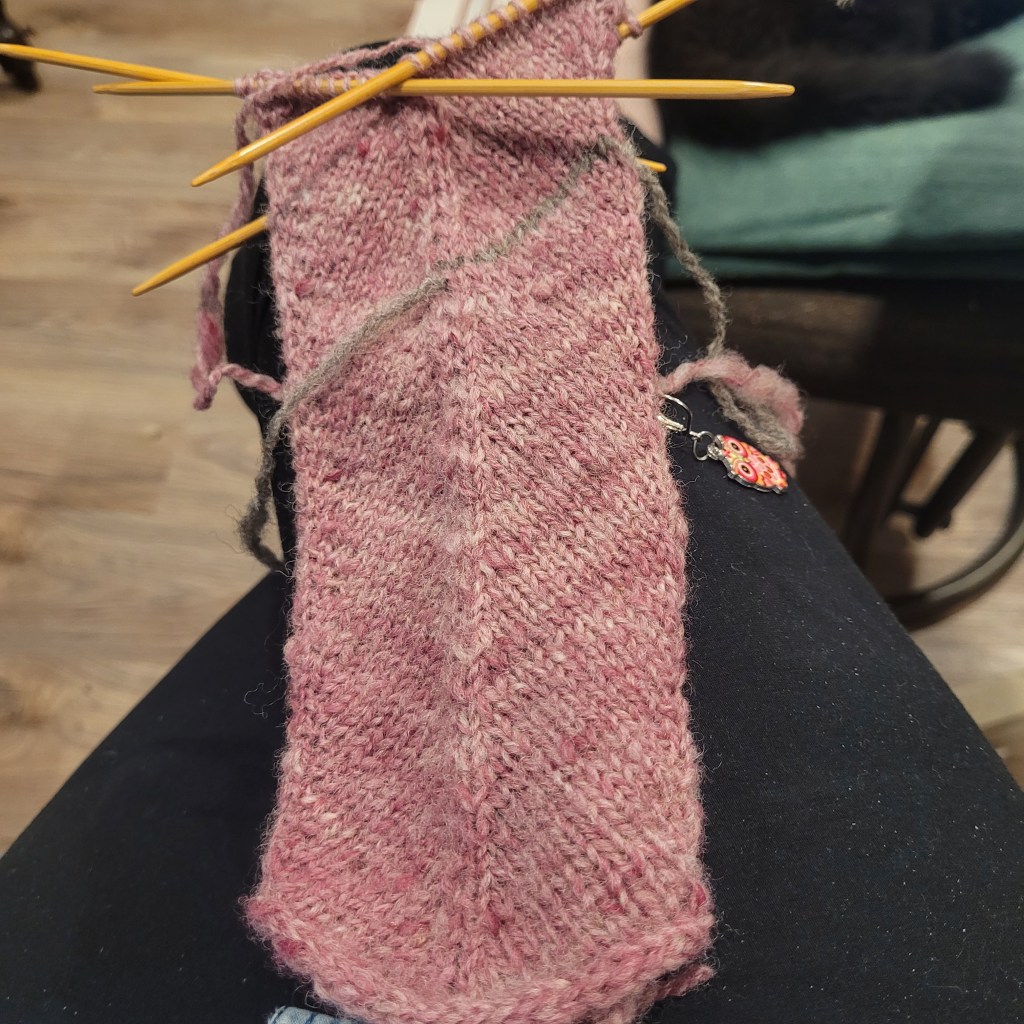
  • Showing up matters. Some days, all I had to share was a sock half-knit. Occasionally, it was a quick glimpse of tomatoes from the farm store. But I learned again that it’s the rhythm of showing up, not the perfection of the finish, that connects us.
  • Local stories hold power. A skein of wool from down the road carries more than just flavor and texture. Apples from the orchard do as well. They carry a story. September proved that when I share those stories, others feel rooted too.
  • Different doors, same home. People came in through different channels, whether it was a blog post, a YouTube vlog, or a printable checklist. However, they all entered the same cozy home. That felt like a gift.

🧶 What GrandmaCore Whispered

  • Slow is a rebellion. Sitting in a rocking chair while the world rushes by isn’t laziness — it’s choosing presence. Each stitch is a small “no” to the frenzy and a gentle “yes” to peace.
  • Hospitality is holy. A warm welcome doesn’t always look like a grand dinner. Sometimes it’s sharing a cinnamon bun from the farm store, or simply offering listening ears and soft yarn to touch.
  • Faith knits it all together. The scriptures I carried this month reminded me of new mercies every morning. They spoke of scars healed in Christ and blessings of the harvest. This reminds me that GrandmaCore isn’t just about cozy living. It’s about rooted, faithful living.

✨ A Lesson for the Heart

If September had one message, it was this:
ordinary life is sacred. Slow living is not wasted living.

Every sock stitch, every apple pie, every whispered prayer is part of the greater pattern God is weaving. And sometimes the rocking chair is the holiest place of all.


📖 Scripture to Rock With

“The steadfast love of the Lord never ceases; his mercies never come to an end; they are new every morning; great is your faithfulness.”
— Lamentations 3:22–23


🌸 A Cozy Blessing

As you step into October, may you carry September’s gentle lessons with you.
May you find warmth in small joys. Find rest in quiet moments. Trust in God’s faithfulness — stitch by stitch, day by day.

From my rocking chair to yours,
Grannie Doll 🧶💜


Grannie Core & Slow Fashion: A Wardrobe with Soul — September 24, 2025

Grannie Core & Slow Fashion: A Wardrobe with Soul

The rhythm of a rocking chair

is deeply comforting. The soft clink of knitting needles also offers comfort. Additionally, the hum of a sewing machine in the background soothes the mind. Grannie Core is more than just an aesthetic. It’s a way of living. It honors the handmade. It cherishes the well-loved. It values the time-tested. When paired with the values of slow fashion, it becomes a gentle rebellion against the fast, disposable culture of today. It’s about clothing that carries stories, faith, and family in every stitch.


1. Cherishing the Handmade & Heirloom

Our grandmothers knew that handmade garments were treasures. A hand-knit sweater wasn’t just wool and pattern—it was warmth, love, and care made tangible. Slow fashion echoes this truth. Instead of mass-produced items, we embrace pieces that carry time, thought, and often the hands of someone we know. Every quilt, apron, or shawl tells a story that becomes part of our own.

“She makes linen garments and sells them, and supplies the merchants with sashes.” — Proverbs 31:24


2. The Wisdom of Mending

There is quiet holiness in mending. When we darn a sock or patch a hole, we choose restoration over waste. Mending reminds us that what is torn can be repaired, what is broken can be useful again. Our clothes—like our lives—need not be discarded when frayed. In fact, those patched places often become the most beautiful.

“He heals the brokenhearted and binds up their wounds.” — Psalm 147:3


3. Seasonal, Natural Materials

Grannie Core invites us to return to the rhythms of the seasons. Wool for winter warmth, cotton for the kitchen, linen for hot summer days. These natural fibers breathe, wear well, and return to the earth gently when their time is done. Choosing them isn’t just a fashion decision. It’s a way of honoring creation. It’s living with respect for the world God has given us.


4. A Wardrobe with Soul

A Grannie Core wardrobe is not stuffed with fleeting trends but shaped by a few faithful pieces. A cardigan has seen decades of family gatherings. A shawl has traveled to church on cool mornings. A dress has memories stitched in its seams. Slow fashion reminds us that clothing is not simply fabric; it is witness to our days.


5. Community & Storytelling

At the heart of it all, Grannie Core is communal. It’s in the knitting circles, the quilting bees, the recipe swaps and fabric trades. It’s where skills are passed down and stories are shared, often over a pot of tea. Slow fashion is not only what we wear but the way we connect through making, mending, and remembering together.


Closing Reflection

Grannie Core and slow fashion encourage us to leave the spinning wheel of consumerism behind. They invite us to find rest in something steadier, softer, and more enduring. They remind us that clothes are not just what cover us—they’re part of our story, stitched with love and faith.

May we find joy in the small acts of making and mending. May we wear our wardrobes like we wear our lives. Our lives should be full of memory, meaning, and grace.

Why Source Wool Locally? — September 23, 2025

Why Source Wool Locally?

Unboxing Provenance Fibre Club

There’s something magical about opening a box of fibre. The colours, the textures, the promise of what it will become. When my Provenance Fibre Club subscription from Julia arrived, I couldn’t wait to dive in. Each braid held not just fibre—but a story.

As I unwrapped each treasure, I felt my excitement grow. But it also reminded me of the bigger question: why source wool locally?


Connection to Place

When we choose local fibre, we’re literally spinning the land around us. Each lock carries the imprint of the farm, the fields, and the seasons. It’s a way of holding our home in our hands.

Supporting Farmers and Makers

Behind every fleece is a shepherd who has cared for those animals through storms and sunshine. By sourcing locally, we honour their work and help keep small farms thriving.

Sustainability

Local wool travels fewer miles to reach us. That means less fuel, less packaging, and a gentler footprint on the earth. It’s one small but meaningful way to live in harmony with our values.

Unique Character

Local breeds raised in particular climates develop distinct textures and qualities. These fibres can’t be replicated elsewhere—they are one-of-a-kind.

Storytelling

Every skein spun from local wool carries a story. It’s not just yarn—it’s the voice of the farm, the shepherd, and the land. When we knit or weave, we share that story with others.


As I spin through my Provenance Fibre Club box, I imagine: this is more than fibre. It’s connection, sustainability, and creativity wrapped up together.

If you’ve never tried local wool, let this be your invitation. Visit a nearby farm, sign up for a local fibre club, or swap with a neighbour. Discover the joy of spinning stories that belong to your own backyard.

Every skein has a story, and every stitch holds a place. May your fibre journey keep you rooted, keep you warm, and keep you close to home. Until next time, spin gently and live locally.

Grannie Doll

Why Wool Matters 🐑🌿 — September 22, 2025

Why Wool Matters 🐑🌿

Today, as I sit with my knitting in hand,

I reflect on a fiber that has been part of my life for so long. That fiber is wool. It may seem like a simple thing. It is a skein of yarn spun from a sheep’s fleece. Nevertheless, for me and for many of us living closer to the land, wool carries a story that’s worth telling.

Wool Is Local

When I choose wool from nearby farms, I’m not just buying yarn. I’m supporting shepherds, small mills, and rural communities who care for their flocks with dedication. Each skein connects me to the fields, pastures, and farmers within my 100-mile circle.

Wool Is Sustainable

Wool is renewable, biodegradable, and natural. Unlike synthetic fibers that linger in landfills, wool eventually returns to the soil, nourishing it. It’s a beautiful example of creation’s design—what’s given to us can also be returned with care.

Wool Is Practical

It’s warm in winter, breathable in summer, and it resists odours in ways synthetic fibers can’t match. A well-made wool garment can last for decades, passed down through families like a quilt of memory and comfort.

Wool Is Comfort

For me, spinning, knitting, or simply handling wool has always been calming. It quiets my racing thoughts and steadies my heart. In every stitch, there’s a prayer. There’s a rhythm of stillness. It connects me to God’s peace and the slow work of my hands.


A Gentle Reminder

Wool is important for many reasons. It is more than a material. It signifies a way of living simply. It involves caring for the earth and honoring those who bring it to us. When we wrap ourselves in wool, we wrap ourselves in connection.


💬 Let’s Talk

Do you have a favorite wool story? Maybe a cozy blanket, a beloved sweater, or even a project on your needles right now? Share it in the comments—I’d love to hear!

👉 If you’d like to follow along on this journey of slow, local living, make sure you’re subscribed. Subscribe to my YouTube channel to stay updated. Subscribing will keep you updated on new content. I share each day of the 30-Day 100 Mile Life Challenge there. Together, we’re discovering that living closer to home brings us closer to what really matters.

🌸 With gratitude, living life 1 stitch at a time,
Grannie Doll

Wounded, Yet Blessed — September 21, 2025

Wounded, Yet Blessed

Genesis 32:9–30

Have you ever carried a wound so deep it shaped how you walk through life? Maybe it’s the ache of grief, the weight of regret, or the slow wear of illness. Jacob knew what that was like. One dark night, on the banks of the Jabbok River, he wrestled with God and walked away limping. But he also walked away blessed.

Jacob’s story is strange and mysterious, but it’s also deeply human. Because we all wrestle. We wrestle with our past, our doubts, our fears, our relationships—and sometimes with God Himself. And like Jacob, we don’t come out of those nights unmarked.


Wrestling in the Dark

Jacob’s prayer that night is raw and honest: “I am unworthy… deliver me, I pray” (vv. 10–11). That’s where wrestling begins—with honesty. We don’t need fancy words to get God’s attention. We can bring our fear, our need, our brokenness just as it is.

In the darkness, Jacob wrestled until dawn. It wasn’t a clean, easy fight. It was gritty. It was exhausting. And that’s how faith often feels. But wrestling is not weakness. Wrestling is faith refusing to let go.


The Limp and the Blessing

At the turning point, God touches Jacob’s hip, leaving him wounded. From then on, Jacob walks with a limp. But the limp isn’t a curse. It’s a sign. Jacob has met God face to face and survived. He has a new name—Israel, the one who struggles with God.

We, too, carry limps:

  • The limp of grief after loss.
  • The limp of chronic pain or illness.
  • The limp of regret for words we can’t take back.
  • The limp of a heart broken by disappointment.

Our woundedness is real. It changes how we move through life. But here’s the hope: our wounds can also be the places where God meets us. They are the places where He blesses us and makes us new.


From Jacob to Jesus

Jacob’s limp points us towards, to another who would be wounded: Jesus Christ.

  • Jacob wrestled in the dark; Jesus wrestled in Gethsemane, sweating drops of blood.
  • Jacob was struck in the hip; Jesus was pierced in His hands, His feet, and His side.
  • Jacob limped into the sunrise. Jesus carried His wounds to the cross. Three days later, He rose into the dawn of resurrection.

And here’s the miracle: by His wounds, we are healed (Isaiah 53:5). The risen Christ still bore His scars—they were not erased but glorified. And so too, our wounds can become testimonies of grace.


Wounded, Yet Blessed

Jacob clung to God and said, “I will not let you go until you bless me.” That’s faith: holding on in the dark, even when wounded, until the blessing comes.

Friends, whatever limp you carry today, don’t let go. Bring your wounds to Jesus, the wounded healer. Cling to Him. Because in Him, even our deepest wounds can become the doorway to blessing.


Reflection Question

What wound do you carry that God want to turn into a place of blessing?


Prayer

Lord Jesus, you are the wounded healer. We bring you our limps, our scars, our hidden hurts. Bless us in our struggles. Teach us to see our wounds not as shame but as signs of your grace. By your wounds we are healed. Amen.


👉 If this reflection speaks to you, share it with someone who may be wrestling in their own dark night. You never know what blessing your encouragement might bring.

Grocery Savings Without Feeling Deprived — September 19, 2025

Grocery Savings Without Feeling Deprived

“Embracing the 100 Mile Life for sustainable living”

Living a 100 Mile Life can seem like it cost more. This involves sourcing as much of our food, fibers, and essentials from within a 100-mile radius. But here’s the truth: When you embrace seasonal eating, you can discover grocery savings. Shopping local produce doesn’t leave you feeling deprived. In fact, the 100 Mile Life can actually make your meals richer, simpler, and more budget-friendly.

1. Shop Seasonal, Shop Abundant for Grocery Savings

One of the best grocery savings tips is buying what’s in season. Local fruits and vegetables are most affordable when they’re abundant. Instead of expensive imported strawberries in January, enjoy crisp apples in September, squash in October, or sweet corn in July.

GrandmaCore wisdom: Buy in bulk when harvests are plentiful. A bushel of tomatoes or apples costs less per pound. With a little preserving, you’ll enjoy budget-friendly seasonal meals all winter.

2. Build Relationships With Local Farmers

Knowing your farmer means knowing your food—and often, saving money. Regular visits to a farm stand or market can result in small discounts. You will get bonus extras, like “take these cucumbers, they’re odd-shaped.” Sometimes, you can even barter. Supporting local farmers not only strengthens community, it helps you cut costs compared to supermarket shopping.

3. Embrace Simple, Frugal Meals

Local ingredients often encourage simpler recipes. A hearty soup made from root vegetables, beans, and fresh herbs can be filling and healthy. It can cost far less than take-out. These meals embody frugal grocery shopping while connecting you back to traditions of home-cooked care.

4. Reduce Waste and Stretch Your Grocery Budget

When you buy farm fresh food, it often lasts longer. Still, reducing waste is key. Roast beet greens with the roots, simmer chicken bones for broth, shred day-old bread into croutons. These small choices stretch every ingredient, creating grocery budget hacks that save you more than you realize.

5. Redefine “Treats” in the 100 Mile Life

A cinnamon bun from a local bakery, a wedge of regional cheese, or berries you picked yourself—these become meaningful luxuries. Because they’re intentional rather than impulse buys, you savor them more deeply while keeping your grocery budget in check.


The Joy of Enough

The secret to saving money on groceries without feeling deprived is embracing the joy of enough. Focus on seasonal eating. Support local farmers. Practice mindful shopping. You’ll find the 100 Mile Life doesn’t shrink your world. It expands it in surprising and satisfying ways.


Friend, what’s one local food swap you’ve made that saved you money? Share it in the comments—I’d love to hear!

💛
With gratitude and hope,
Grannie Doll