
Have you ever curled up with a tiny hexagon in hand, needle and thread at the ready? Have you wondered where this charming craft began?
Scroll down to the video.
English Paper Piecing is affectionately called EPP by many of us. It has a history as rich and layered as a well-loved quilt. It’s a craft built on slow stitching. It emphasizes thrift and the beauty of small things coming together to create something truly special.
🧵 Where It All Began
The roots of English Paper Piecing go back to 18th-century England. Creative hands and thrifty minds used paper templates to shape and stabilize bits of fabric. The earliest known reference to this technique comes from around 1770. It was often called mosaic patchwork because the shapes resembled tiled mosaics. These were pieced together into stunning geometric designs.
But the real magic? Many of these templates were made from recycled materials — letters, newspaper clippings, even pages torn from ledgers and books. Some of these hidden papers are still tucked inside antique quilts. They offer a glimpse into the everyday lives of people long ago.
️ How It Traveled the World
As English settlers moved across the ocean to North America, the tradition of English Paper Piecing also traveled with them. It became popular in colonial homes. Women used scraps of fabric and repurposed paper to make quilts. These quilts were both practical and deeply personal.
EPP was the ideal portable craft. It could be stitched by candlelight. You could work on it during long journeys or while visiting with friends. No sewing machine needed — just needle, thread, paper, and time.
❤️ A Stitch in Time
Through the 19th and early 20th centuries, English Paper Piecing became more than just a way to make blankets. It was a form of creative expression. It served as a quiet pastime and, in many ways, was a reflection of women’s resilience and ingenuity.
Some quilts were made over decades. Others became family heirlooms. And always, there was something deeply satisfying about taking what have been discarded and turning it into something beautiful.
🌼 The Modern Revival
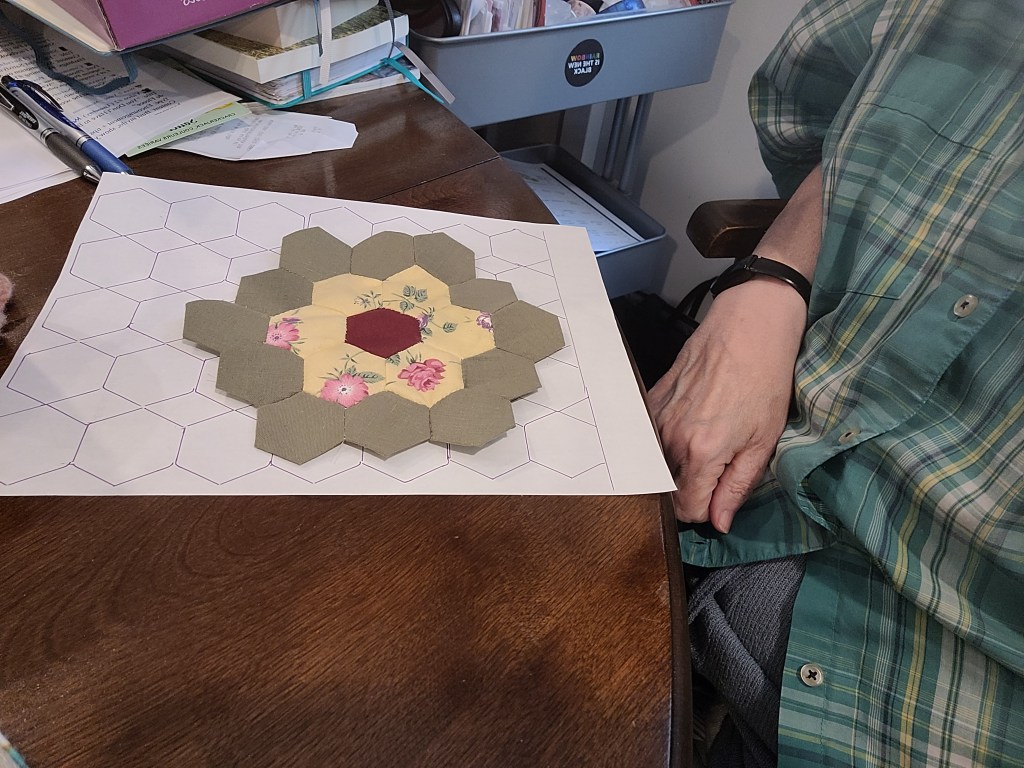
Today, EPP has found a new audience among crafters. They appreciate the meditative pace of hand sewing. They also find joy in making something slowly, piece by piece. It’s part of the larger slow stitching movement — a return to intentional, meaningful making in a fast-paced world.
Quilters and creators around the globe continue to celebrate this time-honored technique. They use both traditional shapes like hexagons. They also innovate with modern patterns that push the boundaries of patchwork art.
💬 One Stitch at a Time
There’s something incredibly comforting about knowing that the stitches you’re making today echo those made hundreds of years ago. Sitting with fabric and thread connects you to your creativity. It also links you to a community of makers, both past and current.
So next time you hold a tiny hexie in your hand, remember: you’re not just sewing fabric to fabric. You’re stitching story to story, and soul to soul.
✨ Let’s Keep the Story Going
Have you tried English Paper Piecing? What’s your favorite shape to stitch?
Share your projects or EPP memories in the comments — I’d love to see what you’re creating! 🧵💬
Discover more from Doll Can Create
Subscribe to get the latest posts sent to your email.
